

A COMPREHENSIVE GUIDE TO HOUND DOGS

Updated: Aug 18

Hound dogs are an incredible group of breeds that capture the heart with their charm and unique abilities.
From their athletic build to their playful spirits, Hounds are more than just beautiful animals—they can become beloved family members.
This guide will explore the distinct types of Hound Dogs, their traits, care needs, and tips for finding the right one for your family.

Understanding Hound Dogs.
Hound dogs are mainly split into two categories: Sight Hounds and Scent Hounds.
However, a small third group uses both Sight and Scent.
Sight Hounds vs Scent Hounds vs Sight & Scent Hounds.
Sight Hounds:
The Sight Hound breed includes some of the oldest dog breeds depicted in history, originating from the Middle East and Asia.
They were bred to hunt by sight, so they have keen eyesight and are fast and powerful runners.
Just like the Greyhound and Whippet, they rely on their keen vision and impressive speed.
Did you know a Greyhound can reach speeds of 45 miles per hour, making it one of the fastest dog breeds?
They excel at spotting prey from afar and are typically fast and agile runners.

Scent Hounds:
These Hounds were developed in Europe and North America to track and pinpoint prey, then alert the hunter.
Therefore, some of these Hound Dogs can be pretty vocal.
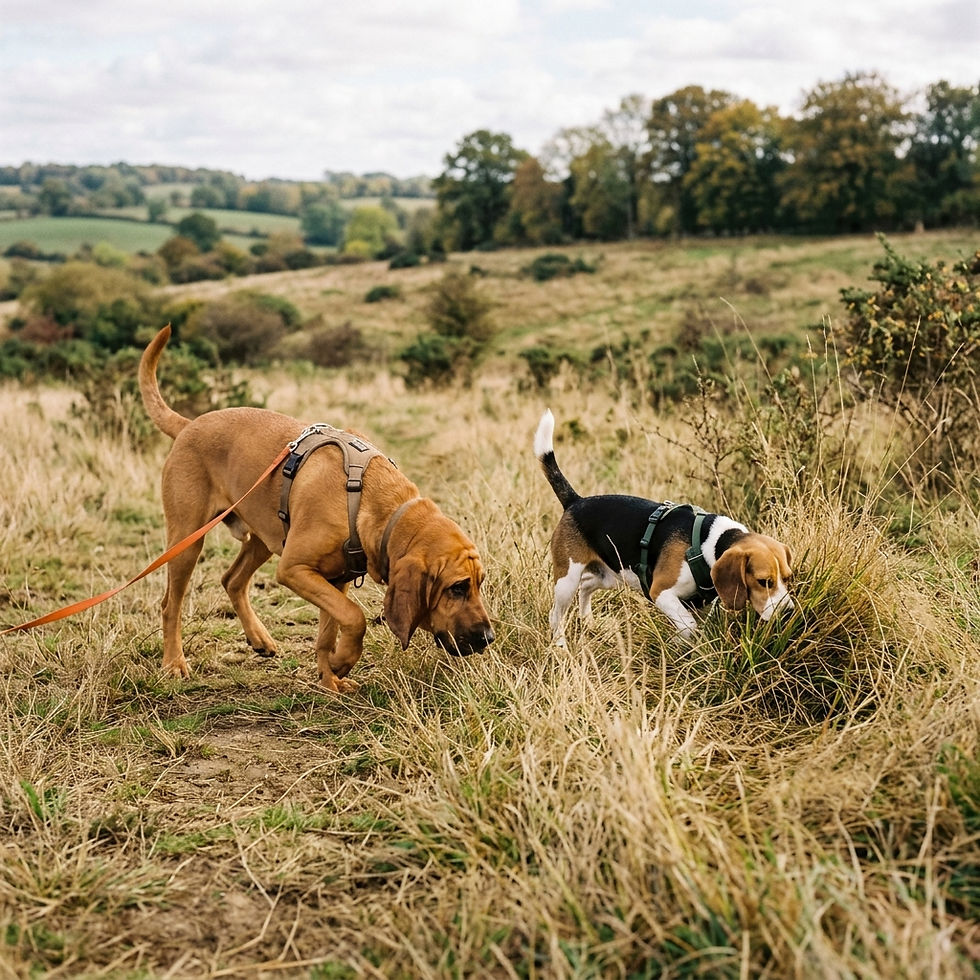
These Hounds include breeds like Beagles and Bloodhounds.
They possess acute olfactory senses, capable of detecting scents up to 40 times better than humans.
For instance, a Bloodhound can track a scent trail days old, making them invaluable in search-and-rescue operations.
Scent & Sight Hounds:
These Hounds include breeds of:
A Rhodesian Ridgeback
An Ibizan Hound and a Pharaoh Hound, typically known as sight Hounds, have also been known to use their noses to smell a scent.
All of these dog breeds have used sight and smell while hunting.
However, one Portuguese breed hunts using sight, smell, and hearing.
That breed is called A Portuguese Podengo Pequeno.
Understanding these differences can help you identify which type of hound best aligns with your lifestyle.

Characteristics and Temperament.
Hound Dogs stand out for their friendly and affectionate nature.
They are generally good with children and tend to be sociable with other pets.
A study showed that Beagles, for instance, scored high in sociability, making them excellent family companions.
However, Hounds also have strong hunting instincts, especially in Sight Hounds, which can lead them to chase small animals.
Their independent nature makes them stubborn during training sessions.
Approach their training with patience and consistency, as building a strong bond will enrich both your lives.
Transitioning from Puppy to Adulthood.
The change from puppy to adult in Hound Dogs is significant.
Puppies are filled with energy and curiosity, while adult hounds often settle into a calmer demeanour.
During this transition, proper training and socialisation are essential.
Engaging them in activities such as obedience classes or agility training will foster their development.
Regular daily exercise — 30 minutes or more for most Hounds — alongside mental stimulation helps keep them healthy and content.
Size Spectrum of Hound Dogs.
Hound dogs come in various sizes, ranging from the 20-pound Beagle to the 150-pound Afghan Hound.
This diversity offers many options for different home environments.
If you live in an apartment, small hounds like Beagles might be ideal.
If you have a large garden/backyard, consider breeds like Bloodhounds, which require more space for exercise.
Considering your living situation will help you make the best choice.
Instincts of Hound Dogs.
Hound Dogs are natural hunters, and their instincts can vary significantly between Sight and Scent Hounds.
Sight Hounds chase after movement, while Scent Hounds are drawn to tracking scents.
To manage these instincts effectively, provide ample opportunities for physical activity and mental challenges.
Activities like fetch or scent games can satisfy their natural drives, promoting fulfilment and happiness.
Behaviour and Personality Traits.
Hound dogs are typically loving, playful, and loyal.
Many enjoy spending quality time with their families.
For example, Beagles are known for their playful nature and often exhibit a joyful demeanour. Building a Connection with Your Hound Dog.
However, Hounds can also be stubborn.
They may ignore commands if they're distracted by an enticing scent.
Positive reinforcement techniques are essential for practical training.
Rewarding your Hound Dog rewards such as praise and/or treats will motivate them, making training a fun adventure for both of you.
To forge a strong relationship with your hound, devote quality time together.
Regular activities, such as daily walks, play sessions, and training, can help deepen your bond.
Understanding your Hound's unique personality traits and preferences will help you connect on a more meaningful level.
For example, some Hounds enjoy games that tap into their hunting instincts
In contrast, others may prefer leisurely strolls around the neighbourhood.
Grooming and Care Requirements.
Grooming needs for Hound Dogs can differ by breed.
Short-haired breeds, such as Beagles, require minimal grooming, needing only occasional brushing to maintain healthy coats.
Long-haired breeds, such as the Afghan Hound, require weekly grooming to prevent matting and tangling.
Regular baths and monitoring their ears and eyes are essential parts of your dog's grooming routine.
Regular teeth cleaning with doggie toothpaste is also essential.
If you can't clean your dog's teeth every day, give them a dental stick to chew on to help clean their teeth and keep their breath fresh.
Regular care of your dog's overall health and hygiene, regardless of breed, can prevent common issues and enhance their comfort.
Training, Games and Exercise for Your Hound Dog.
Scent Hounds.
Teaching Hound Dogs can be enjoyable and rewarding, but it takes a lot of patience.
The best technique for a Scent Hound is positive reinforcement because scent hounds are food motivated.
Sight Hounds.
These Hounds are a unique group of dogs known for their independent personalities.
Unlike the Scent Hounds and many other breeds, they may not be as eager to work for food rewards.
This independent nature, combined with their strong instinct to chase moving objects, can make training them to come when called.
Sight Hounds Struggle With "Sit".
Sighthounds can have a tough time with the "sit" command because of their unique body shape, which makes that position uncomfortable for them.
Interestingly, not all sighthounds react the same way, so it's good to observe your dog before training.
When you begin training, take a moment to observe your dog's natural behaviour.
If you notice that sitting doesn't seem to work well for them, you can try using the commands "down" or "stay" instead; these commands can help you achieve the same goals while being more comfortable for your dog.
Introducing Games Into Your Dog's Training Regime.
Scent Hounds:
Incorporating games into their training, such as hide-and-seek or nose work, will not only engage them but also make learning more enjoyable.
For example, setting up a scent trail filled with treats can stimulate their instincts and encourage focus.
Scent Hounds love to play fetch.
You could throw a toy into long grass and encourage your dog to find it.
As soon as your dog finds the toy, call it back to you before giving praise and a treat, as this will help reinforce the recall command.
Throwing a ball and asking your dog to fetch is also an effective way to train your dog in the recall command.
Exercising Your Scent Hound.
Scent Hounds love to sniff, so long walks where they can explore with their nose are essential.
Walking them down a long country lane would be ideal
Walking your dog is a great way to bond and can help address behavioural issues such as chewing, barking, or digging.
Keeping them busy during walks helps prevent boredom.
Change the Route You Walk:
Try taking your dog on different paths each time you walk.
This keeps things exciting for them and lets them see and smell new things.
Sniffing Time:
Give your dog some time to stop and sniff around while you walk.
This is how Scent Hounds explore their surroundings, and it helps keep their minds active.
Interactive Walking:
Bring along a ball or frisbee and take breaks to play fetch during your walk.
It's a fun way to mix things up!
Socialise:
Make sure to stop and let your dog meet other dogs and people while walking.
This helps them get better at socialising and can make them feel less anxious.
Sight Hounds:
These Hound Dogs require free-running exercise, so a large, enclosed area or a dog-friendly beach is ideal for training and exercising them.
Games such as Flirt Pole and Frisby are good running games.
When playing with your Sight Hound, though, please remember.
Sight Hounds can see movement at distances we can't, and as soon as it does, it is off, on the chase, and can disappear in the blink of an eye.
None of the recall training you have given your dog will be of use, as their prey drive is too strong.
When Walking Your Sight Hound.
When choosing a spot to walk your dog, pick a safe area.
Look for places that are away from busy roads and not too close to wild animals.
Open spaces are ideal for dogs like Sight Hounds.
These dogs can run really fast, and when they glance back to check on you or see if other dogs are chasing them, they might accidentally run into things like trees.
It's best to keep them in wide-open areas to prevent any accidents.
Take your dog on the same walk 5 or 6 times, or more if you just adopted an older dog.
Do this over 2-3 weeks, but remember to keep your dog on a leash during these walks.
It's not about walking multiple times a day; just one good walk each day is enough.
Let your Sight Hound explore and sniff around during the walk.
This way, he will become familiar with the area and be less likely to get lost or panic if he wanders off the path.
It's a good idea to stick to the same route each time you go out, and try to walk at the same time of day.
Keep in mind that wildlife in the area will learn to notice you, and they will typically avoid the area before you arrive.
This routine should help your dog feel comfortable and safe in his surroundings.
Sight Hounds And Muzzles
Sight Hounds have a strong instinct to chase.
This makes them a potential danger to smaller animals, wildlife, and cats.
Muzzles prevent Sight Hounds from catching and injuring these smaller animals.
Also, in certain countries and areas, specific breeds are legally required to wear a muzzle in public.
Health Considerations for Hound Dogs.
Like all breeds, Hound Dogs are susceptible to specific health issues.
Common health concerns include:
Hip dysplasia: A genetic condition affecting many larger breeds.
Ear infections: Especially in breeds with floppy ears, like Beagles.
Obesity: Due to their sometimes laid-back nature, hounds can gain weight if not exercised adequately.
Regular Veterinary check-ups and a balanced diet can help reduce specific health issues.
Understanding your breed's potential health risks allows for proactive care.
What to Feed a Hound Dog and Feeding Schedule.
A balanced diet is vital for your hound's health.
A High-quality dog food tailored to meet their needs is essential.
Most hounds benefit from being fed twice daily.
Monitoring their weight and adjusting their portion sizes can help prevent obesity, a common issue in many hound breeds.
Consult your Veterinarian for personalised dietary advice to ensure your Hound receives the best nutrition.
Final Thoughts.
When choosing a Hound Dog, consider your lifestyle, family dynamics, and activity level. Some Hounds thrive on high energy and require extensive exercise.
In contrast, others are more relaxed and can adapt to a quieter household.
Reflect on your living situation and how much time you can commit to their care.
Hound dogs are a diverse and loving group that can bring joy and companionship to your life.
Understanding their unique traits, care needs, and instincts enables you to provide an environment where they can thrive.
Whether you're welcoming a playful puppy or a loyal adult, there's a Hound Dog out there perfect for your home.
A little forethought will help you find a Hound who seamlessly integrates into your family life.
Enjoy the journey of finding your new Hound Dog partner and friend, and anticipate the countless memories and adventures that lie ahead!


Comments