

A Comprehensive Guide to the German Shepherd


Let's Meet the German Shepherd
The German Shepherd is one of the world's most recognisable and admired dog breeds.
Renowned for its intelligence, loyalty, courage, and versatility, this remarkable breed has become a favourite among families, working professionals, and dog enthusiasts alike.
Whether serving as a loyal family companion, a police dog, a military working dog, a search and rescue specialist, or an assistance dog, the German Shepherd consistently demonstrates exceptional ability and unwavering devotion.
Strong, athletic, and highly intelligent, the German Shepherd thrives when given a purpose.
Their eagerness to learn, combined with a naturally protective instinct, makes them one of the most trainable breeds in the world.
However, they also require responsible ownership, regular exercise, mental stimulation, and consistent training to become well-rounded companions.
If you're thinking about bringing a German Shepherd into your home, understanding their history, personality, and daily care requirements is essential.
This comprehensive guide explores everything you need to know about this exceptional breed.
The German Shepherd's History
The history of the German Shepherd dates back to the late nineteenth century in Germany.
Before the breed existed, farmers across Germany relied on various regional herding dogs to manage sheep and protect livestock.
These dogs were valued for their intelligence, endurance, and strong work ethic rather than their appearance.
The breed as we know it today was developed by Captain Max von Stephanitz, a German cavalry officer who believed Germany needed a standardised working dog capable of excelling in a wide variety of roles.
In 1899, he discovered a dog named Horand von Grafrath, whose intelligence, athleticism, and physical structure perfectly matched his vision.
Horand became the first registered German Shepherd and laid the foundation for the breed.
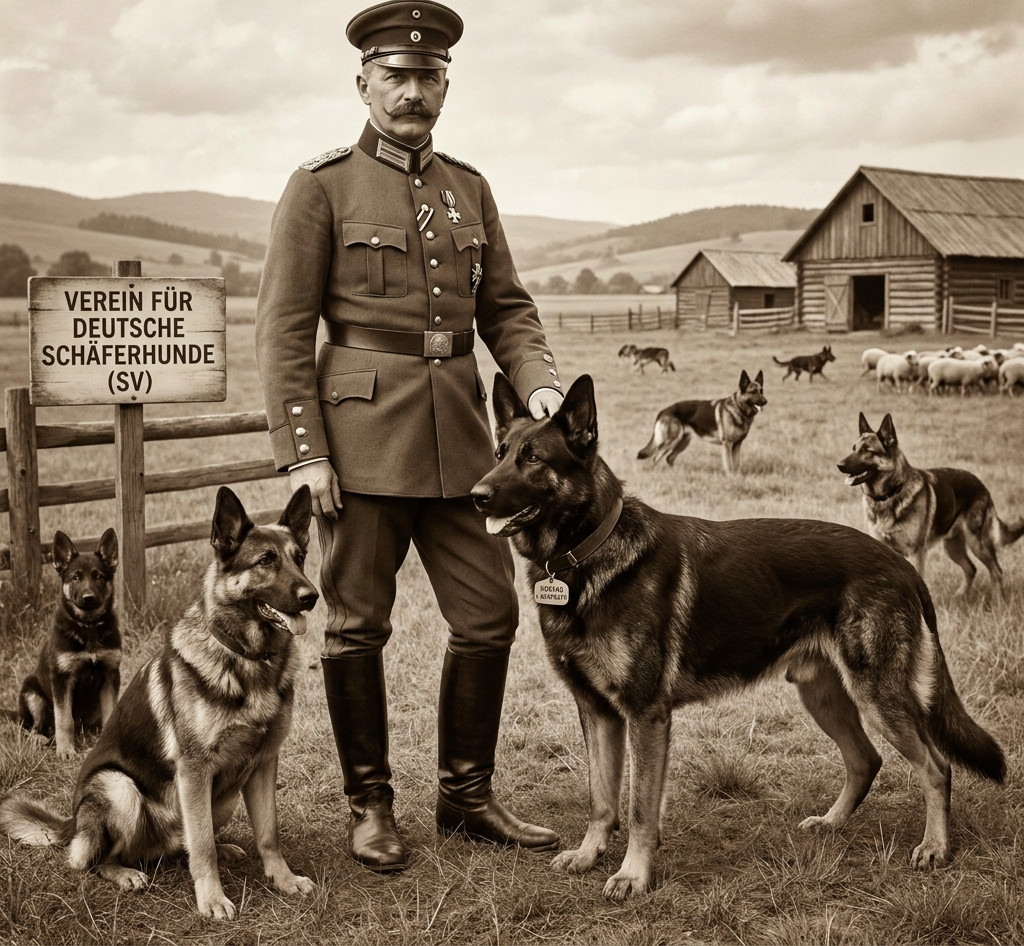
Von Stephanitz carefully selected breeding pairs based on temperament, intelligence, health, and working ability instead of appearance alone.
His philosophy was simple: utility and character should always come before looks.
As industrialisation reduced the need for traditional sheepdogs, German Shepherds quickly found new roles.
Their intelligence and adaptability made them ideal candidates for military service, police work, search and rescue operations, guide dog programmes, and countless other working positions.
Today, the German Shepherd remains one of the most popular dog breeds worldwide. They continue to excel in obedience competitions, canine sports, scent work, protection training, therapy work, and family life, proving their remarkable versatility generation after generation.
German Shepherd Personality and Temperament
One of the biggest reasons behind the German Shepherd's popularity is its outstanding temperament.
These dogs are intelligent, confident, loyal, and eager to work alongside their owners.
German Shepherds develop incredibly strong bonds with their families.
They are affectionate with those they trust and naturally protective without being unnecessarily aggressive.
Their instinct to guard loved ones makes them excellent family protectors when properly trained and socialised.
Because they are exceptionally intelligent, German Shepherds learn new commands quickly.
They enjoy having a job to do and become happiest when their minds are challenged. Puzzle toys, obedience exercises, scent games, agility, tracking, and advanced training all help satisfy their need for mental stimulation.
Unlike some breeds that happily entertain themselves for hours, German Shepherds actively seek interaction with their owners.
They enjoy participating in everyday activities and often follow family members from room to room to remain involved.
Despite their loyal nature, they can be reserved around unfamiliar people.
Early and ongoing socialisation helps puppies grow into confident adults that can distinguish genuine situations from everyday encounters.
A well-socialised German Shepherd should be calm, confident, and composed rather than fearful or reactive.
Their sensitivity also means they respond best to positive reinforcement.
Praise, rewards, consistency, and clear communication produce excellent results, whereas harsh handling can damage their confidence and trust.
If they don't get enough physical activity or mental enrichment, boredom can trigger problem behaviours like constant barking, destructive chewing, digging, or restless pacing.
Providing suitable daily activities is one of the most important responsibilities of owning this energetic breed.
Living with a German Shepherd
Living with a German Shepherd is both rewarding and demanding.
These intelligent dogs thrive in homes where they are considered active members of the family rather than being left alone for extended periods.
Although they can adapt to various living environments, including spacious homes and some larger properties, they need sufficient daily exercise regardless of where they live.
A house with a securely fenced garden offers additional space to explore, but outdoor access alone is never a substitute for walks, training, and interactive play.
German Shepherds generally enjoy family life and often form particularly close relationships with their owners.
They usually get along well with respectful children when introduced correctly and supervised appropriately.
Teaching both children and dogs how to interact safely helps create positive lifelong relationships.
When introduced from an early age, many German Shepherds also live happily alongside other dogs and household pets.
Proper introductions and continued socialisation play an important role in encouraging harmonious behaviour.
This breed sheds throughout the year, with heavier seasonal moults occurring twice annually.
Regular brushing helps manage loose hair while keeping the coat and skin healthy. Prospective owners should be prepared for frequent vacuuming during shedding seasons.
German Shepherds also need structure and routine.
Predictable feeding times, exercise schedules, training sessions, and rest periods help them feel secure and confident.
Their intelligence means they quickly recognise household routines and generally respond well to consistency.
Owners should also be prepared for the breed's need for companionship.
German Shepherds are not suited to spending long periods alone every day.
Extended isolation can contribute to separation-related behaviours, frustration, and anxiety.
They flourish in households where someone has sufficient time to provide companionship, training, and meaningful daily interaction.
For families or people who enjoy an active outdoor life, hiking, running, obedience training, or canine sports, the German Shepherd can become an outstanding companion.
Their enthusiasm, loyalty, and willingness to learn make them a joy to live with when their physical and mental needs are consistently met.
Why the German Shepherd Remains So Popular
The German Shepherd has earned its reputation through generations of dependable service and devoted companionship.
Combining intelligence, courage, loyalty, athletic ability, and remarkable versatility, it continues to rank among the most sought-after dog breeds in the UK and around the world.
Whether working alongside emergency services, supporting people with disabilities, competing in canine sports, or relaxing at home with the family, the German Shepherd consistently demonstrates why it remains one of the finest all-round dog breeds.
Appearance and Size
The German Shepherd is a large, athletic, and well-balanced dog breed renowned for its strength, agility, and endurance.
Originally developed as a working dog, every aspect of the breed's appearance reflects its ability to perform physically demanding tasks.
A well-bred German Shepherd should display confidence, alertness, and effortless movement, with a body built for stamina rather than excessive bulk.
German Shepherds have a strong, muscular frame with a slightly longer body than height, giving them excellent flexibility and balance.
Their deep chest provides room for powerful lungs, while their strong hindquarters generate impressive drive and speed.
Their gait is smooth, flowing, and seemingly effortless, which allows the German Shepherd to cover long distances with minimal fatigue.
One of the breed's most recognisable features is its intelligent expression.
Their almond-shaped eyes are medium-sized and usually dark brown, conveying alertness and confidence.
The ears are large, erect, and carried forward once fully developed, helping the dog detect sounds from considerable distances.
The German Shepherd's bushy tail reaches at least to the hock and hangs naturally with a gentle curve when relaxed.
During movement or excitement, the tail rises slightly but should never curl over the back.
German Shepherd Coat Types
This dog has a dense double coat designed to protect against harsh weather conditions.
The outer coat is straight, coarse, and weather-resistant, while the soft undercoat provides insulation during colder months.
The breed is available in several coat lengths, although the medium-length double coat is the most common.
Long-coated German Shepherds possess feathering around the ears, legs, tail, and chest, requiring more frequent grooming to prevent tangles.
Coat Colours include:
Black and Tan
Black and Red
Black and Cream
Black and Silver
Solid Black
Sable
Bi-colour
Regardless of colour, the breed's striking appearance is matched by its intelligence and athletic build.
Breed Overview
Size: Large
Height Male: 60–65 cm (24–26 inches)
Height Female: 55–60 cm (22–24 inches)
Weight Male: 30–40 kg
Weight Female: 22–32 kg
Coat: A double coat to protect against the weather
Coat Colours: Black, Black with cream, red, silver, or tan markings, Sable, or Bi-colours.
Sheds: High
Grooming Needs: High
Personality: Alert, Brave, Confident, Courageous, Energetic, Loyal, Obedient, Very intelligent, Watchful.
Exercise Requirements: High
Energy Level: High
Training Requirements: High due to their intelligence
Tendency To Bark: Medium. These dogs only bark for a reason.
Tendency To Dig: Low
Tendency To Drool: Low
Tendency To Snore: Low
Social Attention Needs: High
Accommodation: Inside a home, and one with a large secure garden or yard.
Ideal Owner: A Person who has Large Dog experience and who can commit to consistent training.
Life Span: 9 to 13 years
Royal Kennel Club (UK) Recognition: Pastoral Group
American Kennel Club (AKC) Recognition: Herding Group
Individual dogs may vary slightly depending on genetics, nutrition, and activity levels.
Grooming a German Shepherd
Although the German Shepherd is not considered a high-maintenance breed, regular grooming is essential to keep both the coat and skin healthy.
Their famous reputation as a heavy shedder means owners should establish a consistent grooming routine from puppyhood.
Brushing
Brushing is one of the most important aspects of German Shepherd grooming.
For most of the year, brushing two to three times each week helps remove loose hair, dirt, and debris.
Brushing helps spread your dog's natural skin oils evenly through the coat.
In peak shedding periods—typically spring and autumn—you may need to brush every day to keep the extra loose undercoat under control.
Useful grooming tools include:
Slicker brush
Undercoat rake
Pin brush
Wide-toothed comb
Grooming glove for finishing
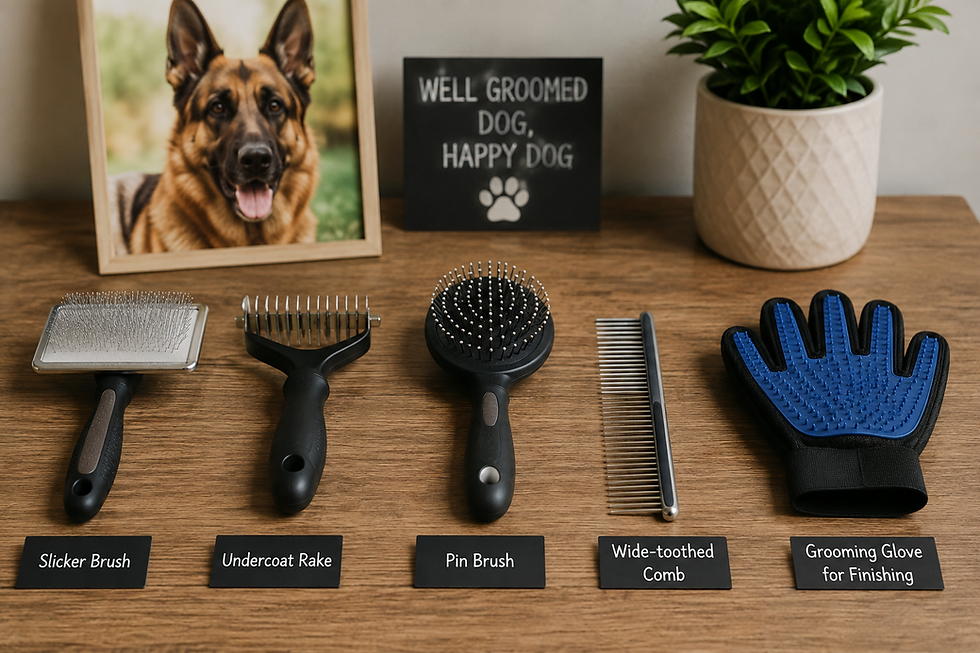
Regular brushing also allows owners to detect lumps, skin irritation, parasites, or injuries before they become more serious.
Bathing
German Shepherds rarely require frequent bathing because washing these dogs too often can strip away the natural oils that keep the skin healthy.
Most healthy adults only require bathing every two to three months, or sooner if they become particularly dirty after outdoor adventures.
Always use a high-quality dog shampoo formulated for canine skin.
Human shampoos should never be used because a dog's skin has a different pH balance, and unsuitable products may cause dryness or irritation.
Ensure the thick undercoat is rinsed thoroughly, as leftover shampoo residue can lead to itchy skin.
Drying the Coat
After bathing, towel dry thoroughly before using a pet dryer or a hairdryer on a cool or low-heat setting if necessary.
Because of their dense undercoat, moisture trapped close to the skin can encourage irritation or fungal infections.
Ensuring the coat is completely dry is particularly important during colder weather.
Ear Care
German Shepherds generally have upright ears, allowing excellent airflow and reducing the likelihood of ear infections compared with breeds that have floppy ears.
Nevertheless, ears should be checked weekly for:
Excess wax
Redness
Unpleasant odours
Swelling
Foreign objects
Use a vet-approved ear cleaner applied to cotton wool or gauze to gently clean the visible areas of the ear.
Never insert cotton buds or any object deep into the ear canal.
Eye Care
Healthy eyes should appear bright, clear, and free from excessive discharge.
If minor tear staining or dirt develops around the eyes, gently wipe the area using damp cotton wool or sterile eye wipes designed specifically for dogs.
Persistent redness, swelling, excessive discharge, or squinting should always be assessed by a veterinarian.
Nail Care
German Shepherds that regularly walk on pavements often wear their nails down naturally.
However, many dogs still require occasional trimming.
Inspect the nails every three to four weeks.

If trimming your dog's nails yourself, be careful not to cut into the quick, the sensitive blood vessel inside each nail.
If accidental bleeding occurs, apply styptic powder or cornflour while applying gentle pressure until the bleeding stops.
Dental Care
Dental hygiene is very important in a German Shepherd's long-term health.
Ideally, teeth should be brushed every day using dog-specific toothpaste and a soft canine toothbrush or finger brush.
Never use human toothpaste, as it contains ingredients that may be harmful if swallowed by dogs.
Dental chews, veterinary-approved dental diets, and suitable chew toys can also help reduce plaque between brushing sessions.
German Shepherd Health and Common Issues
The German Shepherd is generally a robust breed, but like many pedigree dogs, it can be predisposed to certain inherited health conditions.
A reputable breeder carries out appropriate health screening, significantly reducing the risk of inherited diseases.
Maintaining a healthy weight, regular exercise, a balanced diet and routine veterinary examinations all contribute to a longer, healthier life.
Hip Dysplasia
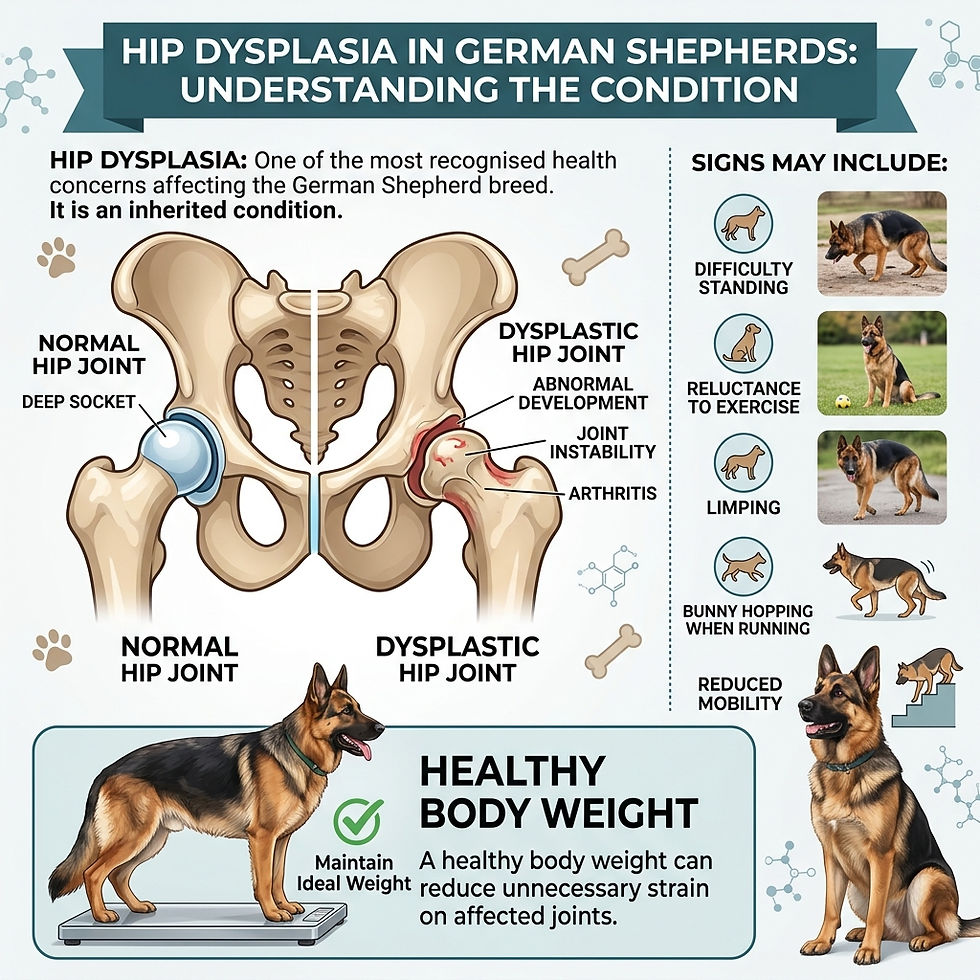
Hip dysplasia is one of the most recognised health concerns affecting the German Shepherd breed.
It is an inherited condition, and it happens when the dog's hip joint develops abnormally, leading to joint instability, arthritis, stiffness, and discomfort over time.
Signs may include:
Difficulty standing
Reluctance to exercise
Limping
Bunny hopping when running
Reduced mobility
A healthy body weight can reduce unnecessary strain on affected joints.
Elbow Dysplasia
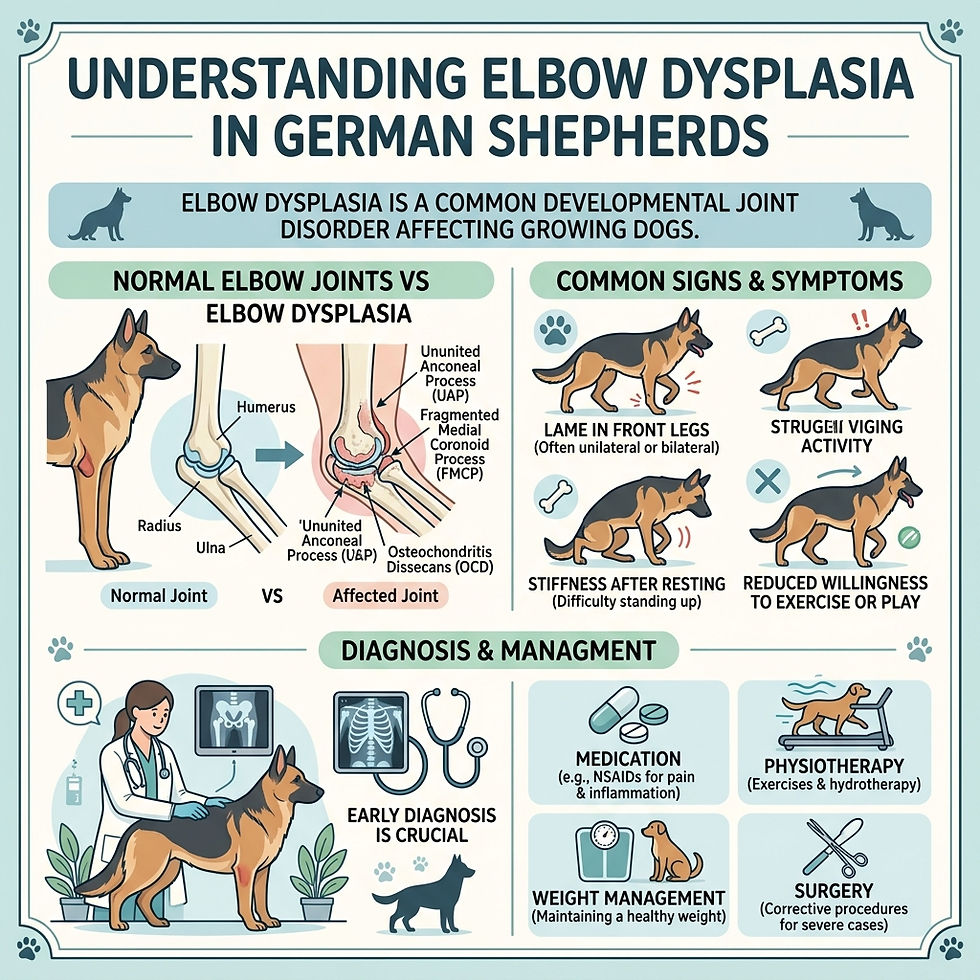
Elbow dysplasia is another developmental joint disorder that may affect growing German Shepherds.
Dogs may show lameness in the front legs, stiffness after resting, or reduced willingness to exercise.
Early diagnosis allows appropriate management, which may include medication, physiotherapy, weight management, or surgery.
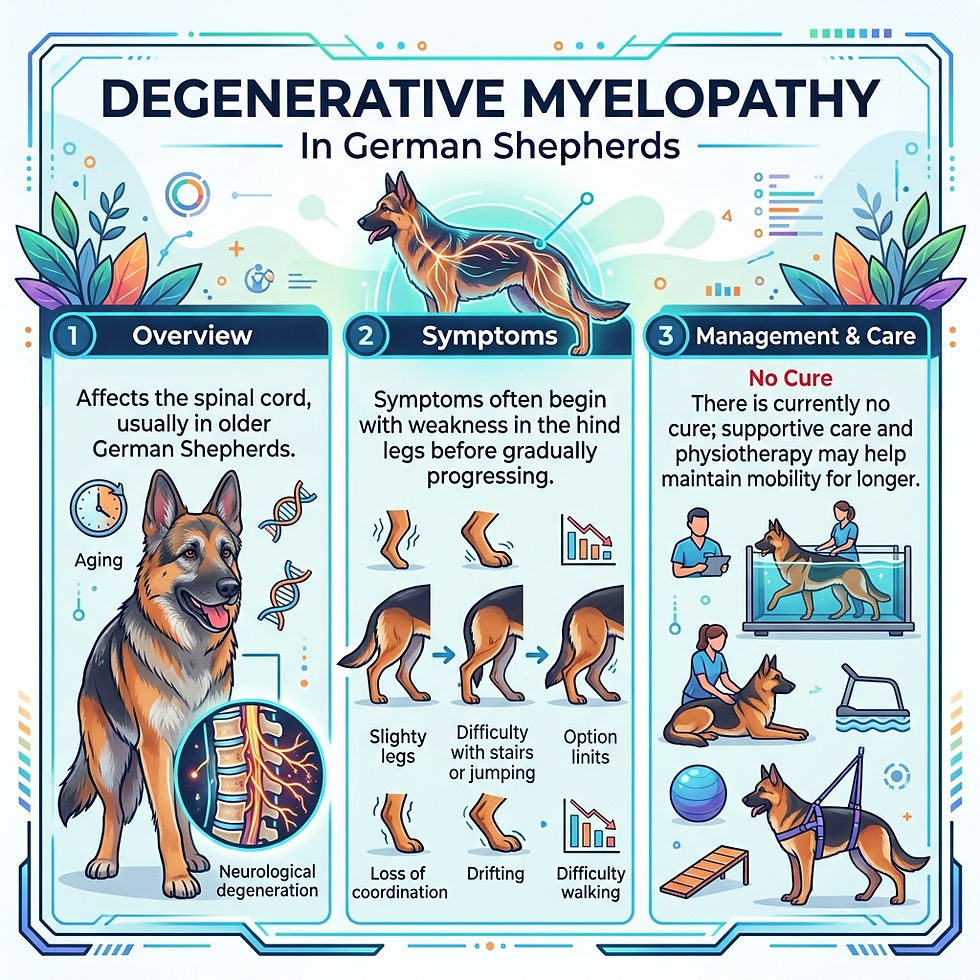
Degenerative Myelopathy
Affects the spinal cord, usually in older German Shepherds.
Symptoms often begin with weakness in the hind legs before gradually progressing.
There is currently no cure; supportive care and physiotherapy may help maintain mobility for longer.
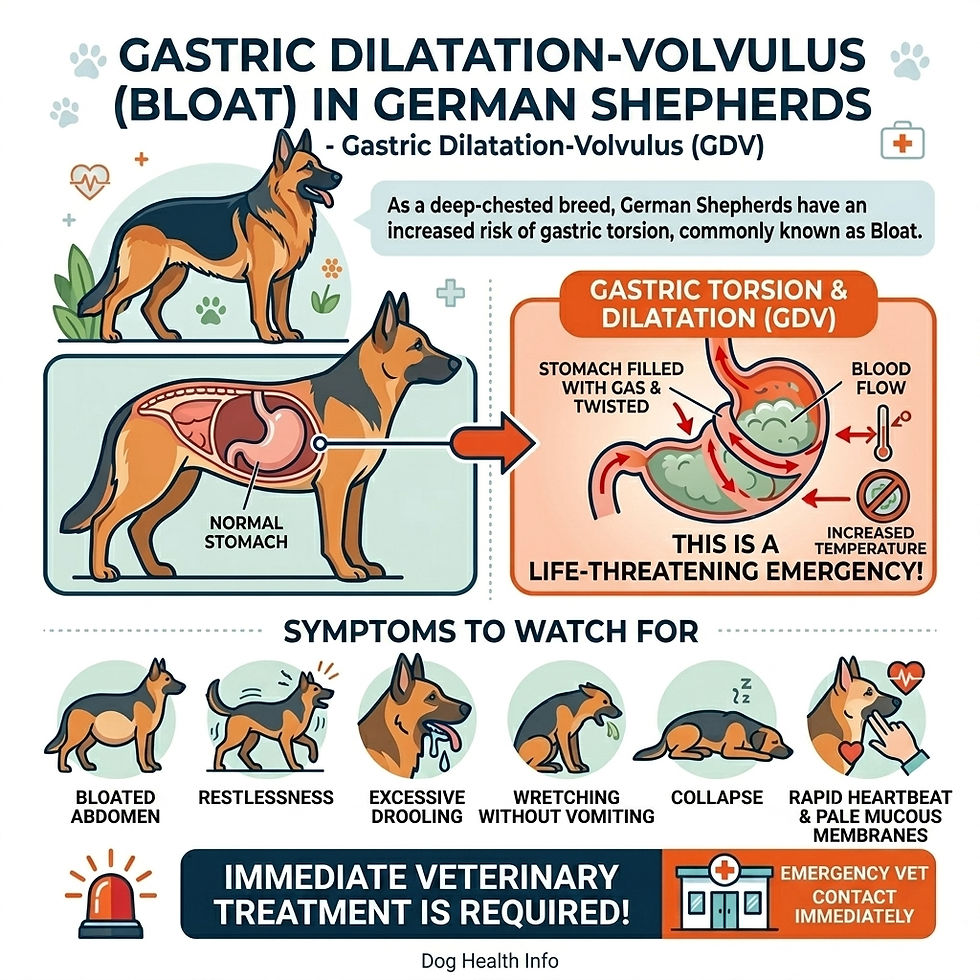
Gastric Dilatation-Volvulus (Bloat)
As a deep-chested breed, German Shepherds have an increased risk of gastric dilatation-volvulus, commonly known as bloat.
This is a life-threatening emergency that occurs when the stomach fills with gas and twists.
Immediate veterinary treatment is essential.
Signs include:
Distended abdomen
Restlessness
Excessive drooling
Retching without producing vomit
Collapse
Arthritis
As German Shepherds age, arthritis can become increasingly common.
Maintaining a lean body condition, providing appropriate exercise, and using joint-support supplements recommended by a veterinarian may help preserve mobility.
Allergies
Some German Shepherds may develop environmental or food-related allergies.
Symptoms may include:
Itchy skin
Ear infections
Paw licking
Red skin
Hair loss
Veterinary investigation can identify the underlying cause and determine suitable treatment.
German Shepherd Food and Diet
Providing a balanced, nutritious diet is a most important aspect of German Shepherd care.
Good nutrition supports healthy growth, strong muscles, joint health, immune function, brain development, and overall wellbeing throughout every stage of life.
Choose a complete, high-quality dog food that meets UK nutritional guidelines and is appropriate for your dog's age, size, and activity level.
Feeding German Shepherd Puppies
German Shepherd puppies grow rapidly during their first year, making correct nutrition especially important.
Puppies need to be fed a food specifically formulated for large-breed puppies.
These diets are carefully balanced to support steady bone and joint development while helping to reduce the risk of skeletal problems associated with rapid growth.
Young puppies generally require:
8–12 weeks: Four meals daily
3–6 months: Three meals daily
6–12 months: Two meals daily
Fresh drinking water should always be available.
Avoid excessive treats or overfeeding, as carrying extra weight places unnecessary strain on developing joints.
Feeding Adult German Shepherds
Adult German Shepherds require a balanced diet rich in:
High-quality animal protein
Healthy fats
Digestible carbohydrates
Fibre
Vitamins
Minerals
Omega-3 and Omega-6 fatty acids
Most healthy adults thrive on two meals per day.
Daily food intake varies according to age, activity level, metabolism, and the calorie content of the chosen food.
Always follow the manufacturer's feeding guide and adjust portions to maintain an ideal body condition.
Avoid exercising your German Shepherd immediately before or after meals to help reduce the risk of bloat.
Feeding Senior German Shepherds
As German Shepherds enter their senior years, their metabolism often slows and activity levels decrease.
Senior diets usually contain:
Moderate calories
High-quality protein
Added joint-support ingredients
Easily digestible fibre
Vitamins and antioxidants
Older dogs may also benefit from foods containing glucosamine, chondroitin, and omega-3 fatty acids to help support ageing joints.
Regular weight checks become increasingly important, as obesity can worsen arthritis and reduce mobility.
Building a Healthy Lifestyle
Combining excellent nutrition with regular grooming, routine veterinary care, appropriate exercise, and early health screening gives your German Shepherd the best opportunity to enjoy a long, active, and happy life.
Training a German Shepherd
Training is one of the most rewarding aspects of owning a German Shepherd.
German Shepherds are highly intelligent dogs that quickly pick up new commands, think through challenges, and adjust well to many different roles and activities.
Their intelligence, eagerness to please, and strong work ethic make them highly trainable, but they also require consistent guidance and clear boundaries from an early age.
Training should begin as soon as your German Shepherd puppy arrives home.
Puppies are naturally curious and absorb new experiences quickly, making early training an excellent opportunity to demonstrate good manners and strengthen the bond between dog and owner.
Start with the Basics
Begin with essential obedience commands, including:
Sit
Stay
Down
Come
Leave
Heel
Wait
Keep training sessions short, enjoyable, and rewarding.
Five- to ten-minute sessions repeated several times a day are often more effective than one long lesson.
The best training method for German Shepherds is positive reinforcement.
Reward good behaviours with praise, healthy treats, or toys, and add playtime to encourage your dog to repeat them.
This approach helps build confidence while creating a positive learning experience.
Consistency is Essential
German Shepherds thrive on routine and clear expectations.
Every member of the household should use the same commands and reward good behaviour consistently.
Mixed messages can confuse even the most intelligent dog.
Set boundaries early and reinforce them calmly.
Whether it's waiting at doorways, walking politely on a lead, or greeting visitors without jumping up, consistency helps your German Shepherd understand what is expected.
Provide Plenty of Mental Stimulation
A bored German Shepherd is likely to invent its own entertainment, which may include chewing furniture, digging, barking excessively, or finding creative ways to escape the garden.
Keeping your dog's mind engaged is just as important as keeping their body active.
Excellent activities include:
Puzzle feeders
Scent work
Hide-and-seek games
Advanced obedience
Tracking exercises
Agility training
Interactive toys
Retrieval games
These activities challenge the mind while strengthening the relationship between owner and dog.
Lead Training
German Shepherds grow into powerful dogs, making loose-lead walking an important skill to teach from puppyhood.
Reward your puppy for walking beside you without pulling and gradually introduce distractions as their confidence grows.
Avoid punishment-based training techniques.
Harsh corrections or physical punishment can damage trust and may encourage fear or anxiety.
German Shepherds respond best to calm, patient, reward-based methods.
Advanced Training
Once the basics are mastered, many German Shepherds enjoy progressing to more advanced activities.
Their intelligence allows them to excel in:
Competitive obedience
Agility
Tracking
Search and rescue
Canicross
Scent detection
Working trials
Rally obedience
Assistance dog work
Regular training throughout adulthood keeps both mind and body active while reinforcing good behaviour.
Socialising a German Shepherd
Early German Shepherd socialisation is one of the most important investments you can make in your dog's future behaviour.
Proper socialisation helps puppies grow into confident, calm, and well-mannered adults that are comfortable in a wide range of situations.
The ideal socialisation period begins during puppyhood and continues throughout adolescence and adulthood.
Introduce New Experiences Gradually
Allow your puppy to experience:
Different people
Children of various ages
Other vaccinated dogs
Friendly cats and household pets
Traffic
Public transport
Cyclists
Joggers
Wheelchairs
Umbrellas
Vacuum cleaners
Household appliances
Busy streets
Parks
Veterinary clinics
Grooming environments
Each new experience should be introduced calmly and positively, allowing your puppy to explore at their own pace.
Puppy Training Classes
Attending well-run puppy classes provides valuable opportunities to learn basic obedience while interacting safely with other dogs and people.
Choose classes that use positive reinforcement methods and experienced instructors who understand canine behaviour.
Continue Socialisation into Adulthood
Socialisation should not stop once puppyhood ends.
Continue exposing your German Shepherd to new environments, visitors, different walking routes, and everyday situations throughout life.
Ongoing positive experiences help maintain confidence and reduce the likelihood of fear-based reactions.
Managing Protective Instincts
German Shepherds naturally possess protective instincts.
While this is one of the breed's most admired qualities, owners should ensure these instincts develop appropriately through responsible training and socialisation.
A well-socialised German Shepherd should be confident, observant, and capable of distinguishing between normal daily events and genuine threats.
They should never be encouraged to display unnecessary aggression.
Why Choose a Reputable German Shepherd Breeder?
Choosing a responsible German Shepherd breeder is one of the most important decisions prospective owners will make.
A responsible breeder prioritises raising healthy, well-socialised puppies with steady temperaments, focusing on their welfare rather than breeding to make money.
Although purchasing from a responsible breeder may initially cost more, it often reduces the risk of inherited health conditions, behavioural problems, and unexpected veterinary expenses later in life.
Health Testing
Responsible breeders carry out recommended health screening on breeding dogs before mating.
Health tests commonly include screening for:
Hip Dysplasia
Elbow Dysplasia
Degenerative Myelopathy (DNA testing)
Eye health where appropriate
Always ask to see copies of the parents' health certificates and discuss the results before committing to a puppy.
Meet the Puppy's Mother
A reputable breeder should willingly allow you to meet the puppy's mother.
She should appear healthy, relaxed, friendly, and comfortable around people.
Observing the mother's temperament can provide useful insight into the likely behaviour of the puppies.
Early Socialisation
Good breeders begin socialising puppies from an early age by introducing them to everyday household sounds, gentle handling, different surfaces, toys, and positive human interaction.
This early foundation helps puppies settle more confidently into their new homes.
Ask Plenty of Questions
Responsible breeders will happily answer questions regarding:
Health testing
Vaccinations
Worming treatments
Microchipping
Diet
Toilet training progress
Socialisation
Grooming
Exercise guidance
Equally, expect the breeder to ask you questions.
A good breeder will do this to ensure their puppies are going to suitable homes.
Avoid Puppy Farms
Avoid purchasing puppies from puppy farms or sellers unwilling to provide health documentation or allow you to see where the puppies have been raised.
Warning signs include:
Multiple litters available at once
Pressure to make an immediate purchase
Reluctance to answer questions
Puppies appearing fearful or unwell.
Refusal to let you meet the mother
No evidence of health testing
Taking time to find a responsible breeder greatly increases the likelihood of bringing home a healthy, well-adjusted German Shepherd puppy.
Our Final Thoughts
The German Shepherd is one of the world's most respected and versatile dog breeds. Combining intelligence, loyalty, courage, athleticism, and an unwavering desire to work alongside people, this remarkable breed excels as both a devoted family companion and an outstanding working dog.
Throughout this guide, we have explored the German Shepherd's fascinating history, distinctive appearance, affectionate personality, grooming requirements, common health concerns, nutritional needs, and the importance of training and socialisation.
All of these elements are vital in supporting your dog's growth into a confident, healthy, and well-adjusted adult.
Owning a German Shepherd is a long-term commitment that requires time, patience, consistency, and dedication.
These highly intelligent dogs flourish when they receive regular exercise, mental stimulation, structured training, and plenty of companionship. In return, they reward their owners with remarkable loyalty, unwavering devotion, and a lifelong partnership built on trust and mutual respect.
Whether you are welcoming your first German Shepherd puppy or adding another member to your family, responsible ownership begins with education.
Choosing a reputable breeder, providing high-quality nutrition, maintaining a regular grooming routine, attending routine veterinary check-ups, and investing in ongoing training will give your dog the best opportunity to live a long, healthy, and fulfilling life.
For active individuals and families prepared to meet their physical and mental needs, the German Shepherd is an exceptional companion whose intelligence, confidence, and affectionate nature continue to make it one of the UK's most popular and admired dog breeds.


Comments