

A Comprehensive Guide to the Border Collie

Updated: Jul 29

The Border Collie is one of the hardest-working and most intelligent dog breeds in the world.
Renowned for its exceptional problem-solving skills, boundless energy, and unwavering loyalty, this remarkable breed has become a favourite among farmers, dog sport enthusiasts, and active families alike.
Whether you're considering bringing home a Border Collie puppy or simply want to learn more about this incredible breed, this Comprehensive Guide covers everything you need to know.
Let's Meet the Border Collie
The Border Collie is a working dog.
It is medium-sized and was originally developed to manage sheep across the rugged borderlands between England and Scotland.
Bred for intelligence, stamina, and remarkable responsiveness, the Border Collie excels in tasks requiring quick thinking and precision.
Regarded around the world as the smartest of all dog breeds, Border Collies thrive when they have both physical exercise and mental stimulation.
Their eagerness to learn, combined with an outstanding work ethic, makes them exceptional companions for active owners who can meet their demanding lifestyle.
The History of the Border Collie
The Origins of the Border Collie
The history of the Border Collie stretches back hundreds of years to the rugged hills separating England and Scotland.
Farmers required a dog capable of controlling large flocks of sheep across steep, rocky terrain while responding instantly to whistles and hand signals.
Rather than breeding for appearance, early shepherds selected dogs based purely on their intelligence, stamina, obedience, and herding instinct.
This careful breeding created one of the world's most capable working dogs.
The breed's name comes from the geographical border region where these exceptional dogs were developed.
Did you know that "Collie" is believed to derive from an old Scottish word referring to sheepdogs?
Old Hemp – The Foundation of the Modern Border Collie
Much of today's Border Collie bloodline can be traced back to a remarkable working dog named Old Hemp, born in 1893.
Unlike many herding dogs of the time, 'Old Hemp' worked sheep quietly using an intense stare, now famously known as the "eye."
His calm yet highly effective herding style impressed shepherds throughout Britain, leading to widespread breeding from his lineage.
Many modern Border Collies still display the same natural herding instincts that made Old Hemp legendary.

From Working Farms to Worldwide Fame
Although the Border Collie was originally bred for livestock management, its intelligence soon attracted attention beyond agriculture.
Today, Border Collies compete successfully in:
Agility competitions
Obedience trials
Flyball
Disc dog competitions
Sheepdog trials
Search and rescue operations
Detection work
Assistance and therapy roles
Their versatility has made the Border Collie one of the most admired working breeds worldwide.
Border Collie Personality and Temperament
The Intelligent Border Collie
When discussing Border Collie personality, intelligence is impossible to ignore.
Many canine behaviour experts consider the Border Collie to possess exceptional learning ability, capable of understanding hundreds of words, commands, and object names.
Their ability to assess situations independently makes them outstanding problem solvers.
However, this remarkable intelligence also means they become bored very easily if left without meaningful activities.
Highly Energetic Dogs
The Border Collie is not suited to a sedentary lifestyle.
These dogs were bred to work all day, often covering many miles while herding livestock.
As family pets, they still require extensive daily exercise and mental stimulation.
Without adequate stimulation, a Border Collie may develop undesirable behaviours, including:
Excessive barking
Digging
Chasing moving objects
Herding children or other pets
Destructive chewing
Escaping from gardens
Providing structured exercise and enrichment helps prevent these issues.
Loyal and Affectionate Family Companions
Despite their working background, Border Collies form incredibly strong bonds with their families.
They are affectionate without being overly demanding and often develop a close attachment to one particular family member while remaining devoted to everyone in the household.
Many Border Collies enjoy cuddles after an active day, although they are generally happier when given a purpose or task to complete.
Are Border Collies Good with Children?
Well-trained and properly socialised Border Collies can make wonderful family dogs.
However, their natural herding instinct may encourage them to chase or gently nip at running children, particularly during play.
Teaching children to be gentle and respectful with dogs—and supervising them during every interaction—helps create a safe, positive relationship.
Border Collies with Other Pets
Border Collies usually live peacefully alongside other dogs when introduced correctly.
Cats and smaller animals can also coexist successfully, although the breed's instinct to chase moving objects means early socialisation is particularly important.
Living with a Border Collie
Is the Border Collie the Right Dog for You?
Before choosing a Border Collie puppy, it's essential to understand the breed's considerable exercise and mental stimulation requirements.
A Border Collie is ideal for:
Active individuals
Hiking enthusiasts
Runners
Farmers
Dog sports competitors
Families who enjoy outdoor adventures
They are generally less suited to households where they would spend long hours alone or receive only occasional walks.
The Ideal Home for a Border Collie
Border Collies thrive in homes with secure gardens and plenty of opportunities for daily exercise.
While they can adapt to various living environments, including urban homes, they require owners committed to providing multiple daily walks, structured training sessions, puzzle toys, and mentally stimulating activities.
Living in the countryside is not essential, but an active lifestyle certainly is.
Can Border Collies Be Left Alone?
A Border Collie will form a strong bond with its family and generally dislikes prolonged isolation.
Leaving them alone for extended periods may contribute to boredom, frustration, separation-related behaviours, and destructive habits.
Gradual independence training from puppyhood can help build confidence, but they remain a breed that thrives on companionship and regular interaction.
Daily Life with a Border Collie
Living with a Border Collie is rewarding, entertaining, and often demanding.
Owners quickly discover that these dogs enjoy participating in every aspect of family life.
Whether learning new tricks, joining countryside walks, competing in agility classes, or simply accompanying their owners on adventures, Border Collies flourish when included in daily activities.
Their enthusiasm, intelligence, and eagerness to please make training enjoyable, but they also require consistency, patience, and ongoing mental challenges throughout their lives.
Why the Border Collie Continues to Captivate Dog Lovers
The Border Collie remains one of the most respected and admired dog breeds because it combines extraordinary intelligence with loyalty, athleticism, and an exceptional willingness to work.
For owners who can provide sufficient exercise, training, and companionship, the Border Collie offers an incredibly rewarding partnership that few other breeds can match.
Whether living as a hardworking sheepdog, a champion agility competitor, or a cherished family companion, the Border Collie continues to prove why it is regarded as one of the finest working dogs ever developed.
Border Collie Appearance and Size
Border Collie Appearance
The Border Collie is a medium-sized, well-balanced breed built for speed, endurance, and agility.
Rather than appearing bulky or heavy, these dogs possess a lean, muscular frame that allows them to work tirelessly across fields and rugged countryside.
One of the breed's most distinctive features is its alert expression.
Their intelligent eyes seem to assess every situation, while their famous "herding eye" enables them to control livestock with little more than a focused stare.
The ears are medium-sized and may stand fully erect or semi-erect, giving the Border Collie its inquisitive appearance.
Their moderately long tail is well feathered and usually carried low, rising slightly when the dog is excited or working.
Every movement of the Border Collie reflects purpose, efficiency, and athleticism, making them one of the most agile and working dog breeds.
Border Collie Coat Types . The Border Collie coat comes in two recognised varieties:
Rough Coat – Medium to long in length with feathering on the chest, legs, tail, and underbody. This is the variety most people recognise.
Smooth Coat – Shorter, closer-fitting hair that still provides excellent protection against the weather while requiring slightly less grooming.
Both coat varieties have a thick, weatherproof double layer: a soft undercoat for insulation and a sturdier topcoat that sheds dirt and water.
Border Collie Colours
Although black and white remains the most recognisable colour combination, Border Collies come in a remarkable range of colours and patterns.
Common Border Collie colours include:
Black and white
Red and white
Blue merle
Red merle
Chocolate and white
Lilac
Sable
Gold
Slate blue
Brindle
Tricolour combinations
Some dogs may also display tan points, white markings, or ticking, making every Border Collie unique in appearance.
Border Collie Breed Overview
The Border Collie size reflects the breed's working heritage, providing the ideal balance of speed, stamina, and agility.
Even though females are often a little smaller than males, both sexes are very active and need regular exercise to keep their weight in a healthy range.
Height: 46–56 cm
Weight: 14–22 kg
Coat Types: Smooth coat or rough coat
Coat Colours: Black and white, red and white, blue merle, chocolate, lilac, sable, tricolour, and many more recognised colour combinations
Sheds: Yes
Grooming Needs: High
Personality: Alert, energetic, athletic, intelligent, keen, loyal, responsive, and tenacious.
Exercise Requirements: 90 to 120 minutes per day plus mental stimulation.
Energy Level: Extremely High
Trainability: Exceptional
Tendency to Bark: Yes, more so if they are lacking Mental Stimulation.
Tendency to Dig: Yes, especially if they do not get enough physical and mental exercise.
Tendency to Drool: Low
Tendency to Snore: Low
Social Attention Needs: Very High
Accommodation: A spacious house in a rural or suburban setting with access to a large, secure yard.
Ideal Owner: A highly active person who is dedicated to a Collie's needs and who is experienced in dog training.
Life Expectancy: 12–15 years plus.
Royal Kennel Club(UK) Recognition: Pastoral Group
The American Kennel Club (AKC) Recognition: Herding Group
Border Collie Grooming Guide
Do Collies Need a Lot of Grooming?
Despite their beautiful coats, Border Collie grooming is relatively straightforward compared to many long-coated breeds.
Regular maintenance helps keep the coat healthy while reducing shedding and preventing tangles.
Because they possess a dense double coat, Border Collies naturally shed throughout the year, with much heavier moulting during spring and autumn.
Consistent grooming removes loose fur before it spreads around your home and also allows you to check your dog's skin for cuts, parasites, lumps, or signs of irritation.
Brushing a Border Collie
One of the most important aspects of Border Collie coat care is regular brushing.
Recommended brushing schedule:
Rough-coated Border Collies: Brush three to four times each week.
Smooth-coated Border Collies: Brush once or twice each week.
During seasonal moulting, Daily brushing is highly recommended.
Pay particular attention to areas where knots are more likely to develop, including:
Behind the ears
Around the neck
Under the front legs
The backs of the thighs
Around the tail feathers
Best grooming tools for a Border Collie.
Useful grooming equipment includes:
Slicker brush
Pin brush
Undercoat rake
Stainless steel comb
Grooming mitt for smooth-coated dogs
De-shedding tool (used carefully during heavy moulting)

Brush with a light touch to prevent skin irritation and to keep the protective topcoat from being harmed.
Bathing a Border Collie
A Border Collie rarely requires frequent bathing because its weather-resistant coat naturally sheds much of the dirt it collects outdoors.
Most healthy Border Collies only require a bath every eight to twelve weeks, unless they become particularly muddy or develop an unpleasant odour.
Use a high-quality dog shampoo formulated for sensitive canine skin.
Never use human shampoo on your dog, as it can upset the skin's natural pH and cause dryness and irritation.
After bathing:
Rinse thoroughly to remove all shampoo residue.
Towel-dry before using a pet-safe dryer on a cool or low-heat setting, if necessary.
Ensure the coat is completely dry, especially during colder weather.
Ear Care
Check your Border Collie's ears every week to help prevent infections.
Healthy ears should be clean, pale pink, and free from unpleasant odours.
Using a veterinary-approved ear cleaner:
Moisten a cotton pad or soft gauze.
Gently wipe the inside of the ear and the visible entrance to the ear canal.
Never insert cotton buds or any object deep into the ear canal.
Seek veterinary advice if you notice excessive wax, redness, swelling, discharge, or persistent scratching.
Eye Care
Although Border Collies generally have healthy eyes, routine checks are worthwhile.
Use cooled boiled water or a pet-safe eye cleanser, with soft cotton wool, to gently remove any debris around the eyes.
Persistent watering, cloudiness, redness, or discharge should always be examined by your veterinary surgeon.
Dental Care.
Good oral hygiene is essential throughout your Border Collie's life.
Brush your dog's teeth at least 3 to 4 times a week, although daily brushing provides the greatest protection against plaque and gum disease.
Always use:
Dog-specific toothpaste
A canine toothbrush or soft finger brush
Avoid using human toothpaste because it contains substances that may be unsafe for dogs to ingest.
Dental chews, specially formulated dental diets, and veterinary dental checks can also help support good oral health.
Nail Care
Most Border Collies naturally wear down their nails through regular exercise.
However, inspect them every few weeks and trim them when they begin clicking on hard floors.
When clipping nails:
Use sharp dog nail clippers.
Trim only the tip of each nail.
Do not cut into the quick, which contains blood vessels and nerves.
If the quick is accidentally cut, apply styptic powder or cornflour to help stop the bleeding before comforting your dog.

Border Collie Health and Common Issues
Is the Border Collie a Healthy Breed?
The Border Collie is typically a robust, long-lived breed, and with great care, many live 12–15 years or even longer.
However, like all pedigree dogs, Border Collies can inherit certain health conditions.
Buying from a responsible breeder who performs appropriate health testing greatly reduces the likelihood of inherited diseases.
Regular veterinary check-ups, vaccinations, parasite prevention, proper nutrition, and daily exercise all contribute to lifelong health.
Common Border Collie Health Problems
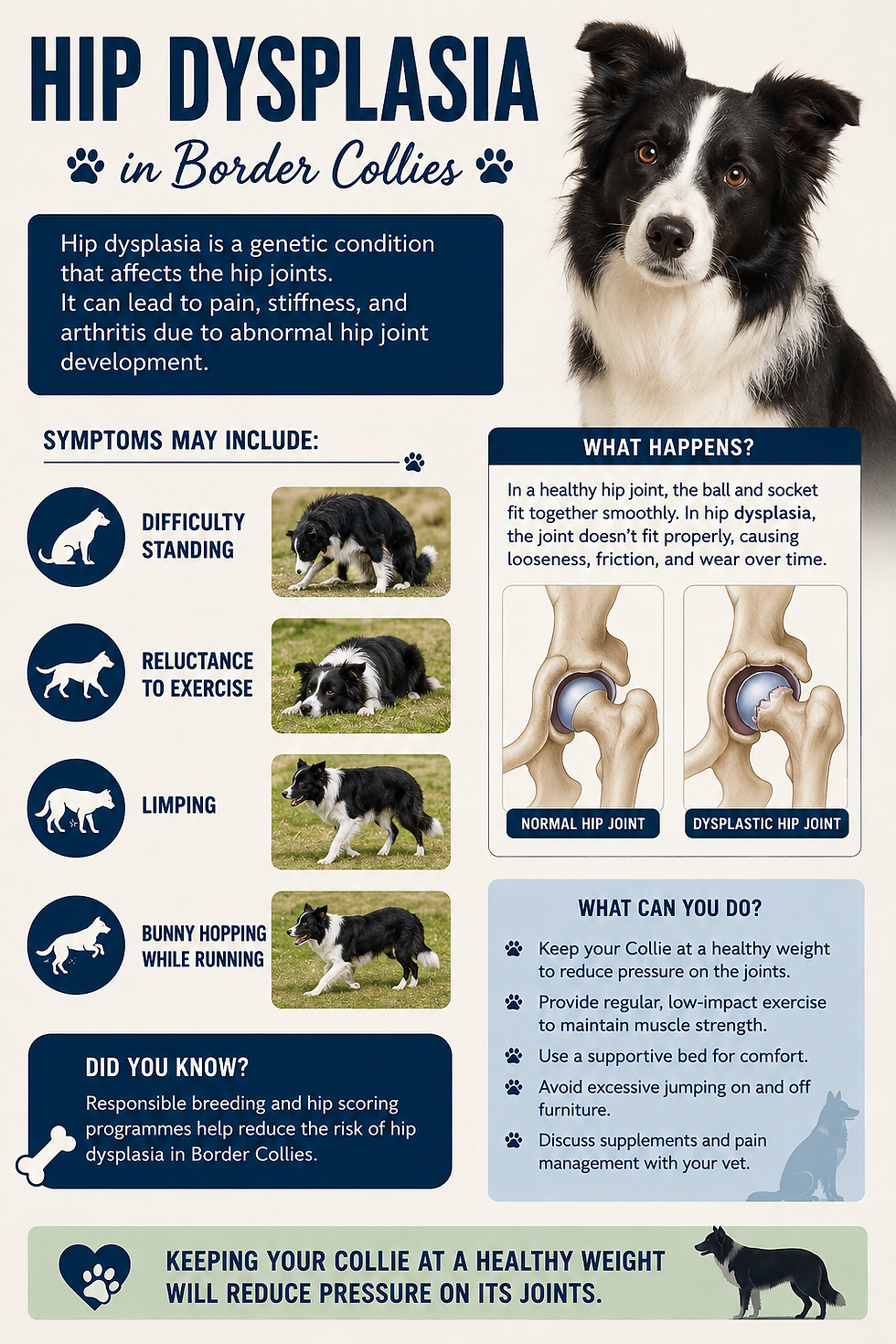
Hip Dysplasia
It can lead to pain, stiffness, and arthritis due to abnormal hip joint development.
Symptoms may include:
Difficulty standing
Reluctance to exercise
Limping
Bunny hopping while running
Collie Eye Anomaly (CEA)
It is an inherited condition affecting eye development.
Many dogs experience only mild vision changes, while severe cases may affect eyesight more significantly.
Responsible breeders routinely screen breeding dogs.
Progressive Retinal Atrophy (PRA)
This is a genetic eye disease that gradually causes vision loss.
Although there is currently no cure, DNA testing helps responsible breeders reduce its occurrence.
Epilepsy
Some Border Collies may inherit epilepsy, resulting in recurring seizures.
Many affected dogs enjoy an excellent quality of life with lifelong veterinary management and medication where required.
Exercise-Induced Collapse (Rare)
A small number of Border Collies may experience episodes of weakness or collapse following extremely strenuous activity.
Veterinary assessment is essential if this behaviour is observed.
Osteochondritis Dissecans (OCD)
This developmental joint disorder can affect growing puppies, particularly if growth is too rapid or exercise is excessive.
Feeding an appropriate puppy diet and avoiding repetitive high-impact exercise helps support healthy joint development.
Border Collie Food and Diet
The Best Diet for a Border Collie.
Providing the right Border Collie diet supports healthy growth, strong muscles, an excellent coat, and sustained energy levels.
Choose a complete, high-quality dog food that lists animal-based protein as the primary ingredient.
A balanced diet should include:
High-quality animal protein
Healthy fats, which include Omega-6 and Omega-3 fatty acids
Digestible carbohydrates
Fibre for digestive health
Vitamins and minerals
Fresh drinking water at all times
Avoid feeding excessive table scraps, fatty foods, chocolate, onions, grapes, raisins, xylitol, cooked bones, and other foods known to be toxic to dogs.
Feeding a Border Collie Puppy
A growing Border Collie puppy requires carefully balanced nutrition to support healthy bone and muscle development.
Choose a complete puppy food specifically formulated for medium-sized breeds.
Feeding guide
8–12 weeks: Four meals per day.
3–6 months: Three meals per day.
6–12 months: Two meals per day.
Avoid overfeeding, as rapid weight gain can place unnecessary strain on developing joints.
Feeding an Adult Border Collie
An active adult Border Collie typically thrives on two balanced meals each day.
The exact portion size depends upon:
Age
Weight
Activity level
Metabolism
Type of food being fed.
Highly active working Border Collies generally require more calories than companion dogs with a less demanding lifestyle.
Monitor body condition regularly and adjust portions accordingly to maintain a healthy weight.
Feeding a Senior Border Collie
As your senior Border Collie grows older, its metabolism gradually slows, and activity levels may decrease.
Older dogs often benefit from specially formulated senior diets containing:
Slightly fewer calories
Easily digestible protein
Joint-supporting nutrients such as glucosamine and chondroitin
Omega-3 fatty acids
Added antioxidants
Controlled phosphorus levels to support kidney health
Continue feeding two meals daily unless your veterinary surgeon recommends otherwise.
Regular weight monitoring becomes increasingly important during the senior years to reduce stress on ageing joints and support overall wellbeing.

Keeping Your Border Collie Healthy Through Proper Care
A healthy Border Collie relies upon far more than exercise alone.
Regular grooming, preventative healthcare, routine veterinary examinations, and a good diet all play vital roles in helping this intelligent and energetic breed thrive.
By meeting your Border Collie's physical, nutritional, and healthcare needs at every stage of life, you can enjoy many happy years with a loyal, active, and devoted companion.
Training a Border Collie
Is the Border Collie Easy to Train?
The Border Collie is often considered the benchmark for canine intelligence.
Bred for generations to work closely with shepherds, these dogs are capable of learning new commands remarkably quickly and enjoy having a job to do.
For this reason, Border Collie training is usually highly rewarding.
However, their intelligence also means they can become bored if training lacks variety or challenge.
Repeating the same exercises too often may cause them to lose interest, so sessions should remain engaging, positive, and mentally stimulating.
Training should begin as soon as your Border Collie puppy arrives home.
Early lessons help establish good habits while strengthening the bond between dog and owner.
Using Positive Reinforcement
The most effective method of Border Collie obedience training is positive reinforcement.
Reward desirable behaviour with:
Small training treats
Verbal praise
Toys
Games
Affection
This encourages your Border Collie to repeat behaviours that result in positive outcomes.
Avoid punishment, shouting, or harsh corrections.
These techniques can damage your dog's confidence and may create anxiety or unwanted behavioural issues.
Essential Commands Every Border Collie Should Learn
Teaching reliable basic commands provides the foundation for good manners and safety.
Begin with:
Sit
Stay
Down
Come
Leave
Heel
Wait
Once these commands are well established, Border Collies are often able to progress to advanced obedience, distance work, trick training, and complex tasks with ease.
Recall Training
Reliable recall is one of the most important aspects of Border Collie training.
Because Border Collies have a strong instinct to chase moving objects, they should only be allowed off-lead once their recall is dependable.
Practise in secure enclosed areas before gradually introducing more distracting environments.
Always reward your dog generously for returning promptly when called.
Lead Training
Lead manners should be introduced from puppyhood.
Teach your Border Collie to walk calmly beside you using rewards and encouragement rather than pulling or jerking the lead.
Loose-lead walking makes daily exercise more enjoyable for both the owner and the dog.
Mental Stimulation is Essential
One of the biggest mistakes new owners make is assuming that physical exercise alone will satisfy a Border Collie.
In reality, their minds need just as much exercise as their bodies.
Excellent enrichment activities include:
Puzzle feeders
Interactive toys
Hide-and-seek games
Scent work
Trick training
Agility
Flyball
Obedience classes
Herding activities where appropriate
Keeping their minds occupied helps prevent boredom-related behaviours such as excessive barking, chewing, digging, and escaping.
Common Border Collie Behaviour Challenges
Without sufficient exercise and mental stimulation, some Border Collies may develop unwanted habits.
These can include:
Chasing bicycles or cars
Herding children
Nipping at heels
Excessive barking
Digging
Destructive chewing
Obsessive behaviours, such as repeatedly chasing shadows or reflections
Most behavioural concerns can be significantly reduced through regular exercise, consistent training, and plenty of enrichment.
Socialising a Border Collie
Why Early Socialisation Matters
Proper Border Collie socialisation is just as important as obedience training.
The critical socialisation period occurs during the first few months of a puppy's life.
Positive experiences during this time help shape a confident, friendly, and adaptable adult dog.
Puppies that miss these experiences may become fearful or overly cautious in unfamiliar situations.
Introducing New Experiences
Gradually expose your Border Collie puppy to a wide variety of everyday situations, including:
People of different ages
Children
Visitors to your home
Other vaccinated dogs
Traffic
Bicycles
Livestock
Public transport
Different walking surfaces
Household noises
Veterinary clinics
Grooming procedures
Always ensure each experience is calm, controlled, and rewarding.
Meeting Other Dogs
Well-managed interactions with friendly, vaccinated dogs teach valuable canine communication skills.
Puppy socialisation classes run by qualified trainers provide safe opportunities for supervised play while helping owners build confidence in handling their new puppy.
Children and Family Life
A well-socialised Border Collie usually becomes a devoted family companion.
However, because of their natural herding instincts, they may occasionally attempt to gather running children by circling or gently nipping at their heels.
Teaching children to interact respectfully with dogs, alongside consistent training, helps encourage positive relationships.
Preventing Separation Problems
Border Collies develop strong bonds with their owners and may struggle if left alone for long periods.
Help your puppy build confidence by gradually introducing short periods of independence.
Provide interactive toys and maintain a predictable routine to encourage relaxation when alone.
Why Choose a Reputable Border Collie Breeder?
The Importance of Responsible Breeding
Selecting a reputable Border Collie breeder is one of the most important decisions prospective owners can make.
Responsible breeders prioritise health, temperament, and welfare above appearance or profit.
Their aim is to raise healthy, confident puppies that grow into loving, lifelong companions.
Choosing a carefully bred puppy significantly increases the likelihood of owning a healthy, confident Border Collie.
Health Testing
Responsible breeders should conduct appropriate health screenings for their breeding dogs to help reduce inherited conditions.
Health testing may include screening for:
Hip Dysplasia
Collie Eye Anomaly (CEA)
Progressive Retinal Atrophy (PRA)
DNA-tested inherited conditions relevant to the breed
Ask to see copies of health certificates before committing to a puppy.
Visit the Puppies
Whenever possible, visit the breeder in person.
Observe:
The cleanliness of the environment
The temperament of the puppies
The temperament of the mother
Puppy confidence
General health
Living conditions
Healthy puppies should appear bright, curious, clean, and well cared for.
Avoid purchasing puppies from pet shops, online sellers unwilling to answer questions, or anyone reluctant to let you meet the puppies with their mother.
Questions a Good Breeder Will Ask You
Responsible breeders are equally interested in ensuring their puppies go to suitable homes.
Expect questions about:
Your lifestyle
Previous dog ownership
Working hours
Garden security
Exercise plans
Training intentions
Family members
Other pets
A breeder who asks thoughtful questions demonstrates a genuine commitment to the long-term welfare of their puppies.
Ongoing Support
Many responsible breeders remain available throughout the dog's lifetime, offering advice on feeding, training, grooming, and health whenever needed.
This continued support can be invaluable, particularly for first-time Border Collie owners.
Our Final Thoughts
The Border Collie is an extraordinary breed that combines intelligence, athleticism, loyalty, and an unrivalled enthusiasm for learning.
Originally bred to herd sheep across the challenging landscapes of the Anglo-Scottish border, today's Border Collie continues to excel as both a hardworking partner and a much-loved family companion.
However, this remarkable breed is not suited to every household.
Border Collies flourish in homes where they receive plenty of daily exercise, structured training, mental enrichment, and regular companionship.
Owners who enjoy outdoor activities, dog sports, hiking, or advanced obedience training often find the breed an ideal match.
Throughout this comprehensive guide, we have explored the Border Collie's fascinating history, distinctive appearance, grooming requirements, common health concerns, nutritional needs, training techniques, and socialisation.
We have also highlighted the importance of choosing a responsible breeder to give your puppy the best possible start in life.
With consistent guidance, positive reinforcement, and an active lifestyle, the Border Collie rewards its owners with unwavering loyalty, remarkable intelligence, and years of companionship.
For those prepared to invest the necessary time and commitment, few breeds offer such a fulfilling partnership.
Frequently Asked Questions About the Border Collie
Are Border Collies good family dogs?
Yes. Well-trained and properly socialised Border Collies can make excellent family pets.
They generally thrive with active families who can provide plenty of exercise and mental stimulation.
How much exercise does a Border Collie need?
Most adult Border Collies require at least two hours of exercise each day, combined with training sessions, games, and mental enrichment.
Do Border Collies shed a lot?
Yes. Border Collies have a double coat.
Because of this, they shed throughout the year, with heavier moulting during spring and autumn.
Regular brushing helps manage loose hair.
Are Border Collies easy to train?
Yes. They are among the easiest dog breeds to train due to their exceptional intelligence and eagerness to learn.
Positive reinforcement and consistent training produce the best results.
Can Border Collies live in a flat?
Although possible, a flat is rarely an ideal environment unless the owner is exceptionally committed to providing extensive daily exercise, mental stimulation, and outdoor activities.


Comments