

A Comprehensive Guide to the English Pointer

The English Pointer is a fast, elegant gundog with a sharp nose, a strong work ethic, and a friendly home life when its needs are met.
This breed suits active homes that can offer space, training, and daily purpose.
It is not a couch-first dog.
It is a field-bred athlete with a soft, loyal side.
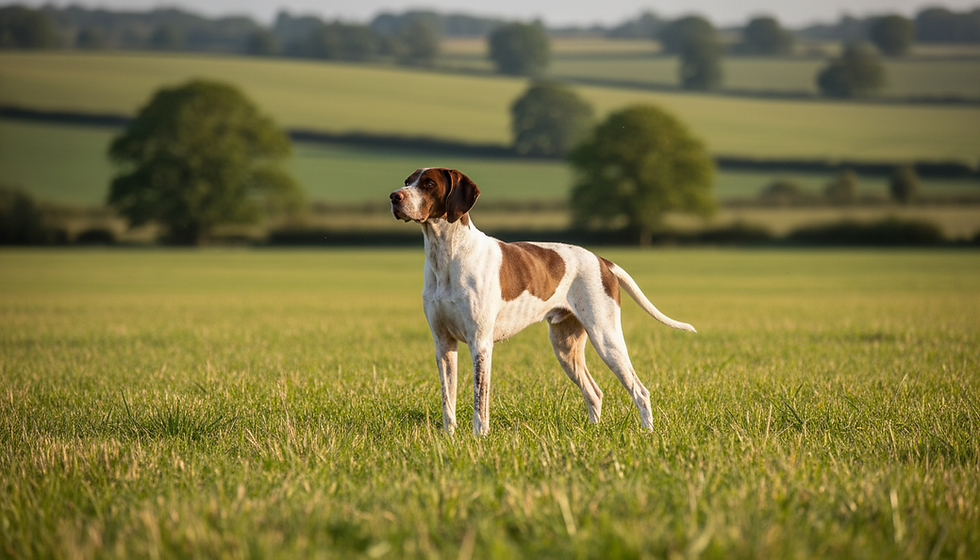
The English Pointer was built for speed, scent work, and open ground.
English Pointer breed overview for new owners
The English Pointer, often called the Pointer, is a medium to large sporting dog.
Its main job was to locate game birds and stand still in a clear pointing pose.
That pose helped hunters know where birds were hiding before the flush.
The breed remains one of the most recognisable pointing dogs worldwide.
It is known for speed, stamina, style, and a clean outline.
At home, a well-exercised English Pointer is usually affectionate, gentle, and sociable.
Outdoors, it becomes focused and driven.
That contrast is part of the appeal.
It can be calm indoors after proper exercise, but it rarely thrives with a slow or inactive routine.
The English Pointer dog breed can suit experienced owners, sporting homes, runners, hikers, and families who enjoy time outside.
It can also live well with children when raised and managed with care.
As with any dog, children need supervision and clear rules.
The breed is not a natural guard dog.
Many Pointers are friendly with visitors.
Some bark when someone arrives, but most are not naturally suspicious.
They tend to form close bonds with their people.
They can struggle if left alone for long hours with no exercise or mental outlet.
This is a key point for potential owners.
A Pointer is not difficult because it is stubborn.
It becomes difficult when underused.
English Pointer facts at a glance
Trait | Typical English Pointer profile |
Breed group | Gundog or sporting dog |
Original purpose | Locating and pointing game birds |
Size | Medium to large |
Coat | Short, smooth, and close-fitting |
Common colours | White with liver, lemon, orange, or black markings |
Energy level | High |
Trainability | Good with consistent, reward-based methods |
Temperament | Athletic, affectionate, sensitive, and alert |
Best suited to | Active homes with time for exercise and training |
Grooming needs | Low to moderate |
Watchdog ability | Moderate bark alert, low guarding instinct |
Avarage life span | 12 to 17 years |
Breed Group Royal Kennel Club (UK) American Kennel Club (AKC ) | Gun Dog Sporting Group |
English Pointer history and origin
The English Pointer developed in Britain as a specialised bird dog.
Its exact ancestry is not fully settled, but the breed likely drew influence from older pointing dogs in continental Europe, and British hunting breeds.
Spanish Pointers are often linked to the breed's early background.
Historical accounts of the Pointer's development also commonly mention Foxhounds, Greyhounds, Bloodhounds, and Setters.
Breeders wanted a dog that could cover ground quickly, detect scent, and freeze in place when it found game.
Before modern shotguns became common, pointing dogs helped hunters work more efficiently.
A dog that could mark a bird's location without rushing in had real value.
The English Pointer became known for its high head carriage, strong nose, and dramatic stance.
By the eighteenth and nineteenth centuries, the breed had a clear role in British field sports.
Pointers worked across open country where range and speed mattered.
The dog did not retrieve as its main task.
It found birds and held point.
Retrievers and other gundogs often handled later parts of the hunt.
This division of work shaped the Pointer's mind and body.
The breed had to be independent enough to search wide areas.
It also had to stay connected enough to work with a handler.
That balance still matters in pet homes.
A modern English Pointer may never work on game, but the instincts remain.
It may lock onto garden birds, scents in long grass, or movement far across a field.
It may stand still with one front paw lifted, tail level or raised, and body tight with focus.
This behaviour is not random.
It is the old job showing through.
English Pointer breed development in the show ring and field
Over time, English Pointers developed in both field and show settings.
Field lines often emphasise drive, range, speed, and endurance.
Show lines may place more emphasis on structure, outline, and breed type.
Both can make good companions in the right home.
The key is to understand the individual dog.
A field-bred pup from high-drive working parents may need serious exercise and training.
A show-bred Pointer may still need plenty of movement, but the intensity can vary.
Good breeders explain these differences clearly.
They do not sell every puppy as suitable for every home.
They match pups to households based on temperament, activity, and experience.
That matters more than colour or markings.
English Pointer physical characteristics
The English Pointer has a clean, athletic body built for speed and efficiency.
It should look balanced, lean, and strong without heaviness.
The chest is deep enough for lung capacity.
The legs are long and powerful.
The feet are compact.
The tail is usually straight and expressive.
The head is distinctive.
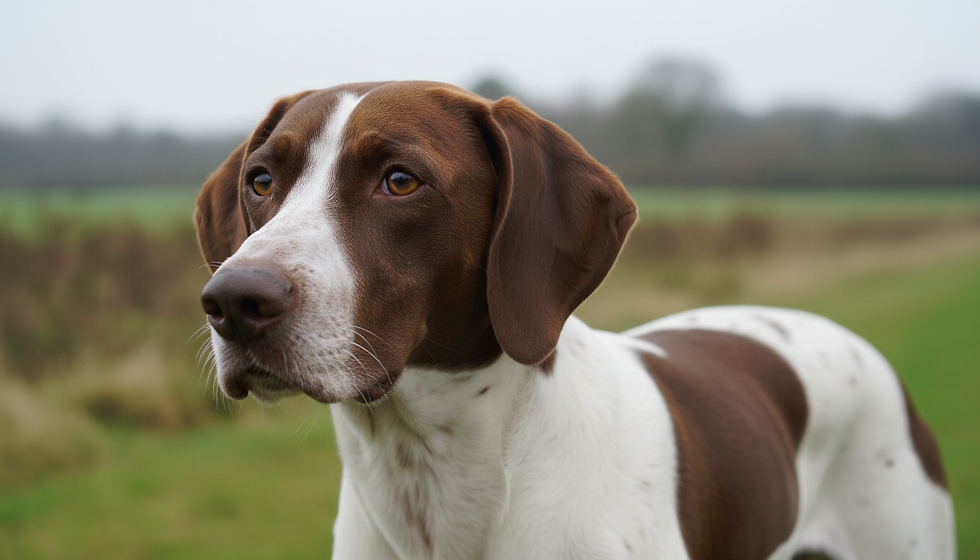
A Pointer often has a defined stop, a long muzzle, and soft, intelligent eyes.
The ears hang close to the head.
The expression should look alert but kind.
The coat is one of the breed's easiest features to manage.
It is short, smooth, and dense.
It offers some protection from brush and weather, but it is not a heavy winter coat.
Many English Pointers feel the cold in harsh British weather.
A waterproof coat may help during cold, wet walks.
Common coat patterns include white with liver, lemon, orange, or black markings.
Some dogs have ticking or speckling.
Solid colours can occur, but the classic image is a mostly white dog with coloured patches.
English Pointer size and build
Adult English Pointers are usually medium to large dogs.
Males often stand taller and have greater muscle mass than females.
A healthy Pointer should look fit, not bulky.
Visible muscle is normal.
Obvious ribs, a tucked posture, or poor coat condition may signal a health or nutrition issue.
Excess weight creates problems.
It strains joints, reduces stamina, and can worsen health conditions.
Because the breed is active, some owners assume weight will never become an issue.
That is not safe thinking.
A Pointer that eats too much and exercises too little can gain weight like any dog.
A good body condition is easy to check.
You should be able to feel the ribs easily under a light layer of flesh.
The waist should be visible from above.
The abdomen should tuck up when viewed from the side.
Ask a vet for guidance if weight changes quickly.
English Pointer grooming needs
English Pointer grooming is simple, but it still needs routine.
Brushing
A weekly brush removes loose hair and spreads natural oils.
A rubber grooming mitt works well on the short coat.
During shedding periods, brushing more often helps keep hair off floors and furniture.
Bathing
Bathing should happen when needed.
Too many baths can dry the skin.
Use a mild dog shampoo and rinse well.
Ear Care
The ears need regular checks.
Dropped ears can trap warmth and moisture.
Redness, smell, discharge, or repeated head shaking needs vet attention
Nail Care
Nails also need care.
Active dogs may wear them down, but many still need trimming.
Long nails can affect movement and foot comfort.
Dental Care
Teeth matter too.
Daily brushing is ideal.
Dental chews and vet checks can support oral health, but they do not replace brushing.
The short coat is easy to maintain, but ears, nails, and teeth still need care.
English Pointer temperament and behaviour
English Pointer temperament is one of the breed's strongest selling points.
A balanced Pointer is friendly, lively, and affectionate.
It tends to enjoy people and often wants to be part of family life.
This breed doesn't thrive in isolation at the end of a garden.
It needs contact, attention, and shared activity.
Many Pointers are gentle indoors when their exercise needs are met.
They may stretch out on a sofa, follow people from room to room, or nap after a long walk.
Without enough exercise, that same dog may pace, whine, steal objects, dig, bark, or become hard to manage.
The breed is also sensitive.
Harsh handling can damage trust.
Pushing, shouting, lead jerks, and punishment-heavy methods are poor choices.
Clear rules and rewards work better.
A Pointer likes to know what earns praise, food, play, or freedom.
English Pointer temperament with children and pets
Many English Pointers live well with children.
Their friendly nature helps.
Their size and energy still need management.
A young Pointer can knock over a small child during play.
Teach calm greetings early.
Reward four paws on the floor.
Give the dog a quiet place where children do not disturb it.
With other dogs, Pointers are often sociable.
Early positive exposure helps.
Choose safe, controlled introductions instead of chaotic dog park meetings.
For cats and small pets, caution matters.
Some Pointers live peacefully with cats they know.
Others have a strong chase response.
Never use small animals for risky tests.
Use barriers, leads, training, and careful supervision.
English Pointer prey drive and scent focus.
Prey drive is part of the breed.
So is scent focus.
A Pointer may switch from relaxed to fully engaged in a moment.
Birds, rabbits, deer, and sudden movement can trigger pursuit.
This does not mean the dog is disobedient.
It means instinct is competing with training.
Reliable recall takes time.
Start in quiet spaces, then build in controlled stages.
Long lines help during training.
Secure fields can help burn energy safely.
In the UK, owners must also follow local rules around livestock, wildlife, public footpaths, and seasonal restrictions.
A dog chasing sheep or wildlife can cause serious harm.
It can also place the dog in danger.
English Pointer training guide for reliable manners
English Pointer training should start early and stay consistent.
The breed is intelligent and quick.
It can also become distracted by scent and movement.
Training works best in short, clear, rewarding sessions.
Use food, toys, praise, sniffing access, and movement as rewards.
Do not rely on food alone.
Many Pointers value the chance to run, search, or investigate.
Turn those instincts into rewards.
For example, ask for eye contact, then release the dog to sniff.
Call the dog back, reward well, then let it run again.
This teaches that listening does not always end the fun.
English Pointer puppy training basics
Start with household skills before expecting field-level control.
The essentials include:
Name response.
Reward the puppy for turning towards you.
Recall.
Make coming back highly rewarding from the start.
Loose-lead walking.
Practise in quiet places before busy paths.
Settling.
Teach the puppy to rest on a mat after exercise or play.
Handling.
Gently touch ears, paws, mouth, and body, then reward.
Alone time.
Build short absences before leaving the dog for longer periods.
Socialisation matters, but it must be thoughtful.
Expose the puppy to people, traffic, livestock at a safe distance, grooming, vets, car travel, and different surfaces.
Keep the experiences calm.
Flooding a puppy with noise, crowds, or rough dogs can create fear.
English Pointer recall training
Recall deserves special attention.
A Pointer can cover ground fast.
A weak recall can become dangerous.
Begin indoors.
Say the recall cue once.
Reward with high-value food, play, or praise when the dog comes.
Move to the garden.
Then use a long line in quiet outdoor areas.
Do not call repeatedly when the dog is unlikely to respond.
That teaches the cue has no meaning.
Make recall easy at first.
Build difficulty slowly.
Reward heavily for fast returns.
Avoid punishing the dog when it comes back, even if it took too long.
Use management while training develops.
A long line, secure dog field, or fenced area can protect the dog.
Recall around:
Wildlife
Livestock
Roads
All require extra care.
English Pointer lead training
Lead walking can be tough with an eager Pointer.
The dog's natural movement is forward and fast.
A short walk on a pavement may not satisfy it.
Still, polite lead skills are essential.
Reward the dog for walking beside you.
Stop when the lead tightens.
Move again when the lead softens.
Change direction often during practice.
Keep early sessions short.
Use a well-fitted harness if needed.
Avoid equipment that causes pain or fear.
Pain may suppress pulling for a time, but it does not teach the dog what to do instead.
English Pointer exercise needs and mental stimulation.
Exercise is not optional for this breed.
English Pointers have high exercise needs.
Most adults need long daily walks, safe free running, and mental work.
A quick walk around the block will not do.
Puppies need controlled exercise.
Their joints are still developing.
Avoid forced long runs, repetitive jumping, and hard impact.
Let puppies play, explore, and rest.
Ask a vet for age-appropriate guidance.
Adult Pointers often enjoy:
Long countryside walks.
Choose safe routes and respect livestock.
Canicross or jogging.
Build fitness gradually after maturity.
Scent games.
Hide food or toys and let the dog search for them.
Gundog-style training.
Use steadiness, recall, hunting patterns, and impulse control.
Secure field running.
Use enclosed spaces if recall is still developing.
Puzzle feeders.
Make meals more engaging.
Mental work tires a Pointer differently than running.
This breed needs both.
A dog can run for an hour and still cause trouble if its brain doesn't get any work.
Short scent tasks, obedience games, and structured training sessions make a real difference.
English Pointer activities for active homes
Pointer owners often do well when they build a weekly rhythm.
One day might include a long rural walk.
Another might focus on lead skills and scent games.
Another might include a secure field session.
Variety reduces frustration.
It also builds a better dog.
Field activities can suit the breed well, even without shooting.
Many owners enjoy gundog training as a sport.
It teaches steadiness, distance control, recall, and focus.
These skills transfer to everyday life.
Agility may also appeal to some Pointers.
Use caution with young dogs and high-impact work.
Wait until the dog is physically mature and get guidance from a qualified trainer.
Daily exercise should include safe running, scent work, and training.

English Pointer health considerations and common issues
Responsible breeding, good weight control, exercise, and vet care generally support English Pointer health.
No breed is free from risk.
This section is informational only and does not replace advice from a veterinary surgeon.
Choose a vet for diagnosis, treatment, and health planning.
Common health concerns linked with the breed can include:
Hip dysplasia
Elbow issues
Eye conditions
Epilepsy
Allergies
Skin problems
Ear infections
Not every Pointer will face these issues.
Good breeders reduce risk through health testing and careful selection.
Good owners reduce risk through daily care.
English Pointer joint health
If the hip joint fails to develop correctly, hip dysplasia may occur.
It can lead to pain, stiffness, reduced movement, and arthritis.
Large and active breeds need careful weight control to reduce joint stress.
Puppies should grow steadily, not too fast.
Avoid overfeeding.
Use a balanced diet made for the dog's life stage.
Match exercise to age and fitness.
Slippery floors can also cause strain.
Rugs or mats may help young, old, or injured dogs.
If a Pointer limps, struggles to rise, bunny hops, or avoids stairs, book a vet check.
Early advice can help protect comfort.
English Pointer eyes, ears, and skin
Eye problems can appear in many breeds.
Cloudiness, redness, squinting, discharge, or sudden vision changes need prompt care.
Do not wait and see with eye pain.
Ears need regular checks due to their shape.
Moisture and debris can build up.
Clean only with products recommended by a vet.
Do not push cotton buds into the ear canal.
Skin issues may show as itching, licking, hair loss, redness, or recurring infections.
Allergies can be complex.
Food is only one possible cause.
Environmental triggers, parasites, and infections may also play a role.
A vet can guide testing and treatment.
English Pointer bloat awareness
Deep-chested breeds can be at risk of bloat, also called gastric dilatation-volvulus.
This is an emergency.
Signs can include a swollen abdomen, repeated unproductive retching, restlessness, drooling, weakness, or collapse.
Get urgent vet help if these signs appear.
Owners often reduce risk by avoiding hard exercise straight after large meals and by feeding sensible portions.
A vet can discuss individual risk and prevention.
English Pointer lifespan and senior care
Many English Pointers remain active into later life.
Senior dogs still need movement, but the type may change.
Shorter walks, softer ground, warm bedding, and joint support may help.
Weight control becomes even more important with age.
Older Pointers also benefit from regular vet checks.
Dental disease, arthritis, lumps, heart changes, and vision loss are easier to manage when found early.
Do not dismiss changes in behaviour as normal ageing.
Confusion, irritability, house soiling, or reduced interest in walks can have treatable causes.
English Pointer diet and daily care
A Pointer needs a balanced diet that matches its age, size, activity level and health.
Working dogs and highly active adults may need more calories than quiet pets.
Rest days need less.
Feed based on body condition, not just the packet guide.
Use measured meals.
Free feeding can make weight control harder.
Treats count as calories.
When possible, use training treats from the daily allowance.
Fresh water should always be available.
Active dogs may drink more after exercise or warm weather walks.
Take water on long outings.
Avoid sudden heavy meals before intense exercise.
Ask a vet for advice if the dog has digestive problems, allergies, or weight changes.
Tips for potential English Pointer owners
Potential owners should be honest about time, space, and energy.
The breed is rewarding, but it asks for commitment.
A Pointer that gets daily exercise, kind training, and companionship can become a superb dog.
A Pointer left bored and undertrained can become exhausting to train.
Choose an English Pointer breeder or rescue with care.
A good breeder welcomes questions.
They explain health testing, temperament, puppy rearing, and the breed's needs.
They let buyers meet the mother where possible.
They do not rush a sale.
They do not promise that every puppy will suit every home.
Ask about:
Health tests relevant to the breed.
Responsible breeders should know their lines well.
Temperament of both parents.
Drive, confidence, and sensitivity can be passed down through families.
Socialisation plans.
Puppies need careful early exposure.
Support after purchase.
Good breeders remain available for guidance.
Contracts and return policies.
Ethical breeders care where their dogs end up.
Rescue can also be a good route.
Some Pointers need new homes because owners underestimated their exercise needs.
A reputable rescue will assess behaviour and carefully match dogs.
Adult rescue dogs can be excellent companions when you understand their needs.
Prepare the home before bringing an English Pointer home.
Set up the basics before arrival.
Have a safe sleeping area, food and water bowls, a lead, harness, collar, identification tag, grooming mitt, toys, and cleaning supplies ready.
A crate or pen can help with rest and management when introduced kindly.
Secure the garden.
Pointers can jump, squeeze, and chase.
Check fences, gates, and gaps.
Remove hazards such as toxic plants, sharp tools, and accessible bins.
Plan the first week.
Keep life quiet and predictable.
Do not invite crowds of visitors.
Focus on toilet training, sleep, bonding, and simple routines.
Build a routine that matches the breed.
Routine helps a Pointer settle.
Include exercise, training, rest, feeding, and social time.
Rest is often overlooked.
High-energy dogs still need sleep.
Overtired puppies can bite, zoom, and ignore cues.
Adult dogs can also become restless when they never learn to switch off.
Teach calm from the start.
Reward the dog for lying down.
Use chew toys after walks.
Keep indoor play controlled.
Save high-energy games for outside.
Common mistakes with the English Pointer dog breed
Many problems come from mismatch, not malice.
Avoid these common errors:
Choosing the breed for looks alone.
The elegant outline comes with serious energy.
Delaying recall training.
Start before the dog discovers full speed.
Expecting obedience without outlets.
Exercise and mental work support training.
Using harsh methods.
Sensitivity and punishment do not mix well.
Ignoring prey drive.
Management protects wildlife, livestock, and the dog.
Skipping health checks.
Early vet care can prevent bigger problems.
English Pointer pros and cons
Pros
Friendly, affectionate, and often sociable.
Short coat is easy to groom.
Athletic and suited to active owners.
Intelligent and capable of excellent training.
Usually gentle in the home after proper exercise.
Cons
Needs a high level of daily exercise.
A Strong prey drive can make recall difficult.
Can become destructive when bored.
May struggle with long hours alone.
Needs secure spaces and careful management outdoors.
FAQ about the English Pointer dog breed
Is an English Pointer a good family dog
Yes, an English Pointer can be a good family dog in an active home.
It needs training, exercise, supervision with children, and enough rest.
How much exercise does an English Pointer need
Most adult English Pointers need a high level of daily exercise.
They usually need long walks, safe running, scent work, and short training sessions.
Are English Pointers easy to train
English Pointers are intelligent and train well with reward-based methods.
Their scent drive and speed mean recall and lead work need early, steady practice.
Can an English Pointer live in a flat?
A flat can work only if the dog gets enough outdoor exercise and mental stimulation every day.
Access to safe running areas makes life much easier.
Do English Pointers shed
Yes, English Pointers shed.
Regular brushing keeps their short coat easy to care for.
A well-matched Pointer fits best with an active routine and clear daily structure.
Final Thoughts
The English Pointer is a graceful sporting dog with deep working instincts and a loving nature.
It needs more than affection.
It needs movement, structure, training, and a job for its nose.
Give it those things and the breed can be a loyal, joyful, and impressive companion.
Skip them and the same dog can become frustrated fast.
The best English Pointer homes are active, patient, and realistic.
They value the dog's history, respect its drive, and build a life that lets it use both body and brain.


Comments