

A Comprehensive Guide to the Lhasa Apso

Let's Meet the Lhasa Apso: A Loyal and Ancient Companion

The Utility Group
Dogs classified in the Utility Group were originally developed for a variety of purposes that do not neatly fit into other canine categories.
As a result, this group includes breeds with a wide range of appearances, personalities, and working backgrounds.
One of the most distinctive breeds in this category is the charming and intelligent Lhasa Apso.
History of the Lhasa Apso
An Ancient Breed
The Lhasa Apso is a small, long-coated breed with origins in Tibet's high mountains, dating back over 2,000 years.
Despite its compact size, this breed played an important role in Tibetan monasteries, where it was bred to serve as an alert watchdog.
Buddhist monks relied on these attentive little dogs to warn them of approaching visitors or potential intruders.
Their keen hearing and naturally watchful nature made them excellent guardians of sacred temples and monasteries.

The Meaning Behind the Name
The city of Lhasa, the capital of Tibet, gave the breed its first name.
The origin of the word "Apso" remains uncertain, though many historians suggest it may be derived from the Tibetan word "Abso."
The breed's original Tibetan name was Abso Seng Kye, which translates to
"Bark, Lion Sentinel Dog."
This title perfectly reflects the breed's courageous spirit and protective instincts.
A Symbol of Good Fortune
The Lhasa Apso holds a special place in Tibetan culture and spirituality.
Tibetan Buddhists traditionally believed that the souls of respected priests and Dalai Lamas temporarily entered the bodies of Lhasa Apsos before progressing to their next human incarnation.
Because of this belief, receiving a Lhasa Apso as a gift was considered a great honour and a sign of good fortune.
Historically, Dalai Lamas also presented these treasured dogs to Chinese royalty and important dignitaries as symbols of respect and goodwill.
Impressive Longevity
One remarkable characteristic of the Lhasa Apso breed is its longevity.
Unlike many dog breeds, Lhasa Apsos mature slowly and often do not reach full adulthood until around three years of age.
An impressive lifespan often accompanies this slower development.
Most Lhasa Apsos live between 12 and 15 years, although many exceed this range with proper care.
The oldest recorded Lhasa Apso reportedly lived to the remarkable age of 29 years.
Lhasa Apso Personality and Temperament
Intelligent, Loyal, and Affectionate
The Lhasa Apso is well known for its calm and balanced temperament. Intelligent and confident, this breed combines independence with strong devotion to its family.
Although they may appear reserved around strangers, Lhasa Apsos form deep bonds with their owners and are incredibly loyal companions.
They enjoy spending time with their families and often display a playful side once they feel comfortable.
Naturally Protective
Originally bred as monastery watchdogs, Lhasa Apsos retain strong protective instincts today.
They are naturally alert and quick to notify their owners when something unusual catches their attention.
While they are not aggressive, they are highly aware of their surroundings and take their role as family guardians seriously.
Not Fans of Being Alone
Despite their independent nature, Lhasa Apsos thrive on companionship and do not enjoy being left alone for extended periods.
Spending too much time alone can leave a Lhasa Apso bored and may trigger unwanted behaviours.
Owners who can provide regular interaction and companionship will often find that their Lhasa Apso is happiest and most content.
Better Suited to Cooler Climates
Thanks to their origins in the cold Himalayan region, Lhasa Apsos generally prefer cooler weather conditions.
Their thick double coat provides excellent insulation against the cold but can make them uncomfortable in excessive heat.
During warm weather, owners should ensure their dog has access to shade, fresh water, and cool resting areas.
Living with a Lhasa Apso
Lhasa Apsos and Children
The Lhasa Apso can make a wonderful family dog when introduced and managed appropriately.
However, because of their small size and independent temperament, they may become overwhelmed by very young or overly enthusiastic children.
Supervised interactions are essential, particularly when children are learning how to handle and interact with dogs respectfully.
Teaching both children and dogs appropriate boundaries helps create positive and safe relationships.
Some Lhasa Apsos may react defensively if they feel uncomfortable or startled, making early socialisation and proper introductions especially important.
Living with Other Pets
Lhasa Apsos can live harmoniously with other animals, including cats, when introductions are handled carefully.
Gradual introductions, patience, and positive reinforcement help establish harmonious relationships between household pets.
Early socialisation significantly improves a Lhasa Apso's confidence and ability to interact positively with other animals and people.
Ideal Owners
One of the reasons the Lhasa Apso remains a popular companion dog is its adaptability.
The breed is generally well-suited to:
First-time dog owners
Senior citizens
Individuals living alone
Families with older children
Apartment dwellers
Their moderate exercise requirements and manageable size make them easier to care for than many larger breeds.
Accommodation Requirements
If you want a small dog that does well in an apartment and doesn't need lots of exercise, the Lhasa Apso is a great option.
These dogs are comfortable in smaller homes and urban environments, provided they receive daily walks, plenty of attention from their owners, and mental stimulation.
Their compact size and adaptable nature make them ideal companions for modern lifestyles.
Is the Lhasa Apso the Right Dog for You?
The Lhasa Apso combines centuries of history, unwavering loyalty, and an unmistakable appearance into one delightful package.
Known for its intelligence, protective nature, long lifespan, and affectionate personality, this ancient Tibetan breed continues to win hearts around the world.
Whether you are a first-time owner, a retiree seeking companionship, or a family looking for a devoted small dog, the Lhasa Apso offers a unique combination of charm, confidence, and companionship that few breeds can match.
Lhasa Apso Appearance and Size
The Lhasa Apso is a distinctive small dog breed known for its elegant appearance, luxurious coat, and confident posture.
Slightly longer than it is tall, this ancient Tibetan breed combines beauty with practicality, having originally been bred as an alert watchdog in Himalayan monasteries.
The breed features a relatively small skull, a medium-length muzzle, and a black nose that complements its expressive face.
One of the Lhasa Apso's most recognisable features is its abundant double coat.
The Lhasa Apso has a soft, warming undercoat, topped by a longer, heavier outer layer with a natural texture that helps shield it from severe mountain conditions.
Long facial hair gives the breed its signature appearance, with a flowing "fall" that drapes over the eyes.
The pendant-shaped ears are heavily feathered, blending seamlessly into the coat.
The tail is also richly feathered and carried gracefully over the back.
For dogs shown in the exhibition ring, the coat should be straight, dense, and long enough to reach the ground.
Many pet owners, however, choose a shorter trim for easier maintenance while still preserving the breed's charming appearance.
Lhasa Apso Coat Colours
Lhasa Apso coat colours are diverse and often change as puppies mature into adults.
It is common for young dogs to lighten significantly as they grow.
Recognised coat colours include:
Golden
Sand
Dark Slate
Grey
Grizzle and Honey
Black
Honey
Red
Many of these colours may also be combined with white markings.
Grizzle refers to black-tipped hairs overlaying a lighter base colour, creating a unique and attractive appearance.
For example, a brown puppy may mature into a cream or golden adult, while a gold-coated puppy may develop a lighter cream-coloured coat over time.

Breed Statistics
Breed Group: Utility Group
Size: Small Dog Breed
Height: 10–11 inches (25–28 cm)
Weight: 13–18 pounds (6–8 kg)
Coat Type: Long double coat with a soft undercoat and protective outer coat
Coat Length: Long show coat or shorter pet trim
Shedding: Very low-shedding dog breed
Grooming Requirements: High
Exercise Needs: 40 minutes to 1 hour daily.
Training Difficulty: Moderate
Temperament: Loyal, intelligent, calm, playful, and independent
Barking Level: Generally quiet but highly alert
Drooling Level: Low
Digging Tendency: Low
Social Needs: Moderate
Suitable For: Families, seniors, first-time owners, and apartment living
Life Expectancy: 12–15 years or longer
Kennel Club Classification.
Royal Kennel Club (UK): Utility Breed
American Kennel Club (AKC): Non-Sporting Group
Because of their adaptable nature and moderate exercise requirements, Lhasa Apsos make excellent companion dogs for a variety of households.
Grooming Your Lhasa Apso
The Lhasa Apso is famous for its beautiful flowing coat, but maintaining that luxurious appearance requires a consistent grooming routine.
Whether you choose a practical puppy cut or keep your dog in a traditional long coat, regular grooming is essential for coat health, skin condition, and overall wellbeing.
Should You Choose a Puppy Cut or a Long Coat?
One of the biggest decisions Lhasa Apso owners face is whether to keep the coat long or opt for a shorter trim.
A puppy cut significantly reduces grooming time and makes coat maintenance easier. A full-length coat, while stunning, requires considerably more brushing, bathing, and attention to prevent tangles and mats.
Both styles can look beautiful, so the choice ultimately depends on your lifestyle and commitment to grooming.

Brushing a Lhasa Apso
Regular brushing is one of the most important aspects of Lhasa Apso grooming.
For long-coated dogs, daily brushing is recommended to prevent knots, tangles, and matting.
Before brushing, lightly mist the coat with a dog-safe detangling spray to reduce breakage and make the grooming process easier.
Use:
A pin brush
A slicker brush
A metal comb
A dematting tool for stubborn tangles
Once a week, conduct a more detailed grooming session.
Divide the coat into layers and brush section by section, ensuring you reach both the undercoat and outer coat.
For show dogs, carefully part the coat from the tip of the nose to the end of the tail with a metal comb.
Applying a leave-in conditioning spray can help maintain a neat, straight parting.
Checking for Skin Problems
Brushing sessions provide an excellent opportunity to inspect your dog's skin for:
Redness
Irritation
Hot spots
Parasites
Allergic reactions
Using hypoallergenic dog grooming products may help reduce skin sensitivities and irritation.
Bathing Your Lhasa Apso
To keep the coat healthy, soft, and glossy, most Lhasa Apsos benefit from bathing every four to six weeks.
Bathing Tips
Thoroughly wet the coat using warm water.
Apply a high-quality dog shampoo designed for long-haired breeds.
Work the shampoo through the coat gently using your fingers.
Avoid circular rubbing motions that may create tangles.
Rinse thoroughly.
Protecting the Face
Take care not to get shampoo into the eyes, nose, or mouth.
Use a soft, lightly moistened cloth to gently wipe around those areas.
Around the eyes
The beard area
Facial folds
After shampooing, apply a quality dog conditioner, comb it through the coat with a wide-toothed comb, and rinse thoroughly.
Pat the coat dry with towels rather than rubbing, which can cause matting.
Drying the Coat
Proper drying is essential for maintaining a healthy coat.
Use a dog dryer or a hair dryer on a low-heat setting.
Work in sections, drying the undercoat first before moving to the outer coat.
Gently brush as you dry to achieve a straight, smooth finish and prevent tangles.
Managing Facial Hair
The long hair that grows over a Lhasa Apso's eyes often requires special attention.
Owners commonly choose one of several options:
Create a traditional centre parting.
Use clips to secure hair behind the ears.
Create a topknot using a small elastic band.
Use grooming bands designed specifically for long-haired breeds.
These styles help keep hair away from the eyes while maintaining comfort and visibility.
Clipping Styles
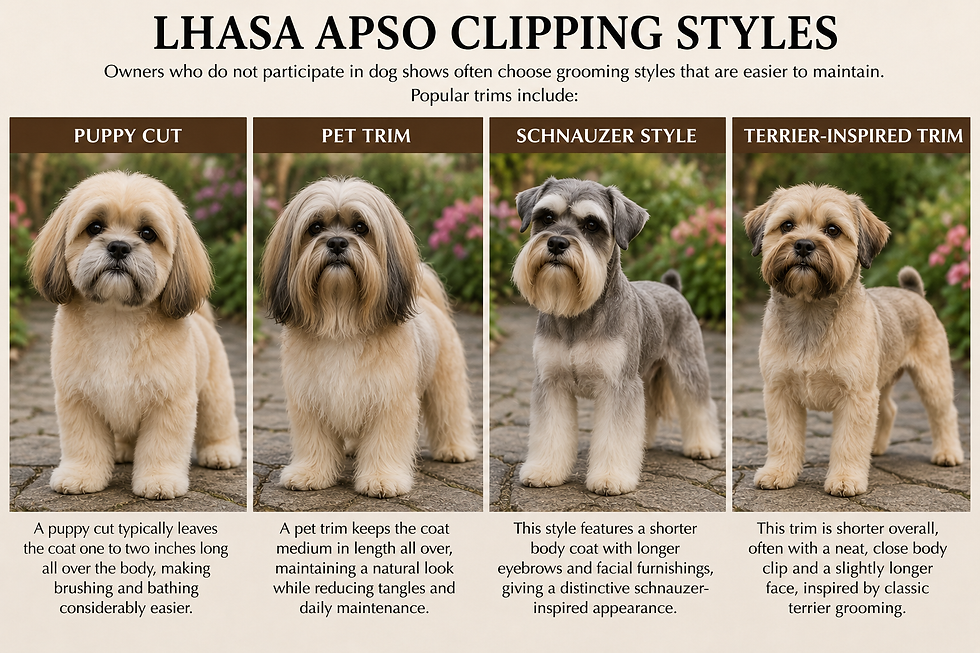
Owners who do not participate in dog shows often choose grooming styles that are easier to maintain.
Popular trims include:
Puppy Cut
Pet Trim
Schnauzer Style
Terrier-Inspired Trim
A puppy cut typically leaves the coat one to two inches long all over the body, making brushing and bathing considerably easier.
Show Coat Maintenance
For exhibition dogs, minor trimming may be carried out around:
The feet
Paw pads
The bottom edge of the coat
These small adjustments help maintain a neat appearance without altering the breed's natural outline.
Wrapping a Show Coat
Owners of show-quality Lhasa Apsos often use coat wraps to protect the hair from damage.
The process involves:
Applying a suitable grooming oil.
Dividing the coat into sections.
Wrapping each section in a coat of paper.
Securing the wraps with bands.
The wraps should be checked weekly and adjusted as necessary to maintain coat condition.
Ear Cleaning
Regular ear care helps prevent infections and excessive wax build-up.
Once a week:
Apply a dog ear-cleaning solution.
Wipe the visible areas of the ear using cotton wool.
Remove loose debris gently.
If hair is growing heavily inside the Lhasa Apso's ear canal, consult a veterinarian or professional groomer before trying to remove it yourself.
Eye Cleaning
Because of the breed's long facial hair, eye care is particularly important.
Daily eye care should include:
Wiping around the eyes with a clean, damp cloth.
Removing tear staining with dog-safe eye wipes if required.
Keeping hair trimmed or secured away from the eyes.
Always use products specifically designed for canine eye care.
Paw and Nail Care
Keeping your Lhasa Apso's paws and nails healthy is an important part of regular grooming, especially after rainy or muddy walks.
Clip the extra hair between your dog's paw pads to reduce slipping, prevent tangles, and stop dirt or grit from getting stuck.
Inspect your dog's feet for any mats or tangles, then use a damp cloth to softly clean away mud, dirt, and grit from the paws.
In winter, using a dog paw balm can help protect paw pads from road salt, cold pavements, and wet conditions.
Nail trimming should be done as needed to keep your dog comfortable and to support healthy posture and movement.
Take care not to cut the quick (the sensitive area containing blood vessels and nerves).

If you're not confident trimming nails at home, follow a trusted grooming tutorial or ask your vet or veterinary nurse for guidance.
You can also book a professional dog groomer to safely clip your Lhasa Apso's nails.
Dental Care
Proper dental care is important for supporting your Lhasa Apso's overall health.
Ideally, teeth should be brushed every day.
At a minimum, aim for three brushing sessions each week.
Recommended tools include:
Finger toothbrushes
Small-headed dog toothbrushes
Only dog-specific toothpaste
Don't use human toothpaste—some ingredients can be harmful to dogs if they swallow it.
Dental chews and dental sticks can also support oral hygiene between brushing sessions, but should not replace regular tooth cleaning.
Lhasa Apso Health
The Lhasa Apso is generally considered a healthy, long-lived breed.
However, like all breeds, it can be predisposed to certain hereditary and age-related health conditions.
Understanding these conditions can help owners recognise symptoms early and seek appropriate veterinary advice.
Patellar Luxation
Patellar luxation is when the kneecap moves out of its normal position.
Symptoms may include:
Limping
Skipping while walking
Difficulty exercising
Intermittent lameness
Mild cases may require monitoring, while severe cases may require surgical correction.
Progressive Retinal Atrophy (PRA)
Progressive Retinal Atrophy is a hereditary eye disorder that gradually breaks down the retina and can lead to progressive vision loss.
Common signs include:
Reduced night vision
Difficulty seeing in low light
Progressive blindness
Although there is currently no cure, many affected dogs adapt remarkably well with their owners' support.
Responsible breeders should screen breeding dogs for PRA.
Dry Eye (Keratoconjunctivitis Sicca)
Dry Eye happens when a Lhasa Apso's eyes don't make enough tears to stay properly moist and comfortable.
Symptoms can include:
Red eyes
Eye discharge
Irritation
Frequent blinking
Veterinary treatment often includes artificial tears and prescription medications to improve tear production.
Sebaceous Adenitis
Sebaceous Adenitis is an uncommon autoimmune skin condition that affects the oil-producing glands within the skin.
Possible symptoms include:
Dry skin
Excessive dandruff
Hair loss
Brittle coat texture
Skin infections
Unpleasant skin odour
While there is no guaranteed cure, many dogs respond well to medicated shampoos, moisturising treatments, and veterinary-prescribed medications.
Important Health Note
Many Lhasa Apsos live long, healthy lives and never develop any of these conditions.
However, understanding potential breed-related health concerns allows owners to provide the best possible care throughout their dog's life.
Regular veterinary health checks, a balanced diet, proper grooming, routine dental care, and appropriate exercise all contribute to a happy and healthy Lhasa Apso.
Food and Diet for a Lhasa Apso
Proper nutrition is key to supporting your Lhasa Apso's health, energy, coat quality, and overall wellbeing.
As a small breed with a long lifespan, the Lhasa Apso benefits from a high-quality, balanced diet designed for small breeds.
Choosing the Best Food
When selecting the best dog food for a Lhasa Apso, look for a recipe that contains high-quality protein, healthy fats, and natural sources of fibre.
Protein
Protein is essential for supporting growth, providing energy, and maintaining strong muscles.
Excellent protein sources include:
Chicken
Turkey
Beef
Lamb
Fish

These ingredients should ideally appear near the top of the food's ingredient list.
Healthy Fats
Healthy fats help support brain function, energy production, skin health, and the Lhasa Apso's beautiful double coat.
Beneficial fat sources include:
Fish oil
Salmon oil
Chicken fat
Flaxseed oil
Omega-6 and Omega-3 fatty acids are particularly valuable for healthy skin and a glossy coat.

Fibre
Fibre aids digestion and supports a healthy digestive system.
Natural fibre sources include:
Carrots
Sweet potatoes
Pumpkin
Peas
Apples
Blueberries
Grain Sensitivities
Some Lhasa Apsos may be sensitive to certain grains, particularly:
Corn
Wheat
Soy
While not every dog requires a grain-free diet, owners should monitor for signs of food sensitivities, such as itchy skin, digestive upset, ear infections, or excessive licking.
If you suspect a food allergy before making dietary changes, consult your veterinarian.
Safe Fruits for Lhasa Apsos
Many fruits can be offered as healthy treats in moderation.
Apples
In addition to fibre, Apples contain vitamins A and C, making them a healthy, nutritious treat.
Always remove:
The core
Seeds
Stalk
Chilled or frozen apple slices can make a refreshing summer treat.
Bananas
Bananas contain potassium, vitamins, and natural fibre.
Because they are relatively high in natural sugars, they should be fed sparingly.
Dogs with diabetes or weight-management issues should only consume bananas under veterinary guidance.
Blueberries
Blueberries are often considered a canine superfood.
They contain antioxidants, vitamins, and fibre that may support immune function and overall health.
Watermelon
Watermelon is an excellent hydrating snack, particularly during warmer months.
Before feeding watermelon:
Remove all seeds.
Remove the rind.
Watermelon contains vitamins A, B6, and C, while its high water content helps support hydration.
Feeding Guidelines for a Lhasa Apso
Most healthy adult Lhasa Apsos require about 1 cup of premium-quality dog food daily, divided into 2 meals.
Owners may choose:
Dry kibble
Wet food
A combination of wet and dry food
Because Lhasa Apsos are often highly food-motivated, measured feeding is recommended.
Avoid free-feeding, as it may contribute to unwanted weight gain.
Fresh, clean drinking water should always be available.
Feeding a Lhasa Apso Puppy
Lhasa Apso puppies require frequent meals to support healthy growth and help maintain stable blood sugar levels.
Most puppies should receive:
Three to four small meals daily
Feeding schedules may gradually be reduced as the puppy grows and matures.
Feeding an Adult Lhasa Apso
Adult dogs typically thrive on:
Two measured meals per day
Portion sizes should be adjusted based on:
Activity levels
Age
Metabolism
Weight management goals
Feeding Senior Lhasa Apsos
In a dog's senior years, its dietary requirements often shift.
Older dogs may require:
Reduced calorie intake
Joint-support supplements
Easily digestible proteins
Specialised senior dog food
Regular veterinary check-ups can help determine the most appropriate feeding plan for an ageing Lhasa Apso.
Training and Socialisation
Training
As an intelligent dog breed, the Lhasa Apso generally learns quickly, but its independent nature means training should be done with patience and consistency.
While eager to please its family, this breed can sometimes display a stubborn streak. Keeping training sessions short, positive, and engaging helps maintain focus and enthusiasm.
Positive Reinforcement Training
Reward-based training methods tend to produce the best results.
Rewards may include:
Healthy treats
Praise
Toys
Playtime
Positive reinforcement encourages desired behaviours while strengthening the bond between owner and dog.
Consistency is Key
Early training is essential for preventing unwanted habits from becoming established.
Focus on teaching:
Basic obedience commands
Lead walking
Recall
House training
Good household manners
Because Lhasa Apsos mature slowly and may not reach full mental maturity until three to four years of age, ongoing training throughout adolescence remains particularly important.
Socialising a Lhasa Apso
Early socialisation is one of the most valuable investments owners can make in their puppy's future behaviour.
Proper socialisation helps your Lhasa Apso grow into a confident, well-balanced dog that can comfortably handle a wide range of environments and experiences.
Expose your puppy gradually to:
Different people
Other dogs
Cats and household pets
Traffic sounds
Household noises
New environments
Positive experiences during puppyhood can help reduce fearfulness and excessive guarding behaviours later in life.
Even after reaching adulthood, socialisation should continue to reinforce confidence and adaptability.
Exercise and Games
Although the Lhasa Apso is not a high-energy breed, regular exercise remains important for maintaining physical health, mental stimulation, and a healthy body weight.
Puppy Exercise
Young puppies require a balance between activity and rest.
Excessive exercise can place unnecessary stress on developing bones and joints, while insufficient exercise may contribute to obesity and behavioural problems.
Suitable puppy activities include:
Gentle walks
Supervised garden play
Interactive toys
Short games of fetch
Puppies should always be given plenty of time to rest and recover.
Adult Exercise
Most adult Lhasa Apsos require approximately 40 minutes to one hour of exercise each day.
This can be divided into:
Two 20-minute walks
One walk and one play session
Interactive games and training activities
Providing variety helps prevent boredom while supporting both mental and physical wellbeing.
Senior Dog Exercise
As Lhasa Apsos enter their senior years, typically around 8 or 9 years of age, exercise routines may need to be adjusted.
Watch for signs such as:
Slower walking pace
Increased fatigue
Joint stiffness
Reduced stamina
Shorter, gentler walks often help senior dogs remain active without overexertion.
Fun Games for a Lhasa Apso
Fetch
Fetch provides excellent cardiovascular exercise while reinforcing training commands.
It can be played:
Indoors
In the garden
At the park
Tug of War
A safe game of tug can provide both physical exercise and mental stimulation.
Always use durable dog-safe toys designed specifically for interactive play.
Agility Games
Lhasa Apsos often enjoy learning new challenges.
Simple home agility activities may include:
Walking around obstacles
Weaving between cones
Low jumps
Tunnel games
Agility-style activities improve coordination, confidence, and responsiveness.
Buying a Lhasa Apso from a Reputable Breeder
Choosing a responsible breeder is one of the most important steps when purchasing a Lhasa Apso puppy.
A reputable breeder prioritises health, temperament, and breed welfare over profit.
Before committing to a puppy:
Visit the breeder in person.
Meet the puppy's mother.
Observe the puppies' living conditions.
Request health screening documentation.
Confirm vaccination and worming records.
Ask about genetic health testing.
Never feel pressured into purchasing if something seems unusual or concerning.
Responsible breeders are happy to answer questions and provide ongoing support.
Understanding the Cost of Ownership
Owning a Lhasa Apso involves more than the initial purchase price.
Prospective owners should budget for:
Food
Veterinary care
Grooming
Vaccinations
Pet insurance
Training
Toys and equipment
Planning for these ongoing costs helps ensure your dog enjoys a healthy and happy life.
Our Final Thoughts
The Lhasa Apso is a charming, intelligent, and loyal companion dog with a rich history stretching back thousands of years. Its distinctive appearance, protective instincts, and affectionate nature make it a popular choice among families, seniors, and first-time dog owners alike.
With proper nutrition, consistent training, regular grooming, and appropriate exercise, the Lhasa Apso can thrive in a wide variety of homes.
Although independent at times, this devoted breed forms strong bonds with its family and rewards responsible ownership with years of companionship and affection.
Whether living in a family home or a city apartment, the Lhasa Apso continues to prove why it remains one of the most beloved small dog breeds in the world.


Comments