
A Comprehensive Guide to the Rottweiler

Updated: Sep 27
Let's meet the Rottweiler.
Initially, Rottweilers helped the Roman army to drive herds of cattle during the day and guard them at night.
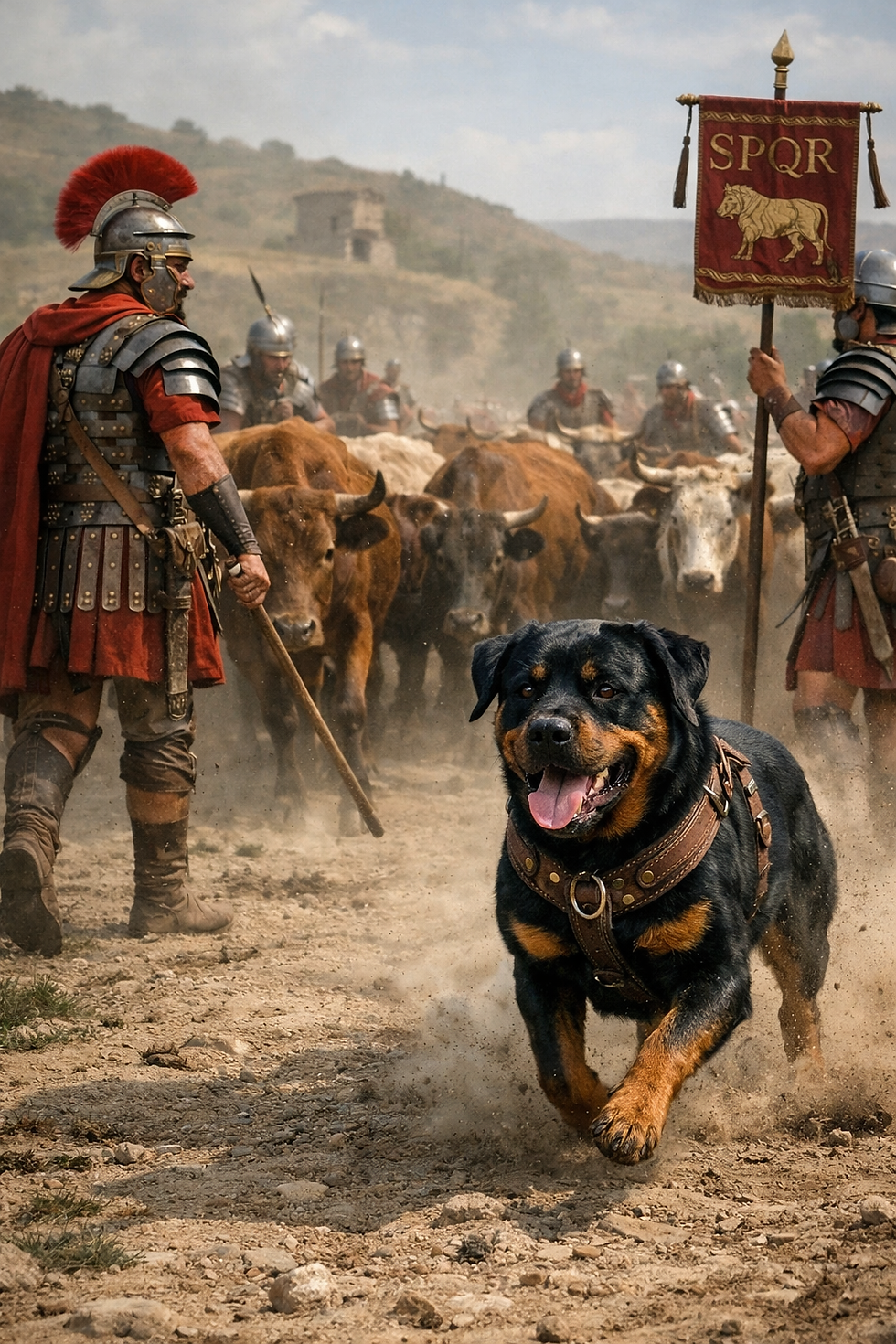
The Romans abandoned the Rottweiler around the Second Century AD in the area now known as Rottweil, Germany.
In the mid-19th century, the construction of railways made cattle driving (a profession) illegal.
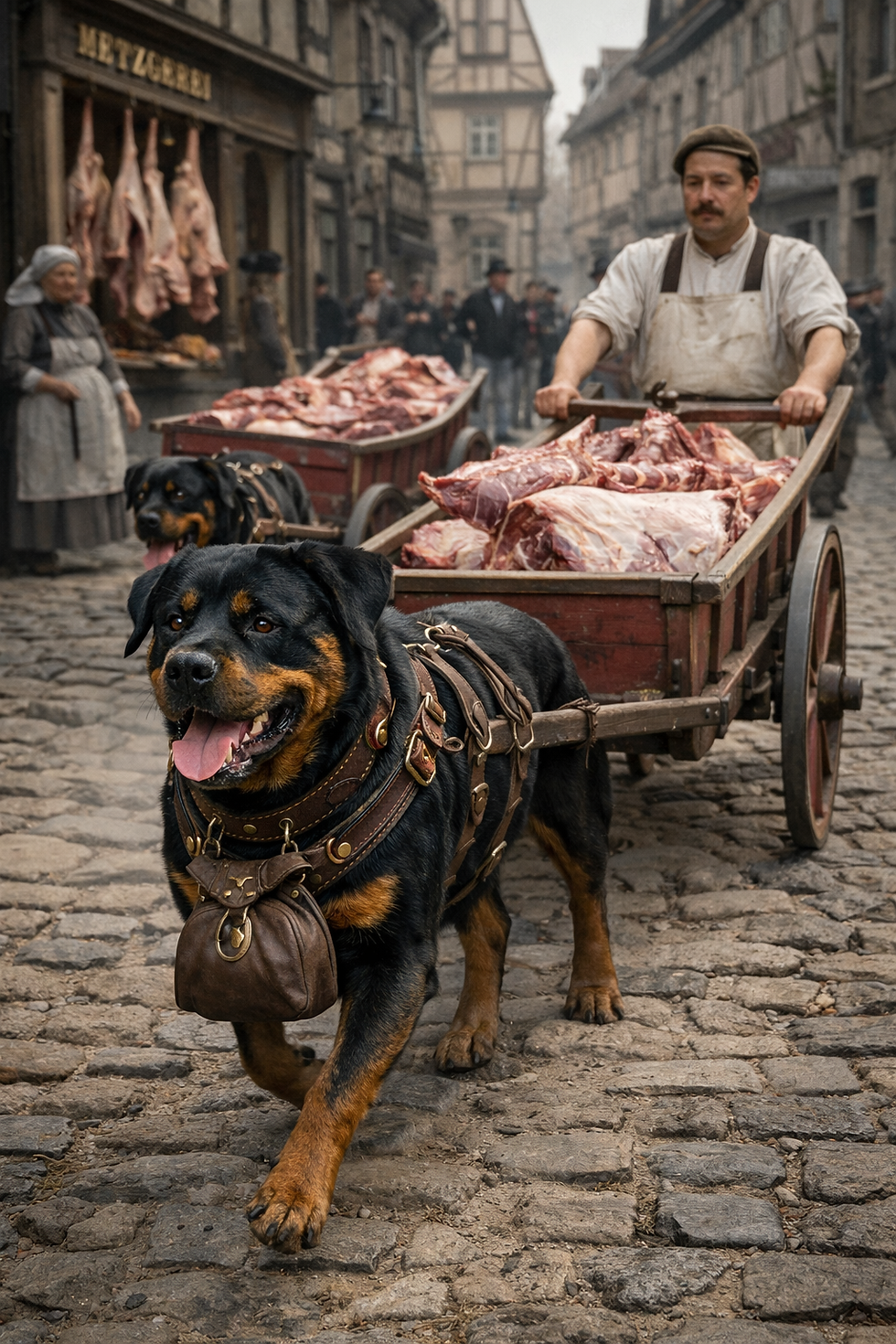
As the Rottweilers were no longer required for herding, Butchers took an interest in these powerful dogs.
Butchers used them to pull meat carts and to carry purses of money around their necks.
Unfortunately, the breed declined sharply and was at risk of extinction.
Fortunately, several dedicated fanciers in Germany made a push to save the breed.
In 1899, an international club was formed for the Rottweiler, which included the Leonberger.
And by 1901, the first breed standard was established.
By this time, Rottweilers were used as Police Dogs, and during World Wars I and II, they served with the armed forces.
To this day, Rottweilers are used in countries such as Denmark, Germany, Norway, and Switzerland as Customs Dogs, Guard Dogs, Police Dogs, and Rescue Dogs.

The Rottweiler is recognised worldwide and is one of the most popular breeds for its size, strength, intelligence, and loyalty.
TEMPERAMENT AND CHARACTERISTICS
The Rottweiler, a robust and regal breed, is known for its remarkable loyalty and devotion to its family.
With a powerful presence and unwavering protection, it can be an imposing figure.
However, when trained early on to obey commands, these dogs are obedient, disciplined, and even-tempered.
Rottweilers bond deeply with their families and are incredibly loyal.
They are also sociable and affectionate toward people they know, but can be wary of strangers.
When properly socialised with other dogs, they typically get along well with them.
The Rottweiler exudes immense strength and, when provoked, can cause harm.
That's why this breed requires meticulous socialisation.
Owning a Rottweiler demands a firm, experienced, and confident handler.
This handler can effectively set appropriate boundaries and behaviours for the dog.
A handler must also be willing to provide ample exercise, mental stimulation, and socialisation.

With the proper training, this gentle giant can be a perfect addition to any family.
Rottweilers need a lot of daily exercise, such as long walks or jogs.

They also require mental stimulation through obedience training or scent games.
This is especially important for Rottweilers kept indoors, as they can become bored and destructive.
WHAT TO EXPECT AS AN ADULT DOG
Rottweilers are intelligent, loyal, and territorial.
However, this breed is not an ideal one for first-time dog owners.
They can be fearless and require a knowledgeable owner who is willing to provide strong leadership.
Rottweilers form strong bonds with their owners, and it's essential to socialise them from a young age.
Socialising at a young age helps them learn to interact positively with people and animals.
It's also important to remember that Rottweilers are powerful dogs.
As a result, they need proper training and discipline to learn to obey their owners.
Rottweilers can be both loyal companions and great protectors.
However, they should never be used as guard dogs without correct training or supervision.
A Rottweiler may become overly aggressive if not appropriately handled.
Rottweilers are working breeds that require regular exercise and mental stimulation.
Running alongside their owners during a jog or a long walk would improve their fitness.
Although they may appear aloof or self-confident, Rottweilers also need plenty of affection and attention from their owners.
If supervised and well socialised, a Rottweiler should be fine with older teenagers.
Unfortunately, because of their size and strength, they are not suitable pets for homes with young children.
A Rottweiler is not a reactive breed, as some people may believe.
Because of his size, though, many who do not know the Rottweiler may mistake him for one.
In fact, an aggressive Rottweiler is generally the result of irresponsible ownership.
Several factors most likely cause this.
These factors could include a lack of training, poor or no socialisation, neglect, abuse, or being a working dog.
A large, strong breed like the Rottweiler can be dangerous if not properly trained or is mistreated.
APPEARANCE AND SIZE
Appearance:
The Rottweiler is a large, powerful breed with an impressive stature and dignified presence.
It gives the first impression of solid strength, which is quite accurate.
They are stocky dogs with massive heads.
Their ears are pendant-shaped, set high and wide apart, lying flat and close to the cheek.
Their eyes are medium-sized, almond-shaped, and dark brown.
Their muzzle is square and strong, and Rottweilers can drool.
A Rottweiler's coat colour should always be black with tan points.
The coat is quite short, dense, and somewhat harsh.
Tails were once docked very short, but are now left to grow.
NOTE:
Tail docking is now illegal in England, Wales, Scotland, and Northern Ireland.
It is also illegal in Europe.
However, there are some exemptions.
A Vet can remove the tail for medical reasons.
Or for working dogs that may get their tails trapped in the course of their work.
As is familiar with larger breeds, Rottweilers can be slow to mature.
The Rottweiler reaches its full height by age 1.
But it will not reach its full adult size until it is 2 or 3 years old.
These dogs will fill out, broadening their chests and becoming the massive dogs we expect them to be with age.
Size:
Weight Male: 85-135 lbs. Weight Female: 80-100 lbs.
Height at Withers: Male: 26 in. Female: 24 in.
Exercise Requirements: - 2 Hours per Day plus play time.
Energy Level: - High
Life Span: - 8-11 yrs.
Tendency to Drool: - Moderate.
Tendency to Bark: - Moderate.
Tendency to Dig: - Low.
Tendency to Snore: - High.
Social/Attention Needs: - High.
Bred For: - Cattle drover, guardian, draft work.
Coat Length: - Short and flat.
Colours: - Black with tan markings.
Overall Grooming Needs: - Low.
Hypoallergenic: - No.
RKC (UK) Breed Standard: - Working Group.
AKC Classification: - Working Group.
GROOMING
Rottweilers have short coats that require minimal upkeep.
Weekly brushing should be sufficient to manage loose hairs and maintain a glossy appearance.
While they are not heavy shedders, they may shed slightly more in spring and autumn.
It is advisable to brush them more frequently during these seasons.

Eye Cleaning:
Bathe your dog's eyes with a damp cotton wool pad soaked in cooled boiled water to remove any eye gunk.
Always use a clean, fresh cotton wool pad for each eye.

Ear Cleaning:
Check your dog's ears weekly for signs of infection and dirt.
If cleaning is required, use an approved ear-cleaning solution from your Veterinarian.
If there is any sign of infection, contact your Vet before cleaning your dog's ears.
Dental Care:
Start cleaning your dog's teeth as soon as it gets its adult teeth (usually between 4 and 6 months old).
Only use toothpaste specifically for dogs.
Never use human toothpaste as it could make your dog extremely ill.
Try to clean your dog's teeth 2 to 3 times a week.
In between cleaning sessions, give your dog a daily dental stick to chew on, which also helps prevent dental disease.
TRAINING AND SOCIALISING
Key Points For Training and Socialisation of a Rottweiler:
TRAINING
Start immediately:
Training and socialising are a MUST and should start in early puppyhood.
You are most likely to succeed if you start the learning process at 6 weeks old.
If your puppy is older, it may take a little more time, effort, and patience on your part.
Leash Training:
Rottweilers grow quickly, so leash training is a must from a very early age.
A full-grown dog that isn't leash-trained can be difficult to control.
Reward-Based Training:
Proper dog communication and positive reinforcement training can help you train a dog of any age.
Rottweilers respond well to praise, treats, and play.
Never hit your dog, and never show aggression toward it; neither accomplishes anything.
Always show kindness and understanding.
Early Learning Commands:
Use the same rules and commands every day to avoid confusing your dog.
Start with simple everyday commands: come, sit, stay, down, heel, drop it, leave it.
Keep lessons frequent but short, no longer than 15 minutes.
Lead With Consistency and Discipline:
Rottweilers require a firm, calm, and consistent leader.
Boundaries:
As your dog's “leader”, you need to define what is not acceptable, such as no jumping up on people and no begging for food.
SOCIALISATION:
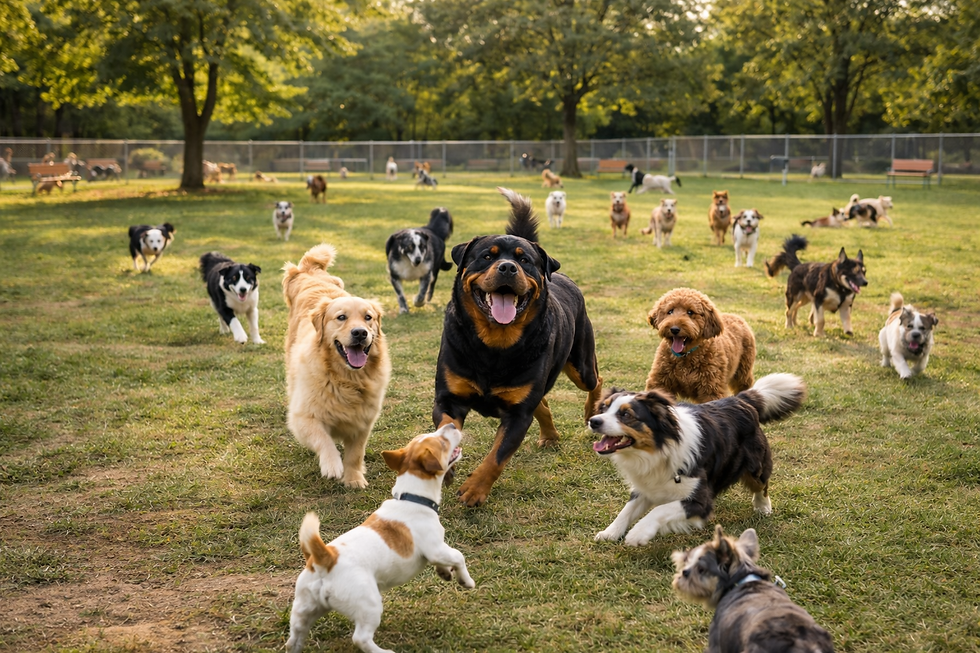
Rottweilers need proper socialisation as early as possible, so taking your dog to the park to meet other dogs and their owners is beneficial.
Invite friends to your home; having visitors can help your dog socialise with different people.
Keep every socialisation experience positive, as it helps build your dog's confidence.
MENTAL STIMULATION
As Working Dog Breeds, Rottweilers love mental tasks.
Obedience training, agility and puzzle toys are ideal for this.
PHYSICAL STIMULATION
Rottweilers require at least 2 hours of exercise per day to stay physically and mentally fit.
These physical activities should include playtime, such as walks or jogging sessions.
These daily mental and physical activities help stop a Rottweiler from becoming bored and destructive.
AGGRESSIVE TENDENCIES
Like other breeds, Rottweilers may show aggressive tendencies when they feel threatened or anxious.
Such behaviours can pose significant challenges for both you and your family.
If you notice aggression toward you or your loved ones, seek IMMEDIATE Training Assistance.
This behaviour can arise from poor communication and inadequate socialisation.
And this behaviour should NEVER be disregarded; it should be addressed promptly.
GAMES
Tug of war, fetch, hide-and-seek, and agility courses are great ways to keep your Rottweiler entertained and satisfied.

Rottweilers will happily compete in virtually all dog sports, from obedience to herding and weight pulls.
NOTE:
If you're thinking of getting a Rottweiler.
It is important to remember that proper care and training are essential throughout the dog's life.
This creates a well-rounded and obedient companion that will be your faithful friend for many years.
FOOD AND DIET
A Rottweiler puppy should be served puppy food that contains 24% to 28% protein.
An adult Rottweiler should be fed a diet containing 22% to 26% protein.
A high-protein diet will help keep your Rottweiler from becoming overweight.
Your dog's diet should not store protein as fat but excrete it through the kidneys.
Proteins should be animal-based; beef, lamb, chicken, and fish are all good for your dog.
Your dog's food should contain only small amounts of fat.
The fat content should never be listed as "animal fat."
It should be labelled clearly as chicken fat or beef fat.
A healthy fat level in your dog's food should be around 12% to 16% for an adult Rottweiler.
However, for a puppy, the fat amount should be slightly higher, 14% to 18%.
As with protein, puppies can consume more fat than adults.
This is because they are still growing and have high energy.
Your Rottweiler's food should never contain any chemical preservatives, sugar, or artificial colour.
None of these ingredients has any nutritional value for a dog.
They can even harm your dog if eaten.
Read the Labels:
When buying dog food, thoroughly check the ingredients before deciding.
Look for a brand that lists meat as the first ingredient.
For your Rottweiler, choose a high-protein, low-fat dog food.
Even expensive meals may contain unnecessary and potentially harmful ingredients.
It's best to choose food that is not only healthy for your Rottweiler but also appealing to their taste.
COMMON HEALTH CONCERNS
Although the health issues below can sound scary, your dog may not have any of them.
However, it is wise to stay aware of these health issues and keep up with your dog's veterinary wellness visits so you and your Vet can discuss any concerns and address them promptly, helping your Rottweiler stay healthy throughout its life.
Cancers: Especially aggressive bone cancer (osteosarcoma) and lymphoma.
Elbow Dysplasia: Rottweilers may be prone to developing bloat.
Bloat (GVD) is life-threatening for any deep-chested dog.
The stomach fills with gas, which can swell and twist.
Dogs may develop bloat after drinking water or eating after vigorous exercise.
To avoid this painful ailment, feed your dog small, frequent meals and avoid exercise immediately before and after meals.
Elbow Dysplasia: The elbow joint doesn't fit together properly.
It can eventually lead to arthritis.
Dogs should be screened through the BVA Kennel Club Elbow Dysplasia Scheme.
Eye Disease: Multifocal Retinal Dysplasia, Persistent Pupillary Membrane
These are hereditary diseases, and eye screening tests are available.
Heart Problems: Screen dogs for heart defects before breeding.
Hip Dysplasia: Hip dysplasia happens if the hip joint doesn't fit together correctly, which can lead to the painful condition of arthritis.
Before breeding, dogs should undergo X-ray screening as part of the BVA-Kennel Club Hip Dysplasia Scheme.
This ensures the overall quality and health of the offspring.
Hot Spots: Also known as acute moist dermatitis.
This shows itself as patches of itchy, sore, and infected skin.
Hypothyroidism: This is caused by low thyroid levels.
Low Thyroid levels lead to a range of symptoms.
The symptoms include lethargy, reduced energy, a dull coat and thinning hair, and irregular heat cycles in females.
Thankfully, appropriate thyroid medication can effectively control this condition.
Osteochondrosis Dissecans (OCD). This affects the hock (ankle), shoulder, or stifle (knee).
It is a cartilage problem causing joint pain and limping.
Obesity: Obesity poses a significant health concern for Rottweilers.
Obesity can lead to potential complications such as joint issues, metabolic and digestive disorders, back pain, and heart disease.
This serious condition can both exacerbate and initiate these ailments.
NOTE:
Breed Clubs can offer valuable guidance on the tests you need for your specific breed and where to get them.
BUY FROM A REPUTABLE BREEDER:
If you buy from a breeder, ensure both parents have been screened for relevant conditions.
This precaution minimises the risk of your puppy developing these distressing ailments.
FINAL THOUGHTS
Rottweilers are incredibly intelligent and loyal; they can be fantastic companions.
However, remember that Rottweilers need regular exercise, mental stimulation, and proper socialisation.
Their diet should also be high in protein and low in fat.
Being informed about potential health issues will help you determine the best way to care for your beloved Rottweiler.
Keeping up with routine Vet visits and preventive care will help ensure your Rottweiler stays healthy and happy throughout its life.
With all the love and attention your Rottweiler will bring to your life, it is imperative that they receive the best possible care.
Rottweilers need daily walks, preferably twice a day, for at least 1 hour each time.
Running in open spaces, such as parks and fields, also supports your Rottweiler's exercise needs.
Interactive toys are essential for providing mental stimulation and can be used during walks or at home.
Involving your Rottweiler in activities such as agility courses and scent work will help keep them active and engaged.
Games like hide-and-seek can also provide the mental stimulation needed to support their well-being. With regular exercise, your Rottweiler will maintain a healthy weight, strong muscles, and a contented attitude.
Are you considering adding a Rottweiler to your family?
If so, proper care and training are crucial.
These fundamentals are key to raising a well-rounded, obedient companion who will remain a faithful friend for years to come.
When buying a Rottweiler puppy to look for a Kennel Club Assured Breeder.
Kennel Club Assured Breeders meet higher standards.
Frequently Asked Questions
Are Rottweilers good family dogs?
Yes. With proper training and socialisation, Rottweilers can be loyal, affectionate, and protective family companions. Supervision is important around young children.
Are Rottweilers difficult to train?
Rottweilers are intelligent and eager to learn, but they need consistent, positive training from an early age. Clear boundaries and regular practice are essential.
How much exercise does a Rottweiler need?
Most adult Rottweilers need around 60–90 minutes of exercise each day, including walks, play, and mentally stimulating activities.
Do Rottweilers require a lot of grooming?
No. Their short double coat usually needs weekly brushing, with more frequent grooming during shedding seasons.
Are Rottweilers aggressive?
Rottweilers are not naturally aggressive when responsibly bred, socialised, and trained. Their protective nature means owners must provide firm, calm guidance and positive social experiences.
What health problems can affect Rottweilers?
Rottweilers may be prone to hip and elbow dysplasia, certain heart conditions, cancer, and obesity.
Regular veterinary check-ups, a balanced diet, and appropriate exercise can support their health.


Comments