

Why Does My Dog Bark at Nothing? Understanding Dog Barking in Homes


A dog that suddenly barks at a blank wall, an empty hallway, or the quiet garden can make any home feel slightly haunted.
One minute the room is calm.
The next, your dog is standing stiff, ears pricked, barking as if something urgent has happened.
The truth is usually less mysterious.
Dogs rarely bark at truly nothing.
They may hear something you cannot, smell something outside, react to a reflection, remember a pattern, or feel worried, bored, excited, or unwell.
What looks random to a person can make perfect sense to a dog.
Dog barking can quickly become stressful; terraced houses, flats, shared walls, close neighbours, delivery drivers, foxes, cats, and busy pavements all add triggers. Understanding the cause is the first step towards a calmer dog and a quieter home.
Dogs often react to sounds and movement long before people notice them.
Why does my dog bark at nothing?
When people ask, "Why does my dog bark at nothing?", they usually mean one of three things:
The dog is barking at a wall, corner, door, window, or empty room.
The dog suddenly starts barking when there is no obvious sound.
The dog barks at night, in the garden, or while staring into space.
In most cases, there is a trigger.
It may be outside human awareness.
Dogs have sharper hearing than humans.
They can pick up higher-pitched sounds and quieter noises.
They also notice small changes in the environment, such as a faint footstep in a communal hallway, a car door closing several houses away, a boiler clicking on, or wildlife moving outside.
Their sense of smell is even more powerful.
A dog may bark because a cat crossed the garden earlier, a fox passed near the bins, a visitor stood by the front door, or another dog left a scent on the pavement.
That means dog barking often starts with something real, even if it seems invisible.
Dog barking at nothing often means your dog noticed something first.
Dogs are watchers.
Some breeds were developed to guard homes, herd livestock, flush birds, or alert people to movement.
That alert behaviour does not vanish just because the dog now lives in a semi-detached house in Surrey or a flat in Manchester.
A barking dog may be saying:
"Someone is near the front door."
"I heard a sound upstairs."
"There is a cat outside."
"The neighbour's dog is moving."
"Something changed."
"I feel unsure."
This does not mean every bark needs action.
It means the bark carries information.
The key is to look at the full picture:
Where is your dog looking?
What time is it?
What happens just before the barking starts?
Does the bark sound sharp and alert, low and worried, or high and frustrated?
Those clues help separate normal alert barking from anxiety, boredom, or a possible health issue.
Common reasons for dog barking at nothing
Most cases of dog barking at nothing fall into a few common categories.
Some are harmless. Others need training, environmental changes, or help from a vet or qualified behaviourist.
Dogs bark at sounds you cannot hear.
This is one of the most common reasons for sudden barking.
Your dog may hear:
People walking past outside.
Neighbours moving in a flat above or next door.
Car doors, gates, bins, or postboxes.
Delivery drivers on the street.
Foxes, birds, cats, or rodents.
High-pitched electrical sounds.
Pipes, radiators, boilers, or appliances.
In many homes, sounds travel through walls, floors, chimneys, windows, and letterboxes. A dog may bark at the front room wall because the actual sound is coming from next door.
They may bark at the ceiling because someone upstairs moved a chair.
If the barking happens at similar times each day, the trigger may be routine.
A neighbour leaving for work, schoolchildren walking past, the post arriving, or a regular parcel delivery can all become barking cues.
A useful test is to keep a short barking diary for a week.
Note:
Time of day.
Room the dog was in.
Where the dog looked.
What the bark sounded like.
Anything that happened outside.
How quickly the dog settled.
Patterns often appear faster than expected.
Scents can trigger dog barking in homes.
Dogs do not experience a room the way people do.
To them, the air holds information.
A quiet hallway can smell of the last visitor.
A garden can smell of a fox that passed during the night.
A sofa can smell different after another dog visits.
Scent-based barking can look strange because the dog may bark at a blank space, sniff intensely, then move around unsettled.
Common scent triggers include:
Cats passing through the garden.
Foxes near the shed, bins, or fence.
Rodents under decking or behind walls.
Another dog on clothing or shoes.
New cleaning products, air fresheners, or candles.
Food smells from neighbours or outside.
A dog may also bark after sniffing around a door, skirting board, fireplace, or air vent.
In older houses, draughts can carry smells from outside, under floors, or through shared walls.
If your dog keeps barking and sniffing at one specific spot, check the area safely.
Look for signs of pests, damp, pipe noise, or movement outside.
Do not punish the barking.
Find out what your dog is responding to.
Reflections and shadows can cause dogs to bark at nothing.
Some dogs react strongly to light, shadow, and reflections.
A moving patch of sunlight, a car headlight, a phone screen, a metal dog bowl, or a mirror can create movement that catches your dog's eye.
This barking often happens:
At sunrise or sunset.
When cars pass the window.
When a TV flickers in a dark room.
Near mirrors, glass doors, or shiny floors.
When children use torches or laser pointers.
Around reflective bowls or picture frames.
Highly chase-driven dogs may find moving light especially exciting.
Some may bark, pounce, stare, or repeatedly search for the light after it disappears.
Try closing curtains for a few days during the usual barking time.
Move shiny objects.
Change the angle of lamps.
Use a heavier dog bowl with a matte finish.
If the barking drops, light or reflection was likely part of the problem.
Avoid playing with laser pointers.
They can create frustration because the dog can never catch the moving dot.
After repeated play, some dogs become fixated on light.
Reflections and shifting light can look like movement to some dogs.

Emotional reasons dogs bark at nothing
Not all barking is about something outside the dog.
Sometimes the trigger is internal.
A dog may bark because they feel anxious, frustrated, under-stimulated, over-tired, or unsure.
This matters because the best response changes with the emotion behind the bark.
If a dog barks because they heard a fox, shouting may add more excitement.
If they bark because they are scared, punishment can make the fear worse.
If they bark because they are bored, ignoring the dog without changing their daily routine won't help much.
Anxiety can make dog barking at nothing worse.
An anxious dog scans the environment for possible threats.
Small sounds, shadows, and movements feel bigger to them.
What seems like barking at nothing may be hypervigilance.
Signs of anxiety can include:
Pacing or restlessness.
Barking at small noises.
Following people from room to room.
Panting when not hot.
Trembling or crouching.
Lip licking or yawning outside normal tiredness.
Trouble settling.
Barking more when left alone.
Separation-related distress can also look like barking at nothing.
A dog may bark after being left, when they hear noises in the hallway, or when they expect someone to return.
Neighbours may report barking that never happens when people are home.
For anxious barking, comfort and training work better than telling the dog off.
The aim is to help the dog feel safer and to teach them what to do instead.
Simple steps can help:
Create a calm resting spot away from busy windows.
Use background sound, such as a radio at low volume, if it helps mask outside noise.
Keep greetings and departures calm.
Build independence gradually.
Reward quiet settling.
Avoid forcing the dog to face scary triggers too quickly.
If anxiety is intense, long-lasting, or linked to being left alone, speak to a vet.
Pain, illness, past experiences, and behaviour issues can overlap.
A vet can check health first and may suggest a qualified clinical animal behaviourist.
Boredom and frustration can drive excessive dog barking.
A bored dog finds their own entertainment.
Barking is loud, active, and often rewarding.
It may bring attention, make a passer-by move away, or release energy.
This is common in intelligent, active dogs that do not get enough mental work.
It can also happen during bad weather, illness recovery, routine changes, or darker winter months when walks become shorter.
Boredom barking often appears with:
Chewing household items.
Digging at carpets or beds.
Stealing objects.
Jumping up.
Whining.
Bringing toys repeatedly.
Barking after a period of quiet.
Barking at windows or garden fences.
More exercise can help, but mental work is just as useful.
A dog does not always need a longer walk.
They may need a more interesting day.
Try adding:
Sniffing time on walks.
Short reward-based training sessions.
Food puzzles.
Scatter feeding in the garden.
Safe chews.
"Find it" games around one room.
Calm handling and settling practice.
Ten minutes of scent work can tire some dogs more than a fast pavement walk.
Sniffing gives them information, choice, and focus.
Attention-seeking barking can become a habit.
Dogs learn from outcomes.
If barking makes someone look at them, talk to them, touch them, feed them, or let them into the garden, barking can grow.
This is not the dog being manipulative in a human sense.
It is simple learning. Behaviour that works gets repeated.
Attention-seeking barking may happen when:
People sit down to watch TV.
Someone starts a phone call.
The family eats dinner.
The dog wants to play.
The dog wants access to another room.
The dog has learned that barking starts interaction.
The solution is not to ignore every bark.
Dogs need their needs met.
They need toilet breaks, food, company, play, and rest.
The trick is to reward the behaviour you want before barking starts.
For example, if the dog barks every evening when you sit down, plan a short walk, training game, chew, or settle mat before that time.
Reward calm behaviour as it happens.
Do not wait for barking to begin.
If the dog barks for attention and you know their needs are met, pause.
Wait for a brief quiet moment, then ask for a simple behaviour such as "sit" or "bed", and reward that.
This teaches a clearer route to attention.
Health reasons for sudden dog barking at nothing
A change in barking can be linked to health.
Dogs cannot tell us they feel odd, sore, confused, or uncomfortable.
Barking may be the visible sign.
This section is informational only and cannot replace veterinary advice.
If barking is sudden, intense, unusual for your dog, or paired with other changes, contact a vet.
Pain or discomfort can change dog barking.
Pain can make a dog more reactive.
A sound they once ignored may now startle them.
A visitor moving nearby may feel threatening.
A dog with sore joints may bark when approached because getting up hurts.
Possible signs of pain include:
Limping or stiffness.
Reluctance to jump, climb stairs, or be touched.
Sleeping more or less than usual.
Changes in appetite.
Irritability.
Restlessness at night.
Panting, trembling, or hiding.
Sudden barking when lying down or moving.
Dental pain, ear infections, skin irritation, digestive discomfort, arthritis, and injuries can all affect behaviour.
Dogs often hide pain well, so behaviour changes deserve attention.
If your dog has started barking at night, barking while lying down, or barking at touch or movement, book a vet check.
Ageing and cognitive changes can cause night barking.
Older dogs may bark more because their senses change.
Hearing or sight loss can make the world feel less predictable.
A dog that cannot see well may bark at shadows or shapes.
A dog with reduced hearing may startle when someone appears suddenly.
Some senior dogs also develop cognitive changes.
They may seem confused, wake at night, stare at walls, get stuck behind furniture, or bark in the dark.
Signs can include:
Night-time waking.
Pacing.
Getting lost in familiar rooms.
Staring into corners.
Changes in toileting habits.
Reduced response to known cues.
Increased clinginess or anxiety.
Barking at unusual times.
Do not assume this is "just old age".
Vets can check for pain, sight, hearing, thyroid issues, blood pressure concerns, and other health factors.
They can also talk through ways to support an ageing dog at home.
Small changes can help senior dogs feel safer:
Keep furniture in familiar places.
Use night lights.
Add non-slip mats.
Keep bedtime routines steady.
Make sleeping areas warm and easy to access.
Avoid startling the dog from behind.
Senior dogs may bark more when their senses or routines change.
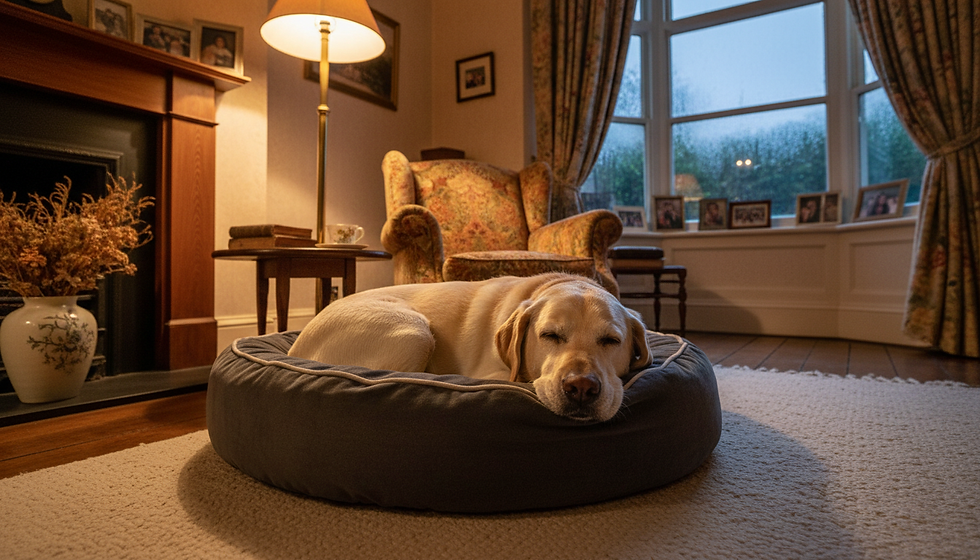
What your dog's "Barking at Nothing" sounds like can reveal the cause.
The sound of the bark gives useful clues.
No single bark type is a perfect diagnosis, but patterns help.
Barking pattern | What it may suggest | What to try first |
Sharp bursts at the window | Alert barking at people, dogs, cars, or wildlife | Block the view, reward quiet, teach a “thank you” cue |
Low barking while staring | Uncertainty, fear, or a specific sound or scent | Give space, avoid punishment, check the area |
High repeated barking | Excitement, frustration, or attention-seeking | Add enrichment, reward calm, teach an alternative |
Barking at night | Outside noises, discomfort, ageing, separation issues | Check routine, comfort, health, and sleep setup |
Barking when left alone | Separation-related distress or frustration | Record safely, speak to a vet or behaviourist if persistent |
Sudden new barking | Pain, illness, fear, or environmental change | Book a vet check if unusual or ongoing |
Body language matters as much as the sound.
A loose, bouncy dog is in a different emotional state from a dog with a stiff body, tucked tail, hard stare, or pinned ears.
Dog barking body language to watch
Look for the whole picture, not just the noise.
An alert dog may show:
Ears forward.
Tail raised or still.
Weight shifted forward.
Eyes fixed on a door or window.
Quick bursts of barking.
Fast return to normal after the trigger passes.
A worried dog may show:
Crouched posture.
Tail tucked or low.
Whale eye, where the whites of the eyes show.
Lip licking.
Yawning.
Trembling.
Moving away or hiding.
Barking and retreating.
A dog that is frustrated may show:
Jumping.
Pawing.
Spinning.
Grabbing toys or clothing.
Barking directly at a person.
Difficulty settling after the bark.
The response should match the emotion.
Alert dogs need guidance.
Worried dogs need safety.
Frustrated dogs need better outlets and clearer routines.
How to stop dog barking at nothing kindly
The goal is not to stop a dog from ever barking.
Barking is normal communication.
The goal is to reduce unnecessary barking, help your dog feel calm, and protect household peace.
Punishment may stop barking in the moment, but it often adds stress.
Shouting can sound like joining in.
Spray collars, shock collars, and harsh corrections can increase fear and damage trust.
A kind plan works better because it changes the reason behind the barking.
Step 1 to reduce dog barking is to find the trigger.
Before training, gather information.
For one week, write down when barking happens.
Include:
Time and place.
What your dog looked at.
What happened before and after.
Whether windows or doors were open.
Whether your dog had eaten, walked, or slept.
How you responded.
How long barking lasted.
You may spot that barking happens after dark, when the heating clicks, when buses pass, or when your dog is overtired after daycare.
Once you know the pattern, you can change it.
Step 2 to stop dog barking at nothing is to manage the environment.
Management is not cheating.
It prevents rehearsal.
The more a dog practises barking, the stronger the habit becomes.
Helpful changes include:
Closing curtains or using window film at street-facing windows.
Moving the dog's bed away from a busy front window.
Using stair gates to reduce hallway guarding.
Keeping the dog indoors during peak fox or cat activity.
Masking outdoor noise with calm background sound.
Adding draught excluders if smells or noises come through doors.
Giving safe chews during regular delivery times.
For garden barking, take your dog outside for a while rather than leaving them to patrol alone.
Call them back before they begin barking if you can.
Reward them for checking in with you.
If your dog barks at the letterbox, use an external post box or letter catcher where possible.
The sound of post hitting the floor can be a huge trigger.
Step 3 is to teach an alternative to barking.
Dogs do better when they know what to do instead.
Useful alternatives include:
Going to a mat.
Looking at you.
Coming away from the window.
Holding a toy.
Sniffing for scattered treats.
Sitting quietly before the door opens.
Start training when there is no trigger.
Practise the skill in calm moments first.
For example, to teach "away from the window":
Stand near the window with treats.
Say a simple cue such as "this way".
Toss a treat away from the window.
Praise when your dog turns and moves away.
Repeat until the movement is easy.
Practise when mild triggers appear.
Reward before barking starts when possible.
Over time, the dog learns that turning away is rewarding.
Step 4: Reward quiet moments.
Many people only notice barking.
Dogs also need feedback when they are doing well.
Reward your dog when they:
Hear a noise and stay quiet.
Look at a passer-by and look away.
Settle on their bed.
Return from the garden when called.
Pause after one bark.
Choose to sniff instead of bark.
Keep rewards small and calm.
Food works well for many dogs, but praise, gentle touch, or access to a toy may suit others.
Timing matters.
Reward the quiet choice as it happens.
If you wait too long, your dog may not connect the reward with the behaviour.
Step 5 is to avoid accidentally rewarding barking.
If barking always opens the door, starts play, or brings food, it will continue.
This does not mean ignoring distress.
If your dog is frightened or unwell, help them.
If they need to go out, take them out.
If they are bored every evening, change the routine.
When needs are met, try to reward the behaviour before barking.
Ask for a known cue, reward calm, and build predictable routines.
For example:
Instead of this | Try this |
Waiting until your dog barks for dinner | Ask for calm on a mat before preparing food |
Letting your dog into the garden while barking | Wait for a second of quiet, then open the door |
Shouting from the sofa | Walk over calmly, cue “this way”, reward away from the trigger |
Leaving the dog to bark at the window | Block the view and provide a chew or sniffing game |
Small changes repeated daily can make a large difference.
When your dog barks at nothing, it may need professional help.
Some barking can be handled with routine changes and training.
Other barking needs support.
Contact a vet or qualified behaviour professional if:
Barking starts suddenly and strongly.
Your dog seems confused, distressed, or disorientated.
Barking happens mostly at night.
Your dog barks when touched or approached.
There are signs of pain or illness.
Your dog panics when left alone.
Barking is causing neighbour complaints.
Your dog growls, snaps, or lunges with the barking.
The problem is getting worse despite kind training.
A vet should be the first step when behaviour changes suddenly.
Once health issues are ruled out or treated, a reward-based trainer or qualified behaviourist can help with a plan.
Avoid anyone who promises instant fixes through fear, intimidation, or punishment. Barking is communication.
Silencing the sound without addressing the root cause often leaves the real problem untouched.
Living with dog barking in your home and keeping the peace
Barking can strain relationships with neighbours, landlords, and family members.
In flats, terraces, and closely packed streets, even normal dog noise may carry.
It helps to be proactive.
If barking has become noticeable, consider:
Speaking politely to neighbours before frustration builds.
Asking when barking happens if you are out.
Using a camera or audio recording legally and respectfully inside your own home to understand patterns.
Avoiding long garden access during barking-heavy times.
Keeping windows closed during known trigger periods.
Creating a calm room away from shared walls where possible.
Working on settling skills every day.
Do not leave a dog outside to "bark it out".
In many neighbourhoods, this quickly creates stress for others and can leave the dog more aroused.
If you rent, check your tenancy terms about pets and noise.
If barking relates to separation distress, get help early.
These cases rarely improve through waiting alone.
Calm routines and simple enrichment can reduce unnecessary barking.

Practical daily routine to reduce dog barking at nothing
A steady daily routine can reduce many barking problems by lowering uncertainty and giving the dog healthy outlets.
Here is a simple framework that suits many dogs, with adjustments for age, breed, health, and temperament.
Morning routine for calmer dog barking
Start the day with toilet access, movement, and sniffing time.
A rushed walk that only aims to cover distance may not satisfy a dog that needs to explore scents.
Try:
A calm toilet break.
A walk with sniffing time.
Three to five minutes of simple training.
Breakfast in a puzzle feeder or scatter feed.
A rest period after activity.
After exercise and food, many dogs settle better.
If morning barking happens at the window, set up enrichment before the busiest pavement time.
Daytime routine for dogs home alone
If your dog spends time alone, prepare the environment before you leave.
Useful steps include:
Close curtains at busy windows.
Leave a safe resting area.
Provide a suitable chew or food toy if your dog can use it safely.
Keep departures calm.
Use background sound if it helps.
Start with absences your dog can cope with.
Dogs with separation distress need a careful plan.
Food toys alone will not fix panic.
If your dog barks, howls, scratches, toilets, or drools when left, seek professional help.
Evening routine for excessive dog barking
Evening barking often links to tiredness, street noise, wildlife, or attention-seeking.
Dogs can become restless when the household slows down.
A better evening may include:
A short sniffy walk before dark.
Calm play or training before people sit down.
Curtains closed before reflections and headlights begin.
A chew or licking activity.
Rewarding the dog for resting on a bed or mat.
A final toilet break before sleep.
Many dogs need help learning to switch off.
Reward calm resting often, especially in young dogs.
What not to do when your dog barks at nothing
Some common responses make barking worse, even when they feel natural.
Avoid these where possible:
Shouting at the dog.
Chasing the dog away from the window.
Using shock, spray, or vibration collars.
Forcing the dog towards something frightening.
Leaving the dog alone in the garden to bark.
Giving attention only after barking starts.
Ignoring sudden behaviour changes that may be health-related.
Expecting total silence from a naturally vocal dog.
Shouting is especially tempting.
The problem is that many dogs read raised voices as excitement or conflict.
They may bark more, not less.
A calm, consistent response works better:
Notice the trigger.
Reduce access to it if possible.
Cue an alternative behaviour.
Reward quiet or recovery.
Adjust the routine to prevent repeats.
This is slower than a quick correction, but it builds lasting change.
Why your dog barking at nothing is usually nothing
A barking dog is not trying to ruin the evening.
They are reacting, communicating, self-soothing, warning, seeking, or coping.
The cause might be a sound behind the wall, a fox near the bins, pain in an older joint, a rewarded habit, or worry when the house goes quiet.
The best next step is simple.
Watch before reacting.
Track patterns for a few days.
Check health if the barking is new or unusual.
Then use kind management and reward-based training to teach your dog to respond more calmly.
Dog barking at nothing can feel baffling, but it usually has a reason.
Once you find that reason, the barking becomes less mysterious and far easier to help.


Comments