
Why Do Dogs Scavenge? Causes, Breeds, Prevention and Training Tips

Why Do Dogs Scavenge?
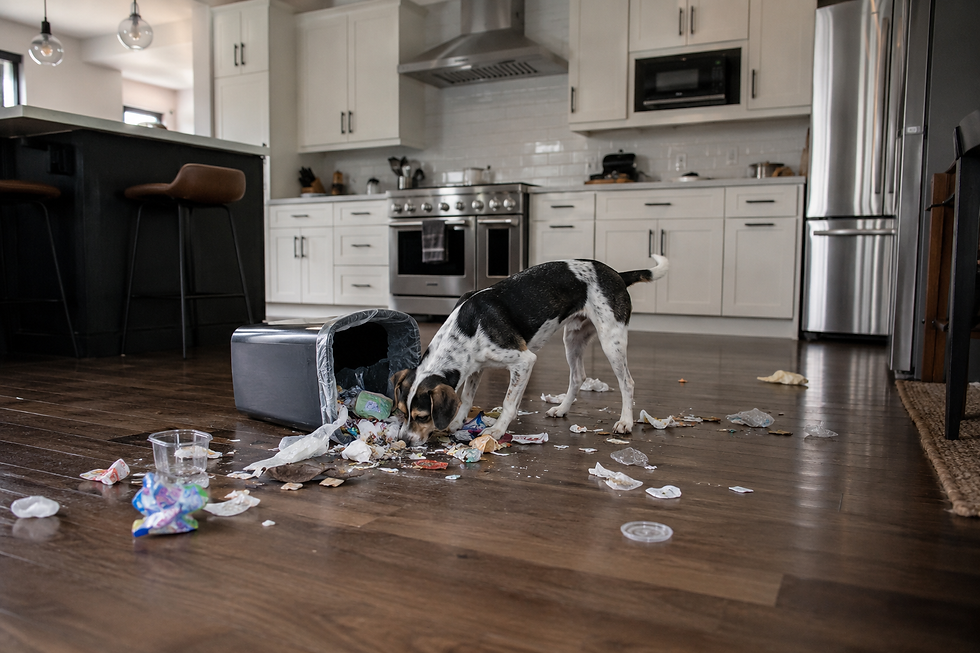
If you've ever come downstairs to find your kitchen bin overturned or caught your dog searching for scraps on a walk, you're not alone.
Why do dogs scavenge? Scavenging is one of the most common natural behaviours seen in domestic dogs, regardless of age or size.
Dogs evolved from opportunistic feeders, meaning they survived by taking advantage of whatever food they could find.
Although modern dogs enjoy regular meals, their instinct to search for food remains deeply ingrained.
Understanding why dogs scavenge is the first step towards preventing unwanted behaviours such as stealing food, raiding bins and eating potentially dangerous items outdoors.
In this guide, we'll explain why dogs scavenge, identify the breeds most likely to do it, and share practical ways to stop your dog from scavenging safely and effectively.
Why Do Dogs Scavenge? Understanding Natural Instincts
One of the biggest reasons dogs scavenge is simple: it is instinctive.
Long before domestication, wild canines relied on finding leftovers, carcasses and discarded food whenever hunting wasn't successful.
Those animals that took every feeding opportunity were more likely to survive and pass on their genes.
Even today, many family dogs still possess this powerful drive to investigate anything that smells edible.
Common reasons dogs scavenge include:
Natural survival instincts
Strong sense of smell
Curiosity
Boredom
Hunger or food motivation
Learned behaviour
Breed-specific tendencies
Lack of mental stimulation
Why Do Dogs Scavenge? Their Incredible Sense of Smell
A dog's nose is remarkably sensitive and can detect odours humans would never notice.
Food buried deep inside a kitchen bin, hidden beneath leaves or dropped onto the pavement still produces a scent that encourages investigation.
Even if something looks rotten to us, many dogs find fermented or decomposing smells extremely appealing.
This explains why many dogs happily search through bins, compost heaps and discarded takeaway containers.
Dog Breeds That Are Most Prone to Scavenging
Although almost any dog can become a scavenger, certain breeds have been selectively bred to use their noses or work independently, making them particularly likely to search for food.
Labrador Retrievers
Labradors are famous for their exceptional appetite.
Research has shown that some Labradors carry genetic variations associated with increased food motivation, making them especially enthusiastic scavengers.
Beagles
Originally bred for scent hunting, Beagles are driven by their noses.
Once they detect an interesting smell, they can become completely focused on finding its source.
Cocker Spaniels
Both English and American Cocker Spaniels have excellent scenting abilities and often enjoy searching for food both indoors and outdoors.
Basset Hounds
With one of the strongest scenting abilities of any breed, Basset Hounds naturally investigate every interesting smell they encounter.
Dachshunds
Originally bred to hunt underground prey, Dachshunds are persistent, curious and highly motivated to investigate hidden scents.
Jack Russell Terriers
Energetic and intelligent, Jack Russells frequently search for anything rewarding, including dropped food and overflowing bins.
Springer Spaniels
Working Springer Spaniels were bred to flush game and search dense cover, making them enthusiastic foragers.
Mixed Breed Dogs
Crossbreeds often inherit food motivation from one or both parents, meaning scavenging behaviour is common regardless of pedigree.
Why Do Dogs Scavenge Around the Home?
Indoor scavenging usually develops because the behaviour has been rewarded previously.
Examples include:
Finding leftovers in kitchen bins
Food left on worktops
Children's dropped snacks
Accessible pet food
Compost bins
Shopping bags containing groceries
Each successful find reinforces the behaviour, making future scavenging even more likely.
Why Do Dogs Scavenge Outdoors?
Outdoor scavenging presents additional risks because dogs may consume:
Chicken bones
Mouldy food
Chocolate
Raisins
Corn cobs
Cooked bones
Plastic packaging
Dead wildlife
Toxic plants
Animal faeces
Besides causing stomach upsets, some items can result in poisoning, intestinal blockages or emergency surgery.
How to Stop a Dog Scavenging
Fortunately, scavenging can often be reduced with consistent management and positive reinforcement training.
Secure Food Sources
The simplest solution is to prevent access to rewards.
Use:
Lockable kitchen bins
Cupboards with child-proof catches
Closed compost containers
Covered food waste bins
The fewer successful scavenging opportunities your dog experiences, the faster the habit weakens.
Feed a Balanced Diet
Dogs receiving complete, nutritionally balanced meals are generally less motivated by genuine hunger.
However, remember that many scavengers are simply opportunistic rather than underfed.
Increase Mental Stimulation
Bored dogs create their own entertainment.
Provide:
Puzzle feeders
Snuffle mats
Interactive toys
Food-dispensing balls
Scent games
Training sessions
Mental enrichment satisfies natural foraging instincts in an appropriate way.
Teach a Reliable "Leave It"
Teaching "Leave It" can prevent many scavenging incidents.
Begin indoors using low-value treats before gradually increasing difficulty.
Reward your dog generously whenever they ignore food after hearing the cue.
Consistency is far more effective than punishment.
Practise "Drop It"
Dogs occasionally succeed in picking something up.
A well-trained "Drop It" cue can prevent dangerous items from being swallowed.
Reward every successful release so your dog learns that giving items back is worthwhile.
Supervise Walks
If your dog frequently searches for discarded food, keep them on a lead in high-risk areas and scan the ground ahead.
Avoid allowing unrestricted access near litter bins, picnic areas or outdoor dining spaces.
Reward Alternative Behaviours
Instead of allowing your dog to search independently, reward them for:
Walking beside you
Making eye contact
Checking in voluntarily
Ignoring food on the ground
Dogs repeat behaviours that earn rewards.
Why Punishment Rarely Stops Dogs Scavenging
Scolding a dog after discovering an overturned bin rarely changes future behaviour.
Your dog simply associates your return with punishment rather than understanding what caused it.
Positive reinforcement combined with good management consistently produces better long-term results.
When Scavenging Could Indicate a Medical Problem
Occasionally, excessive scavenging may be linked to an underlying health condition.
Possible causes include:
Diabetes
Intestinal parasites
Hyperthyroidism (rare in dogs)
Poor nutrient absorption
Certain medications that increase appetite
Cognitive decline in older dogs
If your dog's appetite suddenly changes or they begin obsessively searching for food despite eating normally, consult your veterinary surgeon.
Frequently Asked Questions About Why Dogs Scavenge
Why do dogs scavenge even after eating?
Many dogs are opportunistic feeders. Even after a full meal, they may investigate food because instinct encourages them never to miss an easy feeding opportunity.
Can scavenging be trained out of a dog?
Yes. While the instinct itself remains, consistent management, positive reinforcement and obedience training can significantly reduce scavenging behaviour.
Which dog breeds scavenge the most?
Labrador Retrievers, Beagles, Cocker Spaniels, Springer Spaniels, Basset Hounds, Dachshunds and Jack Russell Terriers are among the breeds most commonly associated with scavenging due to their strong food motivation or scenting instincts.
Is scavenging dangerous?
It can be. Dogs may consume toxic foods, cooked bones, spoiled food, or foreign objects, which may require emergency veterinary treatment.
Why Do Dogs Scavenge? Final Thoughts
Understanding why dogs scavenge helps owners manage the behaviour without frustration. Scavenging is rarely a sign of disobedience—it is a natural survival instinct reinforced by a dog's exceptional sense of smell and past success in finding food.
By preventing access to tempting food, enriching your dog's daily routine, teaching reliable cues such as "Leave It", and rewarding good choices, most dogs can learn to ignore many scavenging opportunities. With patience and consistency, you can greatly reduce bin raiding, food stealing and risky foraging while keeping your dog safe and healthy.


Comments