

What Is the 3-3-3 Rule for a New Dog in Your Home?

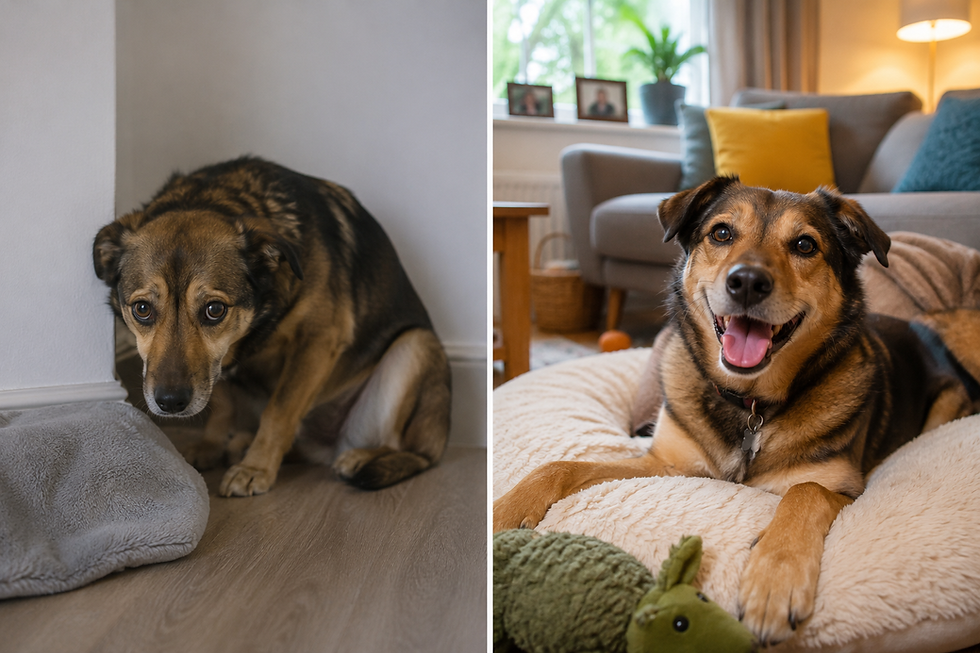
Bringing a new dog into your home is an exciting experience. Whether you have adopted a rescue dog, welcomed an adult dog from another family or brought home a puppy, you are probably eager to begin your new life together.
However, remember that moving into a new home can be a huge adjustment for a dog. New smells, unfamiliar rooms, different people, new routines and even household noises can initially be overwhelming.
This is where the 3-3-3 rule for a new dog can be helpful.
The 3-3-3 rule is a popular guideline that explains the typical adjustment period for a newly adopted or rescued dog.
It divides the first stages of settling into three days, three weeks and three months.
The 3-3-3 rule is not a strict timetable. Every dog is an individual, and some dogs may settle within days while others need several months or longer to feel completely comfortable.
So, what exactly should you expect during each stage?
What Is the 3-3-3 Rule for a New Dog?
The 3-3-3 rule for a new dog is a simple way of understanding the different stages your dog may go through after arriving in your home.
The three stages are:
First 3 days: Your dog begins to decompress and adjust to their new surroundings.
First 3 weeks: Your dog starts learning your household routine and becoming more comfortable.
First 3 months: Your dog gradually develops greater confidence, trust and a stronger bond with their family.
The guideline is particularly associated with rescue dogs and adopted dogs, although puppies and dogs moving between homes can also experience a period of adjustment.
Think of it as a framework, not a countdown.
Your dog does not suddenly become completely settled on day 91.
The most important thing is to allow your dog to progress at their own pace.
The First 3 Days: Let Your New Dog Decompress
The first three days can be one of the most challenging periods for a new dog in your home.
Your dog may have experienced a major change.
A rescue dog, for example, may have moved from a shelter or foster home into an unfamiliar house.
Even a dog coming from another family may find the change confusing.
During these first few days, your dog may appear nervous, withdrawn, unusually quiet or even overly excited.
Some dogs hide, sleep more than usual or have little interest in food, while others may pace, bark or explore constantly.
These behaviours do not necessarily mean something is wrong.
Your dog may simply be trying to process everything that has changed.
3-3-3 Rule for a New Dog: What to Do During the First 3 Days
The best thing you can offer your new dog is calm, patience and security.
Give your dog a quiet area where they can retreat when they need some peace.
This could be a bed, crate or designated corner of a room.
Try to keep the household relatively calm and avoid inviting lots of people over to meet your new pet immediately.
It can be tempting to spend every waking moment cuddling, playing with and talking to your new dog.
However, not every dog wants that much attention straight away.
Allow your dog to approach you rather than constantly approaching them.
Other useful steps include:
Keep mealtimes predictable.
Provide fresh water at all times.
Establish a quiet sleeping area.
Take your dog outside regularly for toilet breaks.
Keep walks short and relaxed initially.
Avoid overwhelming your dog with visitors.
Let your dog investigate their new surroundings gradually.
Use gentle positive reinforcement.
Give your dog somewhere safe to retreat.
A predictable environment can help your dog begin to understand that they are safe.
The First 3 Weeks: Helping Your Dog Learn the Routine
After about three weeks, many dogs become more comfortable in their new surroundings.
Your dog may start to understand when meals happen, when they go outside, where they sleep and what happens during different parts of the day.
You may also begin to see more of their personality.
A dog that was quiet and withdrawn during the first few days might suddenly become playful and energetic.
Another dog may become more affectionate and start seeking attention.
Interestingly, this period can sometimes bring new dog behaviour problems to the surface.
That does not necessarily mean your dog is getting worse.
In many cases, a dog that feels safer becomes more confident about expressing themselves. Behaviours that were hidden during the first few days may now become noticeable.
3-3-3 Rule for a New Dog: Building a Consistent Routine
The first three weeks are an excellent time to establish a predictable daily routine.
For example:
Morning:
Toilet break → breakfast → gentle walk → rest.
Afternoon:
Toilet break → play or short training session → rest.
Evening:
Dinner → toilet break → calm family time → bedtime.
Your routine does not have to be rigid. What matters is consistency.
Positive reinforcement training can also begin during this period.
Reward your dog when they display behaviours you want to encourage rather than relying on punishment when they make mistakes.
Shelters and animal welfare organisations commonly recommend patience, consistency and positive reinforcement while a newly adopted dog settles.
Keep training sessions short and enjoyable.
Your dog is still learning a lot about their new life.
The First 3 Months: Helping Your Dog Feel at Home
The third stage of the 3-3-3 rule for dogs is the first three months.
By this point, many dogs have become much more familiar with their environment and household routine.
Your dog may know where their food is kept, recognise the sounds of your daily life, understand when it is time for walks and have developed a stronger relationship with each member of the family.
Trust should also be developing.
However, some dogs will need considerably longer than three months to feel completely secure, particularly if they have experienced neglect, poor socialisation, repeated changes of home or other stressful experiences.
3-3-3 Rule for a New Dog: Building Trust Over Three Months
The three-month stage is not the end of the adjustment process.
Instead, it is an opportunity to continue strengthening the relationship you have built.
You can help your dog by:
Continuing positive reinforcement training.
Maintaining predictable routines.
Providing regular physical exercise.
Offering age-appropriate mental stimulation.
Giving your dog plenty of opportunities to sniff and explore safely.
Respecting their need for rest.
Introducing new experiences gradually.
Continuing to reward desirable behaviour.
Spending relaxed, positive time together.
Your dog may also become increasingly confident during this stage.
That can be wonderful, but don't assume that a dog who now seems settled is comfortable with absolutely everything.
Keep watching their body language, and respect signs that they are worried, overwhelmed, or uncomfortable.
Is the 3-3-3 Rule the Same for Every Dog?
No.
This is one of the most important things to remember about the 3-3-3 rule for a new dog.
Some dogs settle remarkably quickly. Others may need weeks or many months before they feel completely secure.
Age, temperament, previous experiences, socialisation, health, breed characteristics and the environment they have come from can all influence how quickly a dog adjusts.
A confident adult dog who has previously lived in a loving home may settle relatively quickly.
A nervous rescue dog who has experienced several homes may require much more time and patience.
Even dogs from the same litter can have completely different personalities and adjustment periods.
The 3-3-3 rule should therefore be treated as a helpful guide rather than a promise.
What Should You Avoid When Bringing a New Dog Home?
Knowing what not to do can be just as important as knowing what you should do.
One common mistake is overwhelming your new dog with attention.
Family members may be excited to meet the new arrival, and friends may want to visit immediately.
But your dog may need quiet time before being introduced to lots of people.
Avoid forcing interactions.
If your dog moves away, hides or retreats to their safe space, allow them to do so.
Also avoid expecting perfect behaviour immediately.
Toilet accidents, chewing, barking, nervousness or reluctance to interact can occur while a dog is adjusting.
Respond calmly and concentrate on teaching your dog what you want them to do.
Give Your New Dog Time and Space
One of the best gifts you can give a new dog is the freedom to settle at their own pace.
Do not force your dog to accept cuddles, introductions or handling if they are uncomfortable.
Instead, allow them to approach when they are ready.
This can be particularly important with rescue dogs, which may initially be uncertain about unfamiliar people and situations.
Professional guidance on the 3-3-3 approach consistently emphasises patience and letting the dog adjust, rather than expecting an immediate transformation.
How Can You Tell If Your New Dog Is Settling In?
Several positive signs show your new dog is adjusting to their home.
You may notice that your dog:
Sleeps more peacefully.
Eats and drinks normally.
Becomes interested in toys.
Starts playing.
Explores the house confidently.
Seeks affection.
Responds to their name.
Becomes more relaxed around household noises.
Develops a predictable toilet routine.
Enjoys walks and outings.
Begins responding to basic training.
Shows more of their individual personality.
Remember that progress is rarely completely linear.
Your dog may seem confident one day and nervous the next.
A new visitor, loud noise, a change in routine, or an unfamiliar environment can temporarily make your dog anxious.
That does not necessarily mean they have gone backwards.
When Should You Speak to a Vet or Behaviourist?
Although some nervousness is expected when bringing home a new dog, you should not ignore serious or persistent concerns.
Speak to your vet if your dog refuses food or water, appears unwell, has persistent diarrhoea or vomiting, shows signs of pain, or develops another concerning physical symptom.
You should also seek professional behavioural advice if your dog displays serious aggression, extreme fear, persistent destructive behaviour, severe separation-related problems or other behaviour that you are struggling to manage safely.
A qualified behaviour professional can help you understand why the behaviour is happening and create an appropriate plan.
3-3-3 Rule for a New Dog:
Frequently Asked Questions
What is the 3-3-3 rule for a new dog?
The 3-3-3 rule for a new dog describes three broad adjustment periods: approximately three days to decompress, three weeks to begin learning the household routine and three months to become increasingly comfortable and secure.
It is a guideline, not a fixed timetable.
Does the 3-3-3 rule apply to puppies?
The 3-3-3 rule is most commonly discussed for rescue and adopted dogs, but puppies also need time to adjust to a new home.
Puppies are experiencing many new sights, sounds, people and routines for the first time, so patience and gradual introductions are important.
What happens after the first three days?
Your dog may begin exploring more, eating more normally and becoming interested in their surroundings.
However, some dogs remain nervous for longer.
Continue providing a quiet, predictable environment.
What happens after three weeks?
Many dogs begin settling into a routine and becoming more comfortable with their surroundings.
Their personality may become more apparent, and you may notice behaviours that were not obvious during the first few days.
What happens after three months?
By this stage, many dogs have developed a stronger sense of security and a closer bond with their family.
However, some dogs need considerably longer to feel completely at home.
What if my dog has not settled after three months?
Do not panic. The 3-3-3 rule is not a deadline.
Every dog is different, and some dogs need significantly more time.
Continue providing consistency, patience and positive experiences, and seek professional help if you are concerned about your dog's behaviour or wellbeing.
Final Thoughts on the 3-3-3 Rule for a New Dog
Bringing a new dog home is the beginning of a relationship, not an instant transformation.
The 3-3-3 rule for a new dog provides a useful way to understand the adjustment process and, perhaps most importantly, reminds owners not to expect too much too soon.
Think of the first 3 days as a time for decompression, the first 3 weeks as a period for learning your routine and the first 3 months as a time for developing confidence, trust and a deeper bond.
But remember: your dog has their own timetable.
Some dogs will settle quickly.
Others will take considerably longer.
What matters most is creating a safe, predictable and loving environment where your new companion can gradually learn that they are home.
With patience, consistency and plenty of positive experiences, those first uncertain days can become the beginning of a wonderful lifelong friendship.


Comments