
A Comprehensive Guide to the Afghan Hound

Let's meet the Afghan Hound.
The Afghan Hound looks like royalty, but don’t let the silky coat fool you.
This is a fast, clever, independent sighthound with strong instincts and a real need for patient care.
If you want a dog that hangs on your every word, look elsewhere.
If you want a graceful, funny, loyal companion with a mind of their own, the Afghan Hound may be a brilliant fit.

Afghan Hound breed facts at a glance.
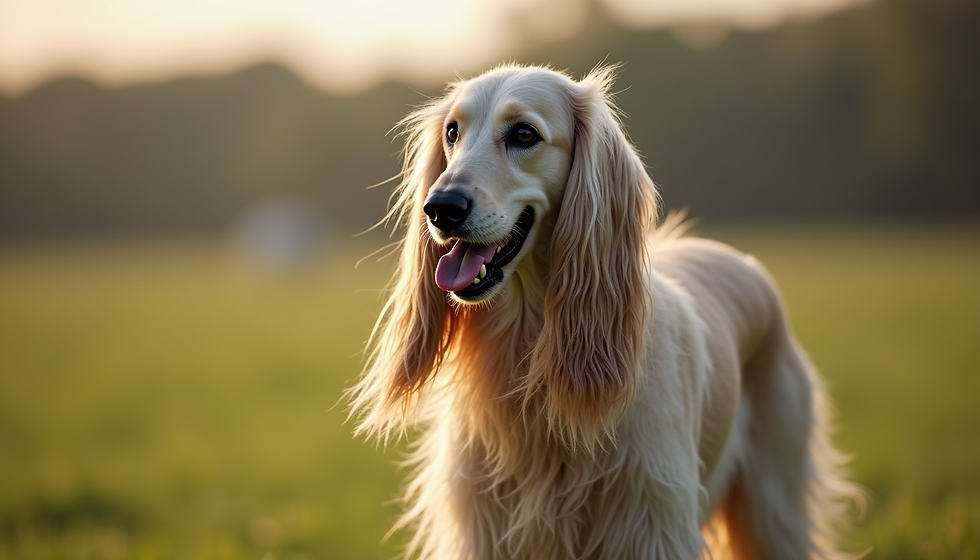
The Afghan Hound is one of the world's most recognisable dog breeds.
Its long coat, narrow head, high hip bones and proud stance stand out.
Underneath that elegant look is an athletic dog built for speed and stamina.
Afghan Hound fact | What to expect |
Breed group | Sight and scent hound |
Size | Large |
Weight: | 23 to 27 Kg = 50-60 lbs |
Height | 64 to 74cm = 25-29 inches at the shoulder |
Type of coat | Long, fine and silky |
Coat colours | Various, including black, cream, red, and brindle |
Shedding | Low |
Grooming Needs | High to stop matting |
Temperament | Independent, loyal, sensitive, dignified |
Exercise needs | Moderate to high |
Energy level | High |
Training requirements | Patient, positive and consistent |
Tendency to bark | Low |
Tendency to dig | Moderate |
Tendency to drool | Low |
Tendency to snore | Low |
Social attention needs | Low |
Accommodation | Can settle anywhere but does require lots of exercise. |
Not ideal for | People who want an off-lead dog in open spaces, or a low-maintenance coat |
Best suited to | Owners who enjoy grooming, enjoy exercise areas and calm training |
Life Span | 12 to 14 years |
Royal Kennel Club (UK) American Kennel Club (AKC) | Hound Group Hound Group |
The Afghan Hound was developed to hunt by sight.
That matters.
This breed spots movement quickly and can chase before you’ve even noticed what caught their eye.
That doesn’t make them “bad” dogs.
It makes them hounds.
Good ownership means working with those instincts, not pretending they don’t exist.
Afghan Hound history and original purpose
The Afghan Hound comes from the mountainous regions of Afghanistan and surrounding areas.
People bred these dogs to work across rough land, using speed, sharp eyesight and agility to pursue game.
Their coat wasn’t just decorative.
It protected them from cold in high, harsh terrain.
Their strong feet, flexible body and powerful stride helped them move over difficult ground.
When the breed became known in Britain, people were drawn to its striking looks.
Show lines helped create the polished appearance many people know today.
Still, the Afghan Hound remains a working-style sighthound at heart.
That history explains plenty about the breed:
They can be aloof with strangers.
They often make their own decisions.
They react fast to movement.
They need safe spaces to run.
They dislike harsh handling.
A well-kept Afghan Hound is not just a beautiful dog.
They’re a specialist breed with strong instincts and specific care needs.
Afghan Hound temperament and personality
Afghan Hounds are often described as independent.
That’s true, but it can sound colder than it is.
Many are deeply attached to their family.
They don’t always show it in a needy way.
Some will curl up nearby without demanding attention.
Others act clownish at home, then reserved in public.
They can be gentle, sensitive and surprisingly playful.
Afghan Hound behaviour at home
At home, many Afghan Hounds are calm once their exercise needs are met.
They often enjoy comfort.
Sofas, soft beds and warm spots are usually popular.
They may not enjoy constant noise or rough handling.
A busy home can work, but they need a quiet place to rest.
Children should learn to treat them with respect.
No grabbing, chasing or pulling at the coat.
Afghan Hounds can live with other dogs, especially if raised with them.
Smaller pets need care.
Their chase drive can be strong, even if the dog is gentle in other settings.
Afghan Hound traits with strangers
This breed can be reserved with new people.
That doesn’t mean they should be fearful or snappy.
A well-socialised Afghan Hound should be watchful, composed and polite.
Don’t force greetings.
Let the dog choose when to approach.
Calm, positive exposure works far better than pushing them into complicated situations.
Afghan Hound independence
The Afghan Hound isn't stubborn for its own sake.
They were bred to work at a distance and make quick choices.
That self-reliance is part of the breed.
Training has to respect that.
Long, repetitive drills won’t help.
Short sessions with clear rewards work better.
Afghan Hound care needs: every owner should know
Afghan Hound care takes time.
The coat needs work.
Exercise needs planning.
Training needs patience.
This is not a wash-and-go breed.
If you enjoy a routine and don’t mind regular grooming, the care can be very rewarding.
If you want low effort, choose another breed.
Afghan Hound grooming and coat care
The Afghan Hound coat is one of the breed’s defining features.
It is long, fine and silky.
It tangles easily, especially around the ears, legs, chest, armpits and tail.
Most Afghan Hounds need grooming several times a week.
Some need more, especially if they run through wet grass, woodland or muddy fields.
A basic Afghan Hound grooming kit may include:
A pin brush
A wide-tooth comb
A slicker brush used carefully
Detangling spray
Dog-safe shampoo and conditioner
Towels or a dog dryer
Nail clippers or a grinder
Ear cleaning supplies recommended by a vet
Never drag a brush through knots.
It hurts and can damage the coat.
Work slowly from the ends of the hair towards the skin.
Use your fingers to loosen tangles first.
Always use a spray-on conditioner to help prevent hair breakage and reduce static.
Bathing is usually part of coat care.
A dirty coat mats faster.
Clean, conditioned hair is easier to manage.
Many owners book a professional groomer, but home maintenance still matters between appointments.
Key point: The Afghan Hound’s coat is high-maintenance. Even a short break from grooming can lead to painful mats.

Afghan Hound ears, teeth and nails
Long ears can trap moisture and debris.
Check them often.
Look for redness, bad smell, discharge, or head shaking.
Speak to a vet if anything looks wrong.
Dental care also matters.
Brush teeth with dog-safe toothpaste if your dog accepts it.
Dental chews can help, but they don’t replace proper care.
Keep nails short enough for comfortable movement.
Long nails can affect the dog’s gait.
If you hear constant clicking on hard floors, they may need trimming.
Afghan Hound feeding and weight
Afghan Hounds are lean dogs.
They should not look bulky.
A healthy dog usually has a visible waist, and you should be able to feel the ribs without pressing hard.
Feed a complete diet suited to your dog’s age, size and activity level.
Puppies, adults and senior dogs need different nutrition.
Ask your vet for help if growth, weight or digestion becomes a concern.
Avoid overfeeding treats during training.
Use small rewards, or take part of the daily food allowance and use it for training sessions.
Fresh water should always be available.
Afghan Hound exercise and mental stimulation
The Afghan Hound needs regular exercise, but not reckless freedom.
As a sighthound, safe containment matters.
A secure field or enclosed exercise area is ideal for off-leash running.
A normal park with roads, livestock or wildlife nearby is risky.
Recall training helps, but it may not override chase instinct when something fast moves.
Afghan Hound walking needs
Most adult Afghan Hounds enjoy daily walks plus chances to stretch their legs safely.
Walks should include time to sniff and explore.
Mental stimulation can tire a dog in a healthy way.
Good exercise options include:
Lead walks in quiet areas
Secure field hire
Garden play in a well-fenced space
Sighthound-friendly games
Short training sessions
Enrichment feeders and scent games
Avoid forced running with young puppies.
Their joints are still developing.
Build exercise gradually and ask your vet for age-appropriate guidance.
Afghan Hound recall and chase drive
Recall is useful, but you must train it carefully.
Start indoors.
Then use a garden.
Then move to safe enclosed spaces.
Use high-value rewards.
Keep sessions short.
Never punish a dog for returning slowly.
That teaches them that coming back is a bad idea.
Even with training, many Afghan Hounds should stay on a lead or long line outside secure areas.
That’s not failure. It’s responsible ownership.
Afghan Hound boredom signs
A bored Afghan Hound may invent their own fun.
That can include digging, chewing, raiding bins or ignoring you outdoors.
Boredom often comes from too little mental work, not just too little walking.
Add problem-solving games.
Hide treats.
Teach simple cues.
Rotate toys.
Keep training light and upbeat.
This breed shuts down if you handle it harshly.
Afghan Hound training and socialisation
Training an Afghan Hound is about trust.
You need clear rules, good timing and rewards that matter to the dog.
This breed often dislikes being bossed around.
Heavy-handed training can create avoidance or fear.
Positive reinforcement is the better route.
Afghan Hound puppy training
Start early. Focus on the basics first:
Name response
Gentle handling
Lead walking
Toilet training
Settling quietly
Being brushed
Coming when called
Being alone for short periods
Grooming training is vital.
Touch the paws, ears and legs gently.
Reward calm behaviour.
Make the brush a normal part of life, not a battle.
Short sessions work best.
A few minutes of good training beats half an hour of frustration.
Afghan Hound socialisation
Socialisation means careful, positive exposure.
It doesn’t mean letting everyone and every dog rush up to your puppy.
Introduce your Afghan Hound to normal life in manageable steps:
Traffic sounds
People in hats and coats
Calm dogs
Vets and grooming tables
Car travel
Different floor surfaces
Livestock seen from a safe distance
Children playing nearby
Keep experiences calm.
Reward confidence.
Leave before the puppy feels overwhelmed.
Afghan Hound house manners
This breed can learn lovely house manners.
Teach what you want, rather than only correcting what you don’t want.
Reward lying on a mat.
Reward calm greetings.
Reward walking beside you.
Use baby gates or closed doors when you can’t supervise.
Afghan Hounds can be sensitive.
A sharp tone may affect them more than expected.
Stay calm and consistent.

Afghan Hound health and common issues
Afghan Hounds are generally athletic dogs, but every breed has health risks.
Good breeders screen their dogs where suitable and avoid breeding from animals with serious inherited problems.
This section is for general information only.
Always speak to a vet about symptoms, diagnosis or treatment.
Health points to discuss with a vet or breeder include:
Hip health
Eye conditions
Thyroid issues
Allergies or skin irritation
Ear problems
Dental disease
Bloat risk in deep-chested breeds
Sensitivity to some medicines or anaesthetics, which sighthound owners often discuss with vets
Bloat, also called gastric dilatation-volvulus, is an emergency.
Signs can include retching, a swollen abdomen, distress, drooling or restlessness.
Seek urgent veterinary help if you suspect it.
Afghan Hound health checks before buying
If buying a puppy, choose a responsible breeder.
They should answer questions clearly and care where their puppies go.
Ask about:
Health testing
The puppy’s parents
Temperament
Socialisation
Grooming needs
Feeding routine
Vaccination and worming records
Lifetime support
You should be able to see the puppy with their mother.
The environment should be clean and calm.
Walk away if the seller pressures you, avoids questions or offers to meet in a car park.
Rescue is another good route.
Breed rescues and sighthound rescues sometimes have Afghan Hounds or Afghan Hound crosses needing homes.
Adult dogs can be brilliant companions when matched well.
An Afghan Hound's living needs.
An Afghan Hound can live well in many types of homes, but the setup matters.
A secure garden/yard is useful.
Fencing should be high and well maintained.
These dogs can move fast and may jump or squeeze through gaps if tempted.
Apartment living can work for the right dog if you meet its exercise needs, but coat care after wet walks may be harder.
Mud, rain and long hair don't mix well.
Afghan Hound and family life
Afghan Hounds can be good family dogs in homes that respect their nature.
They suit calm handling and predictable routines.
Young children need supervision around any dog.
Teach them to leave the dog alone while eating, sleeping or resting.
The Afghan Hound’s coat can attract little hands, so set clear boundaries.
Afghan Hound and other pets
Many Afghan Hounds live with other dogs.
Sighthounds often enjoy the company of dogs with similar play styles.
Cats and small animals need careful thought.
Some Afghan Hounds can live with cats they know, especially if raised with them.
Others cannot be trusted around small animals.
Management is key.
Never assume a peaceful indoor relationship translates the same outdoors.
Movement can trigger chase.
Afghan Hound alone time
Afghan Hounds are independent, but that doesn’t mean they like being left alone all day.
Build alone time slowly.
Use calm departures and returns.
If a dog becomes distressed when left, get help from a qualified trainer or behaviourist.
Don’t leave the problem to grow.
Afghan Hound pros and cons
No dog breed suits everyone.
The Afghan Hound has clear strengths and clear challenges.
Pros
Elegant, athletic and distinctive
Loyal without always being clingy
Often calm indoors when exercised
Sensitive and intelligent
Fun, quirky personality
Cons
High grooming needs
Strong chase instinct
Recall can be difficult
Can be aloof with strangers
Needs secure spaces to run
The biggest mistake is choosing this breed for looks alone.
The coat gets attention, but the temperament and instincts shape daily life.
Afghan Hound cost and time commitment
The cost of an Afghan Hound goes beyond the purchase or adoption fee.
Budget for regular care.
Ongoing costs may include:
Quality food
Grooming tools
Professional grooming
Vet checks
Vaccinations and parasite control
Insurance
Secure field hire
Training classes
Bedding, coats and leads
Time is the higher cost.
Grooming can’t be skipped.
Exercise needs planning.
Training takes patience.
If you work long hours and want an easy coat, this breed will be hard work.
If you love grooming and thoughtful handling, the Afghan Hound can be a joy.

Afghan Hound suitability checklist
Before choosing an Afghan Hound, be honest about your routine.
This breed may suit you if:
You enjoy grooming or are willing to pay for expert grooming.
You have access to secure exercise areas.
You like independent dogs.
You can train with patience and humour.
You don’t expect perfect off-lead reliability.
You want a calm but athletic companion.
This breed may not suit you if:
You want a low-maintenance coat.
You need a dog that obeys instantly.
You have unsecured outdoor space.
You keep small pets and can't safely separate them.
You dislike mud, hair and grooming time.
You want a dog that greets everyone warmly.
A good match makes life easier for both dog and owner.
Afghan Hound FAQ
Are Afghan Hounds suitable for families?
Yes, Afghan Hounds can thrive in peaceful households where they are treated with patience and respect.
They need gentle care, early socialisation, and supervision when around young children.
Are Afghan Hounds good family dogs?
Yes, Afghan Hounds can be good family dogs in calm, respectful homes.
They need gentle handling, proper socialisation and supervision around young children.
Do Afghan Hounds shed a lot?
They do shed, but the bigger issue is tangling and matting.
Their long coat needs regular brushing, bathing and careful maintenance.
Can Afghan Hounds be let off the lead?
Only in secure areas.
The Afghan Hound has a strong chase instinct and may chase wildlife, cats or fast-moving objects.
Are Afghan Hounds hard to train?
They can be challenging because they’re independent.
They learn best with short, positive sessions and rewards they value.
How much exercise does an Afghan Hound need?
Adult Afghan Hounds need daily walks and safe chances to run.
They also need mental stimulation, such as scent games, training and enrichment toys.
Our Final thoughts on the Afghan Hound
The Afghan Hound is graceful, loyal and full of character.
They’re also independent, fast and demanding to groom.
Choose this breed with your eyes open.
Meet Afghan Hounds in real life.
Talk to experienced owners, breeders, groomers and rescue volunteers.
Ask about the hard parts, not just the beautiful ones.
If you can offer patient training, secure exercise and serious coat care, the Afghan Hound can be a wonderful companion.
Not easy.
Not ordinary.
But unforgettable.


Comments